


How To Produce Extracted Honey. Part 5
Description
This section is from the book "How To Succeed With Bees", by E. W. Atkins and K. Hawkins. Also available from Amazon: How To Succeed With Bees: More Than 190 Successful Plans To Produce Big Crops Of Honey.
How To Produce Extracted Honey. Part 5
11. What are the objects of placing an extracting super above the queen excluder when bees are Demareed?
12. What may happen in some localities if the queen cells are not destroyed in upper hive when the Demaree plan has been used?
13. What is the object of removing all ripe light colored honey before another honey flow starts?
14. What is the name of the most popular method of swarm control in extracted honey production?
15. How can you tell in your location whether it is necessary to destroy queen cells in the upper hive bodies after the colony is Demareed to prevent swarming?
16. How would you select honey to insure that it is ready to take off the hive?
17. What is the easiest method to use in taking off honey?
18. At what temperature does honey extract best and why?
19. Is it much easier to uncap combs that extend out beyond the sides of the frames? How do you go about it to obtain that condition?
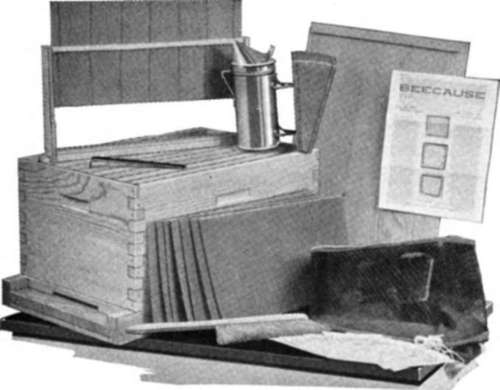
Fig. 54-The equipment needed to make increase. If combless package bees are purchased, two or more frames should contain comb instead of foundation. The foundation in this picture has* yet to be adjusted in the frames.
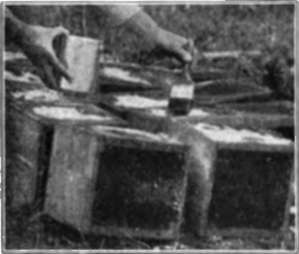
Fig. 55-Feeding combless bees on their arrival just prior to putting them in their new home. Photo from American Bee Journal.
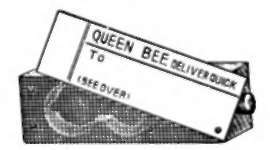
Fig. 56-The usual style of cage the queen is shipped in. The cork in the end of the cage is removed before inserting the cage in the hive. See paragraph 179.
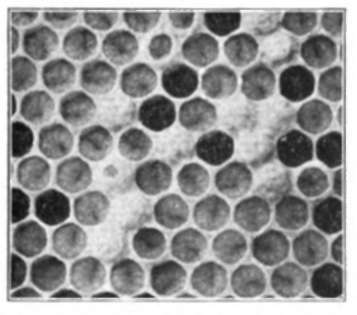
Fig. 57-Pearly white bee grubs (larvae) in this stage should be present in new colonies not later than 9 or 10 days after the colonies are made up. Note the bees have capped some of them. Photo from A. B. J.
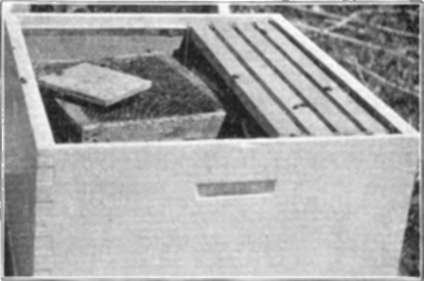
Fig. 58-The side of the shipping cage is removed, the queen cage removed and placed between cage and frame. When the cage is in place the feeder is put on and bee tight cover over all. Photo from A. B. J.
Increase May Seldom Be Made And Get A Bumper Crop
1. Choose plan of making increase carefully considering its effect on your honey crop.
a. May be made by purchase of combless packages.
b. Nuclei easier for beginners.
c. Colonies may be divided by swarming or artificially.
d. Swarms may be purchased from neighbor beekeepers.
2. No more than a prime swarm should be allowed to issue from a colony being run to produce honey.
e. Prime swarms permissible in good seasons with careful management although not advised.
f. Bees may be purchased from advertisers in reliable bee journals or from those whose honesty you know.
g. Best time to secure bees is at the beginning of the settled warm weather in your locality.
3. Packages or nuclei require careful handling.
h. Care of bees immediately after receipt and until they are settled is very important.
i. Immediate feeding of packages and early release of packages or nuclei from shipping cases urgent, j. Early examination to insure queenright.
4. Fit your increase scheme to your honey-producing program.
k. Vital difference in making increase if producing comb or extracted honey.
1. Never buy bees from anyone who does not furnish an inspection certificate of their freedom from disease.
m. Do not move or ship bees in weather when they would not normally fly from the hives.
Continue to:


My Books

