


Chapter 3. Selection Of Obstacles
Description
This section is from the book "Training Young Horses To Jump", by Geoffrey Brooke. Also available from Amazon: Training Young Horses To Jump.
Chapter 3. Selection Of Obstacles
Schooling Mounted
The fences must be selected exactly on the same lines as for free jumping.
Never attempt a larger fence with a young horse if he has failed to jump successfully and with confidence a small one.
A horse, like a man, when he has lost confidence in himself is unreliable.
Dispensing With Wings
Thus, by starting over small obstacles and only increasing the size as the horse becomes perfect, it will be found quite possible to dispense with wings. They will be quite unnecessary, for now, when ridden up to a fence, the horse's inclination from habit will be to jump it. When driven into his bridle his inclination is to canter or gallop, and jumping is merely rather more exertion; but he must know that the effort is not going to cause him any pain, and he must be confident of his own prowess.
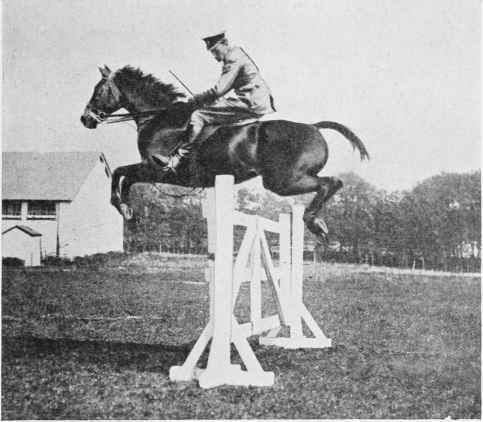
Fig. 5. Schooling Over A Gate Without Wings - Horses trained in this manner can be relied to jump exactly where the rider puts them at the fence. There is no difficulty in training them in this way. - W. A. Rouch Copyright
If schooled over fences without wings your horse can be relied upon to jump exactly where you put him at a fence when he is out hunting. Often one sees the necessity for this. Only quite recently I saw a man knock down two unfortunates at two consecutive fences. One of them happened to be Captain Burns-Hartopp, who is rather large to be trifled with in this manner. The offender himself soon came to grief by jinking off into a gap that was wired, and so ended his exhilarating gallop.
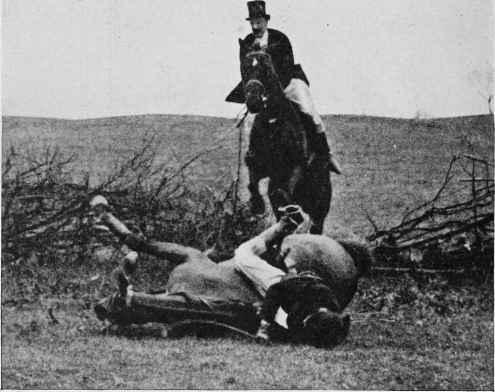
Fig. 6 - The danger of a horse that persists in jumping the gaps. Fortunately in this particular instance the fallen horse and man were cleared. - W. A. Rouch Copyright
I mention this instance as furnishing convincing proof of the necessity for a reliable straight jumper, and dispensing with wings when schooling is an excellent and certain method of attaining this desideratum. I suppose we have all of us, when travelling in a railway carriage, chosen our own line and picked out places at the fences in an imaginary run, as the train goes through a hunting country: our imaginary horses never tire, falter or refuse, and we negotiate rails, banks, cut and laid fences and bullfinches with equal facility; even navigable rivers and canals are taken on in a manner that would do justice to the Spring Captains of Surtees.
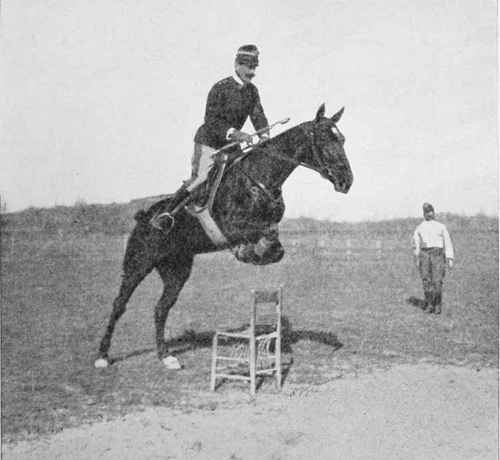
Fig. 7 - Schooling without wings is carried to a fine art in Italy. - By permission of Capt. Paul Rodzanko
Now, the real thing is not quite so easy. As a small boy one was seldom if ever taught how to present a horse at a fence or how to sit over a fence. There was the inevitable golden rule which apparently never failed - "sit back"-so we sat back, and there was little moderation about it. Sometimes the youthful rider would commence to sit back half-way across the field, anticipating the unpleasantness of a fall. Often the horse would mistake the laying back for the signal to stop, and this he did when he got to the fence.
Sometimes we did not sit back far enough, and so got jumped off. Generally if our horses took off sooner than we expected, we received a shock of surprise, and this shock reacted even more on our horse's mouth.
Continue to:


My Books

