


Photographing Pianos For Catalogs, Etc. Continued
Description
This section is from the book "Complete Self-Instructing Library Of Practical Photography", by J. B. Schriever. Also available from Amazon: Complete Self-Instructing Library Of Practical Photography.
Photographing Pianos For Catalogs, Etc. Continued
271. Avoiding Reflections
Avoiding Reflections. Where the piano has already been polished it is a good plan to extend over the front of the camera a black cloth, with an opening for the lens, thus cutting out the reflection of the camera and tripod. The photographer should stand at some distance from the camera during the exposure, to avoid reflections of his image on the piano. If reflections are cast on the lower part of the piano from the floor, spread a breadth of black calico on the floor in front of the piano, or place the piano on a dark rug.
272. Also, when it is desired to have the photograph of the piano as free from reflections as possible, to cut down the expense of the engraver, or where photographs are desired entirely without reflections, this may be accomplished by placing a screen of black calico, arranged wedge shape, on each side of the piano. The screen should not be placed too close to the piano, but close enough to cut out all side reflections, thus enabling all the light to fall broadly on the front.
273. Whenever possible, persuade the manufacturer to assemble the parts of his sample piano before polishing. Then, the original grain of the wood can be preserved and reflections will be eliminated, making the picture much more satisfactory.
274. Brightening Dull Metal Parts
Brightening Dull Metal Parts. When photographing interiors of pianos or other musical instruments, to show the working parts, it is often advisable to rub chalk on dull parts of the mechanism, thumb-screws, etc., which are required to show up prominently.
275. Exposure
Exposure. The exposure for such work will naturally be a long one, usually ranging from five to twenty minutes.
276. Development
Development. The plates should be developed with a diluted developer, to which a few drops of bromide have been added. The bromide will prevent fog and the diluted developer will supply good detail. The Universal Developing Formula, given in Volume II, slightly diluted will produce excellent results.
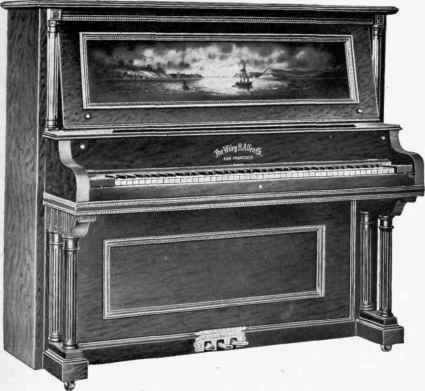
Illustration No. 58
Commercial Photograph - Piano
See Paragraph 269
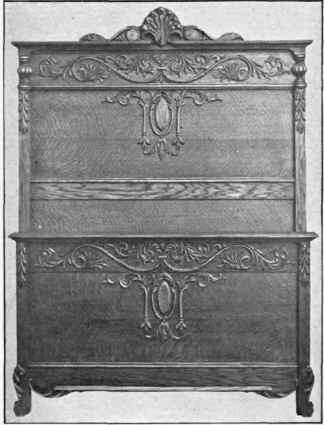
Illustration No. 59 Commercial Photograph - Bed See Paragraph 280
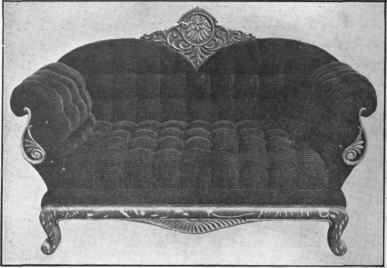
Illustration No. 59a Commercial Photograph - Settee See Paragraph 280
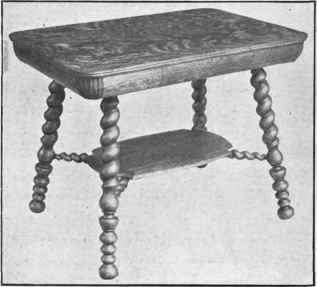
Illustration No. 60
Commercial Photograph - Table
See Paragraph 281
Continue to:


My Books

