


Machine Drawing. Dimensions
Description
This section is from the book "Modern Shop Practice", by Howard Monroe Raymond. Also available from Amazon: Modern Shop Practice.
Machine Drawing. Dimensions
It is easy to spoil an otherwise good drawing by loose and careless methods of putting on dimensions. Systematic and careful effort must constantly be used to make every dimension upon a drawing absolutely clear. To put it still more strongly, it must be absolutely impossible for any dimension of a drawing to raise doubt in the workman's mind as to its meaning. The draftsman has no justifiable excuse for mistakes in the shop due to poorly made dimension lines or small and blotted figures.
The arrows terminating the dimension lines should be pointed, bold, and regular, thus,  not like this,
  The arrow points should exactly touch the extension lines, thus,
  not like this,
  The figures should be broad, bold, and clear, and of good size to be easily read. A gap may be left for the figure, thus,
  or the line may run straight through, thus,
  or the figures may be placed wholly above the line thus,
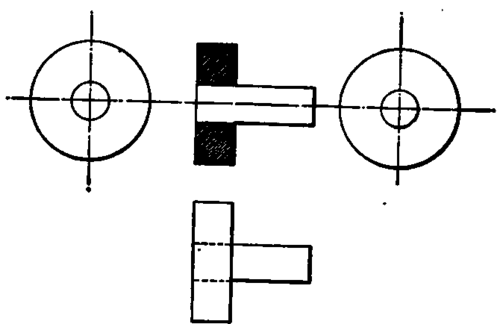
Fig. 16. Location of Shade Lines for Disk with Shaft.
It should be noted that by making figures broad, they will appear bold and clear, even when they are limited to small height. The common error of making them narrow destroys their bold character, and renders them difficult to read. Note the difference between the following examples, both sets of figures being exactly the same height, but one broad and the other narrow, fig 25 fig.25.
Fractions should always have the dividing line horizontal, thus,  not like this,
  Small dimensions, or dimensions in cramped places should be made thus,
For distances greater than 36 inches, and often for distances greater than 12 inches, the dimensions are usually given in feet and inches. These dimensions should be indicated thus, the dash being made bold and conspicuous.
Continue to:


My Books

