


Oxygenite
Description
This section is from the book "Welding Theory, Practice, Apparatus And Tests Electric, Thermit And Hot-Flame Processes", by Richard N. Hart. Also available from Amazon: Welding: Theory, Practice, Apparatus And Tests, Electric, Thermit And Hot-Flame Processes.
Oxygenite
"Oxygenite" is the name given to the oxygen-producing powder sold by the Industrial Oxygen Co. Its main constituents are potassium chlorate and manganese dioxid in the probable proportion of 100 to 13 by weight. To this is added a small percentage of carbon in the form of lamp-black, to support and assist combustion. The powder is a fine gray sand in texture; wetting it will not diminish its oxygen-producing ability, though it will cause it to cake and harden. It is accepted by the railroads at the merchandise rates and is safe to handle.
One pound of Oxygenite when ignited with a match burns with the production of oxygen and carbon dioxid, producing about 4 cubic feet of the gas. The oxygen is produced according to the reactions 2KCIO 3 +heat = 2KCI+302 and 3Mn02 +heat = Mn304 +02.
The principal function of the manganese dioxid is to reduce the temperature of occlusion and to prevent the chlorate from melting and flashing. As a good portion of the oxygen is consumed by the carbon, carbon dioxid gas forms a large percentage of the resultant gas. This is washed out of the gas by passing it through a solution of sodium or potassium hydroxid. The reaction continues up to 200 pounds' pressure and takes less than three minutes.
Figure 39 is a diagram of the apparatus in position. It consists of a combustion chamber, a washing tank in which pebbles are drowned in the caustic solution, and a gasometer. The function of the pebbles in the washing tank is to cause the gas that is let in at the bottom to work its way more slowly to the top and to break up the bubbles. Less caustic solution is needed, and such a washer takes the place of three washers in which the solution is free.
This process has its own special advantages, though it is not cheap. Oxygen can be generated on short notice and at high pressure without the aid of a gas flame for heating nor of a pressure pump.
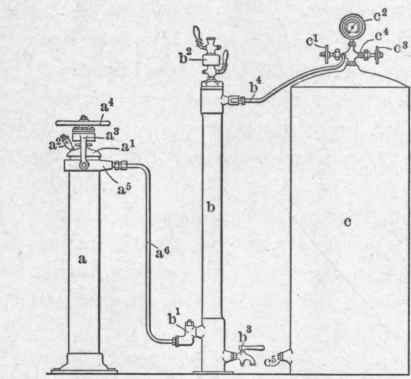
Fig. 39. - Oxygen apparatus using oxygenite (Industrial Oxygen company).
a | - | |
a1 | - | Cover plate |
a2 | - | Safety valve |
a3 | - | Brace |
a4 | - | Tightening Screw |
a5 | - | Outlet for gas |
a6 | - | Pipe to cleaning device |
b. | - | Washer and cooler |
b1 | - | Inlet for gas |
b2 | - | Funnell to stopcock |
b8 | - | Drainage tap |
b4 | - | Pipe to storage cylinder |
c | - | Storage Cylinder |
C1 | - | Entry valve |
c2 | - | Pressure gauge |
C3 | - | Outlet valve to blowpipe |
C4 | - | Fixture for reducing valve |
C5 | - | Drainage pipe |
Oxygenite is at present selling at $15 per 100 pounds. Since each pound is claimed to produce 4 cubic feet of oxygen, the cost per cubic foot, exclusive of apparatus, operation, and incidental costs, would be four cents. Storage oxygen is selling at present above three cents per cubic foot. While the final cost of using Oxygenite is probably greater than storage oxygen, it is able to compete with the latter, because it is safer to handle and can be kept indefinitely.
Continue to:


My Books

