


Woman's Work. Among Our Sailors
Description
This section is from "Every Woman's Encyclopaedia". Also available from Amazon: Every Woman's Encyclopaedia.
Woman's Work. Among Our Sailors
The Great Work of Miss Agnes Weston and Miss Wintz in Establishing Sailors' Rests-miss Weston's Work among Sailors - The Formulation and Development of her Great Scheme - Royal Patronage - The Present Dimensions of the Movement
Until the latter part of the nineteenth century the British sailor on shore had no better shelter to go to than the "grog-shop," where in less than a week he could spend two or three years' savings. Two brave women altered all this, and have given every bluejacket a "home" on shore. To Miss Agnes Weston and her assistant, Miss Wintz, all this magnificent work is due.
It was in 1874 that some of the crew of H.m.s. Dryad asked Miss Weston to open a temperance house for bluejackets close to the dockyard gates; "a public-house without the drink" was what they wanted. For six years Miss Weston had been helping the men of the Navy, writing them letters, greeting them as they came off the ships, holding Sunday afternoon meetings on board the men-of-war lying at anchor off Devonport and Portsmouth. But she had not considered permanent or regular work among sailors, and for some little time she
Religion hesitated, though she recognised the urgent need for some safe and comfortable shelter for the practically homeless men.
There could have been no woman in England better suited for such a work. Shrewd, capable, bright, devout, she had every characteristic to make such a venture a success. To-day, among the men of both services there is real love and respect for "Mother," as many of them have called her. Both soldiers and sailors declare that there is no one in the world like Miss Weston.
Letters from Home
Encouraged by her mother - a noble-hearted woman - she had, when young, given up a great deal of time to philanthropic work. Later, work among the Militia in camp led her to start a system of letter-writing among the soldiers going out in the troopships on foreign service. A letter sent to one soldier on board H.m.s. Crocodile aroused the interest of the steward, who asked if he, too, might correspond with Miss Weston. Gladly she assented, and asked for a list of names of other men who might like a letter "from home" once a month. Many eagerly availed themselves of this privilege, and each month her list grew longer. This was Miss Weston's introduction to the men of the senior service.
Later the boys of the training-ships lying in the Hamoaze (Devonport) came under her notice, and she, with the assistance of Miss Wintz, arranged for them meetings every Sunday afternoon in Mrs. Wintz's kitchen. Miss Weston has always found work amongst boys most profitable, and is now able to say that some two millions have passed through her motherly hands in thirty-five years.
Then came the request for the Sailors' Home. All kinds of difficulties stood in her way, but she determined to grant the bluejackets their request.
After a good deal of searching, she found a building that had once been a grocer's shop, standing at the bottom of Fore Street, Devonport, close by the dockyard gates and right among the "grog shops." She took it for one year, with the option of purchase at the end of that time.
The next and more difficult step was to collect funds. Explaining her project, sne wrote to the editors or many of the religious and temperance papers. At once she had practical sympathisers, and was able to start re-arranging and fitting up the building. Miss Wintz helped her in the organisation and management. With earnest whole-heartedness the two women threw themselves into the work. Every day they went from Stoke to Devonport to supervise and assist and arrange, till, by degrees, the old, dusty shop became a bright, comfortable restaurant.
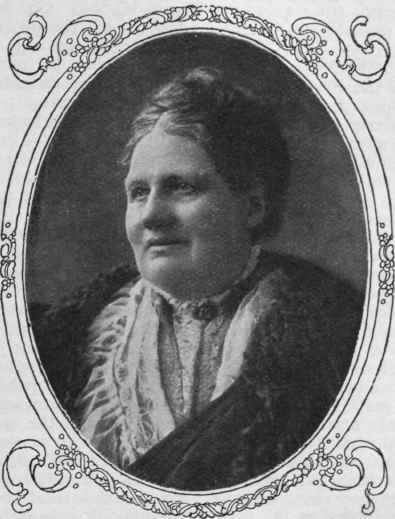
The Sailors' "Mother" photo,g. West Miss Weston, who has won the love and esteem of every member of England's first defence
The success of Miss Weston's Homes is due largely to their excellent design. The first received the same consideration and thought as the immense one standing at Portsmouth to-day. The kitchen was upstairs, connected by lifts and speaking tubes, the large reading-room was on the ground floor behind the coffee bar. At the back of the house was an old coal - shed converted into a small hall, and across the garden were two cottages for the men's sleeping accommodation. Two basement rooms were sufficient for Miss Weston and Miss Wintz to live in until the lack of good air and sunshine forced them to be less unselfish as to their comfort.
By the end of the year 1875 Miss Weston had collected enough money to buy the house, and on May 8, 1876, the Home - the first sailors' Home in the world - was opened. The coffee bar did as good a trade on that first morning as it has done ever since. Miss Weston said afterwards, "You might have walked on the men's heads" as they swarmed into breakfast. It was determined that the Rest was to be strictly teetotal. All subscriptions were to go to the building fund and the charities in connection with the work.
Royal Interest In The Movement
All ranks of sailors - and soldiers, if they wished - might come and go freely, only paying for bed, food, or bath. Everyone was to be admitted while there was room; the sailor who had had a glass too many should have his chance of a bed just the same as the petty officer.
So successful were the first few months that the debt was quite paid off, and fresh subscriptions allowed of extra sleeping accommodation being built behind the house.
When the Rest had been running a few-years, Miss Weston paid a visit to the training-ship H.m.s. Britannia, off Dartmouth. It was commanded by Captain (afterwards Admiral) Fairfax, and two of the cadets were our present King and his brother, the Duke of Clarence. The two Princes had often heard of her from the boys on the ship, and they were glad to have the opportunity of meeting her and visiting the Rest. This early interest which our King then showed in Miss Weston's work has always been maintained.
Continue to:


My Books

