


True Love Stories. Madame Roland, The Beautiful Queen Of The Gironde. Part 3
Description
This section is from "Every Woman's Encyclopaedia". Also available from Amazon: Every Woman's Encyclopaedia.
True Love Stories. Madame Roland, The Beautiful Queen Of The Gironde. Part 3
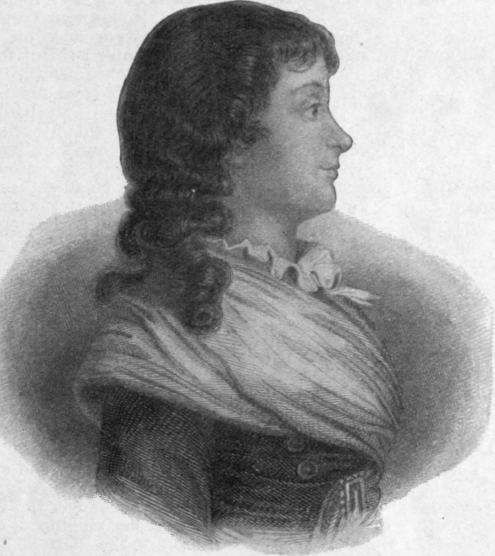
Madame Roland, the beautiful Queen of the Gironde, one of those strange and lovely creatures who lend beauty and romance even to the grim horrors of the French
Revolution his passionate interest in the welfare of humanity. Her views, in fact, were even more violent than her husband's. Nor did she see any danger in her doctrines. To establish a republic became her great ideal in life. And she infected her husband with her own enthusiasm.
In 1791 they came to Paris to fulfil their mission. And much had already happened then. Already one great upheaval had been consummated; centuries of caste and privilege had been swept aside and the monarchy deprived of almost all its ancient rights. But for Madame Roland this was not enough.
A second revolution must be organised. The monarchy must be abolished and a republican government instituted in its place. However great the price, the ultimate result would justify the cost. Madame Roland was all enthusiasm, and her house in Paris became a salon at which assembled all the advanced thinkers of the day. Ultimately this body of men developed into the party known as the "Gironde," pledged to sweep away every vestige of the ancien regime.
But here it is impossible even to trace its activities. It must suffice merely to say that the flame which these honest but misguided patriots patiently had kindled soon burst forth with such fierce intensity that even they could not control it. Indeed, they soon found themselves championing law and order against a party of extremists still more violent, a party of which Robespierre was the will, Danton the brain.
Could these parties but be fused, France might be saved. Danton knew this; he desired earnestly to effect such a fusion. But Madame Roland made it impossible. She hated the man. And, womanlike, she allowed prejudice to govern reason.
But there was also a more subtle cause to Madame Roland's folly. She had fallen in love! And a woman in love is ever better out of politics. Love dims her vision; she can judge no man correctly, save the man she is in love with, and him she idolises.
But Madame Roland in love? Yes, and with a man other than her husband! In the springtime of her life she had seen perfection in the rich maturity of autumn. But autumn soon passes into winter. She had not thought of this; she had not thought of the day when she, still young, still full of the joy of life, would find herself wedded to a man for whom love had lost its meaning.
And now that day had come, and with it a man who stirred her nature in its deepest depths. Then the realisation of her great mistake dawned on her. Francois Buzot, in fact, young, handsome, debonair, an ardent sympathiser with her views, roused all the dormant, elementary passions in her. She loved him. But to Madame Roland love was a something sacred, beautiful not in its fulfilment, but in its innocence and purity. Such, at any rate, was her love for Buzot, a passion made great by the rare restraint that ruled it.
Chaste as an icicle
That's candied by the frost from purest snows
And hangs on Dian's temple.
This must she be. And to the end she remained true to her noblest self.
And Buzot helped her, for he was one of those fine flowers of chivalry which the very horrors of the Revolution seemed to cultivate. Fersen's love for Marie Antoinette, Buzot's for Madame Roland - they are without equal in the history of romance.
But M. Roland - poor man, it wounded him sorely thus to lose his wife's affections. And yet. older than his years, hemmed in on every side with dangers, worn out in body, ill in mind, he still stood with pathetic loyalty beside his wife, brilliant as ever, while she plotted with her lover to frustrate the Terrorists.
Needless to say, their efforts failed. In the end, Robespierre triumphed, and wrought an awful vengeance on his adversaries. A miracle enabled Buzot to escape from Paris. Roland reached safety, thanks mainly to his wife's resource and cunning. But she herself did not escape. She had no wish to. Almost gladly she went to prison. Freedom now had lost its charm for her, the honoured wife of one man, the loved one of another.
"I thank Heaven," she declared to Buzot in a farewell letter, "for having learned to know you, and for having tasted the ineffable happiness of love like our own, a love vulgar natures can never experience.
"Pity me not," she continued; "my execution will reconcile that love to duty. . Beloved, adieu."
Then came that grim November afternoon. Clad all in white, she passed from the prison, and so out into the street. Her fellow-prisoners clamoured round her as she left, begging her blessing, kissing her hands, her frock. Even the hardened gaolers wept. She alone remained unmoved. Proud, beautiful, austere, she stood in the tumbril while it made its way, through seething, brutal crowds, over the Pont Neuf, past the home of her childhood, down the Rue Saint Honore to the Place de la Concorde, then to the Place de la Guillotine.
Unfalteringly she stepped up to the hideous plank. Her courage almost moved the onlookers to pity. For one moment she gazed at the statue facing her. "O Liberte," she cried, "comme on t'a jouee!"
Then the knife fell.
A few days later, lying in a road near Rouen, a labourer found the body of a man. He was quite dead. He had fallen deliberately upon his sword. And fastened to his coat was a piece of paper with these words: "Respect my remains, you who find me lying here. They are the remains of a man who devoted his life to being useful, and who has died as he has lived, virtuous and honest. Not fear, but indignation, brought me from my place of refuge. My wife had been murdered. I did not care to remain longer in a land stained with such crimes."
The body was M. Roland's.
Continue to:


My Books

