


Spring
Description
This section is from the book "The Chronicles Of A Garden: Its Pets And Its Pleasures", by Miss Henrietta Wilson. Also available from Amazon: The Chronicles of a Garden: Its Pets and Its Pleasures.
Spring
"Spring! Summer! Autumn! Of all three,
Whose reign is loveliest there? Oh! is not she who paints the ground, When its frost fetters are unbound.
The fairest of the fair?
"I gaze upon her violet beds, Laburnums golden-tress'd, Her flower-spiked almonds; breathe perfume From lilac and syringa bloom, And cry,; I love Spring best.'"
Mrs Southkv.
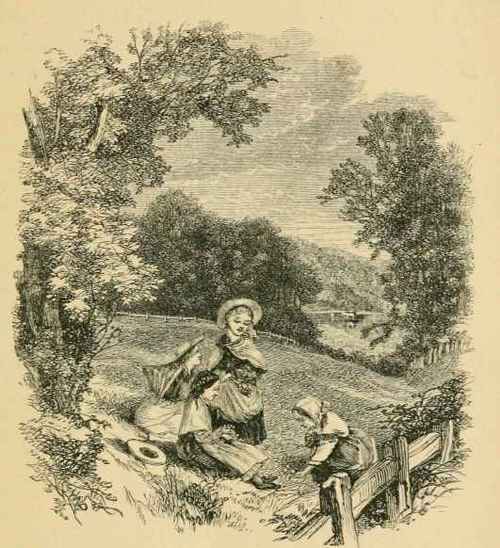
THE pleasures of a garden begin early in the year, long, indeed, before winter has resigned his reign - before one has begun to experience that "Happy, genial influence, Coming one knows not how or whence, Nor whether going," which the first mild air of spring causes to arise in our hearts. Even in the wild, wintry month of January, there are the points of crocuses and snowdrops to be seen, buds of hepatica beginning to form, and a nameless something in the light that tells of coming spring. It is a true old saying no doubt, that "All the months of the year Ban a fair Februeer;" but who that loves a garden does not rejoice in the few mild days sometimes met with in this month - days when the first snowdrop and crocus put out their blossoms, when the first bee is seen, the first warble of the thrush is heard - who can help wishing such weather to continue, or feel otherwise than grieved to find the wholesome severity of frost and snow return upon the newly-awakened earth?
Uncertain and coy as spring is in this country, mild balmy air alternating with sleety showers or boisterous breezes, or worst of all, an east wind of six weeks' duration, still spring does deserve all that poets have written of it, and all that our childhood has felt for it 1
"Dost thou not rejoice When the spring sends forth an awakening voice Through the young woods? Thou dost! And in that birth Of early leaves and flowers, and songs of mirth, Thousands, like thee, find gladness!"
It is curious to feel how the love of gardening awakens from its winter sleep at the first sight of a golden mass of crocuses, or bunch of trembling snowdrops, or the tiny rent in the ground through which the winter aconite thrusts up its bent stem and pretty yellow cup. How instantaneously does the desire start up just to put this bit of the border in order, to rake away the leaves or smooth the clods round this clump, and how pleasant the feeling is of breaking up the soil, crumbly and sweetened by the winter's frost, pausing in the work now and then lest you drive the bee out of the crocus-flower, and gently removing out of the reach of the rake the half torpid specimens of Carabus hortensis that are sure to be disinterred on the first spring days of gardening. Woe betide them if the bright eye of the robin spy them out ere they re-bury themselves for "a little more sleep and a little more slumber." The first day's work in the garden brings the redbreast from the window-sill to the borders in a very short time, and his presence adds another pleasure to the season and its work. Spring flowers are easy of culture, and no garden should be without a profusion of them : as most of them are low growing, they may have the front row of the borders and the edges of the beds dedicated to them, for few of these favourites like to be shifted. Not many sights are gayer and more pleasing than a small garden in spring with bunches of snowdrops, crocuses, yellow white and blue hepaticas, pink and blue dwarf daffodils, grape-hyacinth, and other species of Scilla, and, a little later on in the season, the dog-tooth violet. As all these, with the exception of the hepatica, die down to the root in summer, their places will require to be filled up by low growing annuals sown round them; but the bulbs should be left undisturbed, for it is one of the chief pleasures of spring-to watch for the re-appearance of our old friends, to observe the gradual growth of snowdrop and crocus, from their first appearance above ground as little green points to the swelling and opening of their blossoms; while, on the other hand, the little daffodil, the squills, and the dog-tooth violet surprise us by bursting through the ground, flower and leaf together, almost full blown. Then there are those universal favourites, double daisies, white, red, or pink, set either as borders or in groups, and a very pretty little white saxifrage, (Saxifraga tridactylites,) with foliage like clumps of moss, and every blossom of which "keps its ain drap o' dew," and sparkles in the sun. This last-named plant requires to be kept within bounds, for it spreads rapidly, and never seems to object to rough handling, or to require much root. I have seen it torn away from the surface of the ground in hands full, to reduce it to proper dimensions, and the portions thus rudely treated, stuck in in some shady spot, where they grew and prospered as if they had been lifted and replanted with all the usual ceremony. Another very pretty saxifrage is the little red Saxifraga oppositifolia. It is not common in gardens, and certainly will not submit to such freedoms as the last named. Its native haunt is the summit of lofty mountains, Ben Lawers being one of its habitats, but I have seen it thriving in a Lowland home, and brightening the borders in early spring with its rosy flowers.
" There, cleaving to the ground, it lies With multitude of purple eyes, Spangling a cushion green like moss."
I suspect it is somewhat "dorty;' about taking root at first, or else some fatality attends my own attempts to rear it, but certainly it dies out here, and the only plant I succeeded in establishing was perseveringly pulled up, day after day, by a tame raven, whenever it came into full flower. Perhaps the colour of the blossom attracted him at first; it is a dull flesh-coloured red: then, when replanted, its fading look might make him think there was a worm at the root; but though I shifted it to another part of the garden, he found it out, and fairly persecuted my pretty plant to death, leaving me to "Grieve to find That love for little things, by Fate Is render d vain as love for great."
Continue to:


My Books

