


Exercise XXX. The Study Of Shield And Prong Budding
Description
This section is from the book "Laboratory Manual Of Horticulture", by George W. Hood. Also available from Amazon: Laboratory Manual Of Horticulture.
Exercise XXX. The Study Of Shield And Prong Budding
Material. Bud sticks, stocks of the peach or willow (preferably steamed, if the exercise is practiced in the laboratory).

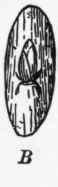

Fig. 19. Shield budding.
A, the stock, showing the longitudinal and the transverse cut; B, the bud removed from the bud stick and ready to be inserted into the stock; C, the stock, showing the bud in position ready for tying
Apparatus. Kama or grafting-cord, budding-knife.
Budding is the operation of applying a single bud, bearing little or no wood, to the surface of the growing wood of the stock. The bud is applied directly to the cambium layer of the stock. It is usually inserted under the bark, but in some forms of budding the bud is used to cover the wound made on the stock. Plants with thin bark and plenty of sap are likely to do better when budded than plants with thick, heavy bark.
Shield Budding
This is the style of budding that is in general use, and the one that is the most often practiced. It is known as shield budding, from the shieldlike shape of the portion of bark bearing the bud. Secure small branches, about three eighths of an inch in diameter, of either the peach or the willow. If the exercise is desired in the winter, the steaming of the wood will be found to loosen the bark so that it will slip. Now hold the branch firmly with the left hand and with the right make a clean, sharp cut, with a budding-knife, through to the wood and one third of the distance around the twig. Now, by another operation, make a straight cut, about one inch in length, at right angles to the one just finished. The two cuts now form a letter T (see Fig. 19). With the budding-knife carefully peel the bark back, down to the wood, thus breaking the cambium layer. Take a bud stick which has previously been procured and, holding it in the left hand, carefully cut a bud from the stick. The bark, including the bud, should be about one inch in length. It should contain as little as possible of the wood of the stick. Now insert the bud into the cut made in the stock, place the bark over the bud, and tie the whole firmly with raffia or grafting-cord.
Make three drawings, four inches in length, to show first, the longitudinal and the cross cut; second, the bud in place; and third, the bud wrapped. Make two natural-size drawings of the bud after it has been removed from the bud stick, the first a front view, showing the shieldlike shape of the portion of the bark; the second a side view, showing the width of the bark bearing the bud. Label all drawings.
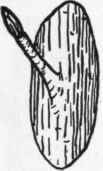
Fig. 20. Prong bud ready to be inserted into the stock.
Prong, Or Twig, Budding
This is a modification of shield budding in which a short prong, or spur is used in the place of a simple bud. The bud is cut in essentially the same manner as for shield budding.
Secure for your bud stick small branches of the walnut tree, or any other tree having short prongs, or spurs. By the same operation as in shield budding remove the prong bud. The incision into which the prong bud is placed is identical with that of the shield bud. Make two drawings, natural size, of the prong bud, showing the front and side views. Label. Discuss.
References
Bailey, "The Nursery Book," pp. 94-107.
Goff, "Principles of Plant Culture," pp. 230-234.
Farmers' Bulletin No. 157, pp. 21-23.
Continue to:


My Books

