


January - First And Second Weeks. Fruit
Description
This section is from the book "The Garden Week By Week Throughout The Year", by Walter P. Wright. Also available from Amazon: The Garden Week by Week Throughout the Year.
January - First And Second Weeks. Fruit
Although fruit trees may be planted theoretically at any time from November to March inclusive, January is rarely a good month for planting. The soil is cold, and perhaps "messy." But pruning may be done, and it is often convenient to do this when the ground is hard with frost, as the soil is not trodden up. The fear that injury may accrue from pruning in frosty weather is baseless. If early fruit is wanted under glass, preparations may be made this month.
Pruning
The correct pruning of the different kinds of fruit trees is a matter of considerable moment to fruit growers. Fruit trees may be divided into two classes:
(1) those which bear on old wood or spurs: (2) those which bear on young wood. Under (1) we have Apples, Apricots, nearly all Cherries, Red and White Currants, Gooseberries, Nuts, Pears, and Plums. Under (2) we have Morello Cherries, Black Currants, Peaches, and Nectarines. Even a beginner in fruit-growing can distinguish between old and young wood. Apart from the fact that the latter grows at the ends or from the sides of the former, it is paler in colour. A "spur" is also easily distinguished on Apples and Pears. It consists of a short, knotty growth, with two or more buds on a mature branch. There is no other growth in any way resembling a spur on either Apples or Pears. The spur might be confused on an Apricot, Cherry, or Plum, because these fruits often develop shoots that are neither "spurs" proper nor "shoots" proper. They are from three to six inches long, and terminate in a plump bud. Gardeners call them "stubs." They do not need any pruning. In addition to learning the differentkindsof growth, beginners should learn to distinguish between shoot buds and fruit buds on the dormant tree, by which I mean the buds which develop stem and leaves when they start growing in spring, and those that produce blossoms. This is an easy matter, as the shoot buds of nearly all fruit trees are thin and pointed, and the fruit buds plump and rounded at the tips. An amateur who is familiar with the characteristic bud can prune much better than one who is not.
Pruning Apples
Those who plant Apples should buy quite young trees, and be satisfied if they get fruit eighteen months after planting. They should order three-year-old trees (the dealer has pruned these as maidens and two-year-olds), and prune back the branches, some to over half their length (Fig. 8). If they plant in autumn, they should do this pruning back at once. If they plant in spring they should do it when the young leaves are unfolding at the tips. The object of the cutting back is to cause basal buds to break into growth, and form new branches. If it were not done, the fresh shoots would come from the tips of the original branches, and would probably be weak and "whippy," so that the tree had a top-heavy look.
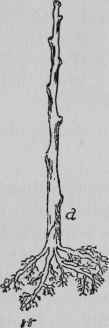
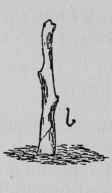
Fig. 6. - Pruning a Nurseryman's Maiden Apple.
a. Tree unpruned. b. Tree pruned.
As a result of the pruning the trees will be likely to push several sturdy branches in the summer after they were planted, in addition to forming fruit buds at the base of the original branches. In the winter a second pruning may be done, but it need not be so severe as the first; in fact, it will suffice if the branches are shortened to half their length. In after years no further cutting back is likely to be needed, because the trees will be well furnished with sufficient strong branches. It must be remembered that cutting back always tends to multiply branches, and it is possible to extend this unduly, with the result that the tree is all wood and no fruit.
From its fifth year onward the winter pruning of Apple trees should consist mainly in thinning out shoots where they are getting too thick, and cutting back the summer side shoots to near the main branches. The grower should aim at a well-furnished, but uncrowded, tree. If his trees have from ten to fifteen main branches that stand quite clear of each other, are free from tangled shoots, and the wood is not too gross, they are sure to bear.
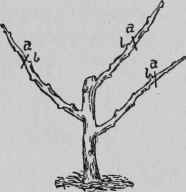
Fig. 7. - Pruning a Nurseryman's Two-Year-Old Apple.
a. Points of pruning.
b. Buds suitable for making leading shoots.

Fig. 8. - Shortening a Three-Year-Old Apple.
a. Branches to be cut hard back. b. All ends of branches to be cut off at the dark lines.
The pruner should always cut as close to a bud as possible without undermining it, and when he is pruning for extension that is, cutting back young trees - he should cut to a shoot bud on the outside of the branch in order that the resulting branch may grow outward instead of inward. Any shoot that grows towards the centre of the tree, and crosses its neighbours, should be cut clean out.
The fruiting of Apple trees is greatly encouraged by summer pruning, which I will deal with in its proper month.
Root pruning is called for in some cases, but it is only appropriate when the tree throws a great deal of summer wood, and does not bloom. These conditions generally go together. If the side shoots of a tree push more than two and a half feet long in one season, there is likely to be a paucity of fruit buds, and root pruning will probably do good. It consists in baring the roots in winter, and cutting through some of them; or, in the case of a young tree, taking it right out of the ground, pruning the strong roots, and replantnig it.

Fig. 9. - Winter Pruning Apples. Right side of Apple tree.
(a) pruned. Left side of Apple tree (b) not pruned.
c. Leading shoots shortened.
d. Side branches pruned.
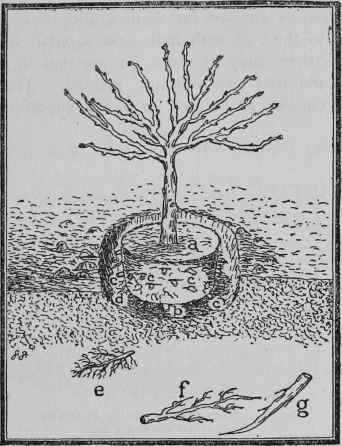
Fig. 10. - Root Pruning.
a. Surface of soil. b. Taproot cut off.
c. Large fibreless roots cut off. d. Fibrous roots not cut.
e. The kind of fibrous roots not to be cut.
f. The kind of large root to be cut. g. The taproot.
Continue to:


My Books

