


62. Plants Poisonous To Eat. Part 2
Description
This section is from the book "Plants And Their Uses - An Introduction To Botany", by Frederick Leroy Sargent. Also available from Amazon: Plants And Their Uses; An Introduction To Botany
62. Plants Poisonous To Eat. Part 2
The bark of various trees and their roots is often chewed by young people, and often serious and sometimes fatal consequences have resulted from mistaking poisonous for harmless kinds. The locust (Fig. 182) and elder (Fig. 183) have proved especially dangerous in this respect.
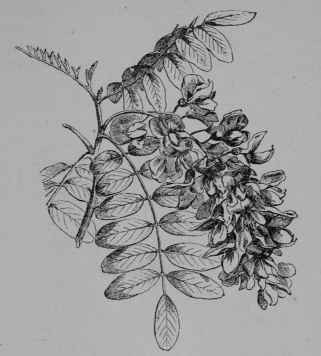
Fig. 182.-Locust (Robinia Pseudacacia, Pulse Family, Leguminosoe). Flowering branch. (Baillon.)-Tree growing 24 m. tall, twigs spiny; flowers white and fragrant; fruit a flat brownish pod. Native home, Eastern North America.
Young shoots of the elder (Fig. 183) eaten as a pickle have also proved poisonous.
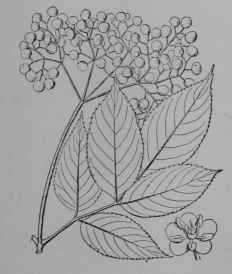
Fig. 183.-Elder (Sambucus canadensis, Honeysuckle Family, Caprifoliacece). Fruiting branch with leaf. Flower. (Britton and Brown.)-Shrub about 1-3 m. tall, leaves nearly smooth; flowers white; fruit deep purple or black. Native home, Eastern North America.
The danger attending the use of the herbage of the pokeweed as a pot-herb has already been noticed. Not infrequently deaths are caused by eating the leaves of poisonous wild plants picked by mistake for the marsh-marigold (Figs. 184, 185), or other spring "greens." The plant which has proved most dangerous in this way is the Indian poke (Fig. 186). Another common herb which has sometimes been eaten for "greens" with fatal results is the jimson-weed (Fig. 187).
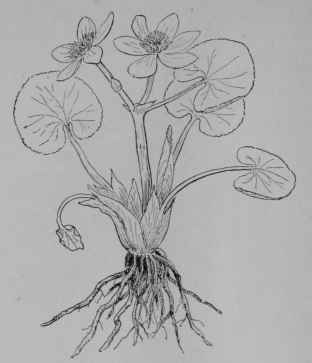
Fig. 184.-Marsh-marigold (Caltha palustris, Crowfoot Family, Ranunculacece). Plant in flower. (Original.)-Perennial herb, growing 30-60 cm. tall; leaves smooth; flowers yellow; fruit dry. Native home, North Temperate regions.
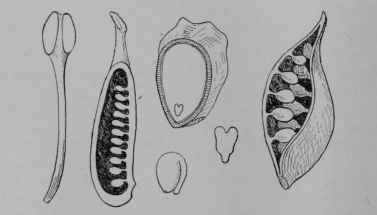
Fig. 185.-Marsh-marigold. Stamen. Pistil, cut vertically. Ovule. Fruit, splitting open to discharge the seeds. Seed, cut vertically. Embryo. (Redrawn from Gray.)
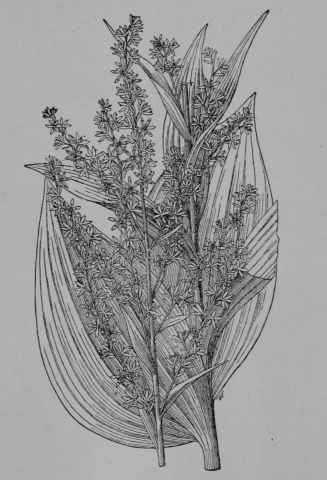
Fig. 186.-Indian Poke (Veratrum viride, Lily Family, Liliaceoe). Upper and middle section of plant, 1/3. (Chesnut.)-Perennial herb about 1-2 m. tall; leaves somewhat hairy; flowers yellowish green; fruit dry. Native home, North America.
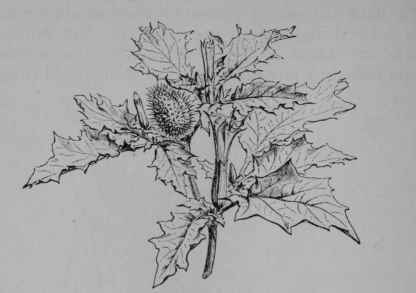
Fig. 187, I.-Jimson-weed (Datura Stramonium, Nightshade Family, Solanaceoe). Flowering and fruiting branch. (Baillon.)-A coarse annual about 1-2 m. tall; stem green; flowers white, heavy-scented, 5-10 cm. long; fruit dry. Native home, Asia (?).
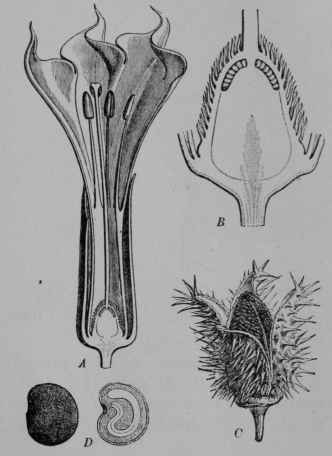
Fig. 187, II.-Jimsonweed. A, flower, cut vertically. B, base of flower cut vertically, enlarged. C, fruit opening to discharge the seeds. D, seed, entire, and cut vertically. (Baillon.)
The propensity which children have for chewing various leaves occasionally leads them into danger. A plant which they need to be warned against is the Indian tobacco (Fig. 188) that grows very commonly in pastures and might prove alluring perhaps on account of its common name. Every part of the plant is highly poisonous. It has been extensively used in quack medicines and has caused a large number of deaths.
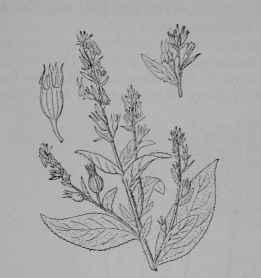
Fig. 188, I.-Indian Tobacco (Lobelia inflata, Bellflower Family, Campanulacece). Flowering top. Tip of flower-cluster. Fruit. (Britton and Brown.)-An annual, growing 1 m. tall or less; leaves hairy; flowers light blue; fruit smooth. Native home, North America.
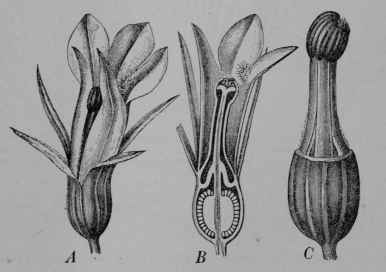
Fig 188 II.-Indian Tobacco. A, flower, entire, 3/1. B, same, cut vertically. C, flower, with calyx and corolla removed. (Luerssen.)
Very young plants of the mountain laurel (Fig. 189) and the sheep laurel (Fig. 190) are especially dangerous from the rather close resemblance of the leaves of small seedlings to wintergreen or checkerberry leaves (see Fig. 147) which children are fond of chewing. The laurels are among our most poisonous plants and have a bad record particularly with reference to domestic animals.
Continue to:


My Books

