


Part 198. The Inorganic Realm - The Plant's Place In Nature
Description
This section is from the book "Plants And Their Uses - An Introduction To Botany", by Frederick Leroy Sargent. Also available from Amazon: Plants And Their Uses; An Introduction To Botany
Part 198. The Inorganic Realm - The Plant's Place In Nature
Part 198. The inorganic realm, it must be admitted, presents many points of fundamental similarity with the organic. Thus volume, mass, resistance, form, and all such physical properties are common to both realms. Furthermore, all the chemical elements found in animals or plants occur also in minerals, and often in the same combinations. Indeed many of the so-called "organic compounds" once supposed to be formed only within living bodies are now made in chemical laboratories by purely artificial means. Oil of wintergreen, indigo, and madder-red are examples we have already had occasion to notice. Many others might be added, including certain sugars.
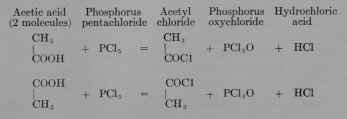
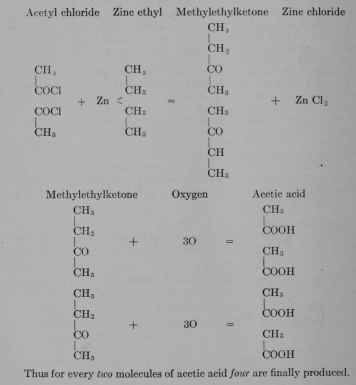
It has been urged that some day it may be possible to manufacture protoplasm artificially, and so break down the distinction now made between living and lifeless things. Certain naturalists go so far as to insist that even to-day no fundamental difference can be found that will absolutely distinguish all organisms from all minerals. They say that life consists merely of the activities of protoplasm, that these are determined solely by the combined properties of the several chemical elements of which protoplasm is composed, and that already it is possible to match every one of the fundamental properties of protoplasm by an artificial process. For example, if a crystal of copper sulphate be thrown into a solution of potassium ferrocyanide there is formed at once, by precipitation around the crystal, a membrane resembling a cell-wall, which presents every appearance of growing as a consequence of pressure from within and fresh precipitation wherever the two solutions come in contact. The artificial cell thus produced may attain considerable size and branch in various ways. Another striking experiment consists in putting a few grams of mercury into a flat-bottomed dish containing a 10% solution of nitric acid in water, and then placing a crystal of bichromate of potash on the bottom about an inch away from the mercury. As the potash salt dissolves it becomes surrounded by a reddish cloud which finally reaches the mercury. Then suddenly the mercury becomes agitated, moves toward the crystal, and envelopes it, very much as certain of the lower animals seize and swallow their prey. Finally, an experiment held to be of profound significance as showing in a mineral substance the very essence of growth and reproduction attended by anabolic and catabolic reactions, consists in adding to a certian quantity of acetic acid, chemically equivalent amounts, successively, of phosphorous pentachloride, zinc ethyl, and oxygen. As a result there is formed double the original amount of acetic acid plus several substances which correspond to the by-products of organic metabolism.1 Here, then, we have what is regarded as the life-history of a molecule, which, so long as it is fed, grows and reproduces as if by fission and excretes much as a bacterium would do.
1 For the benefit of students familiar with organic chemistry the transformations above referred to may be expressed by the following equations copied from Les Problèmes de la Vie, by E. Giglio-Tos. Part I, 1900, pp. 20, 21.
What is the utmost that may be inferred from such experiments? Have lifeless things really been made to act as if they were alive? It is plain that all we have here are simply imitations of isolated vital processes, and not such a coordination of activities as characterizes a living being. Living protoplasm does not merely feed, or grow, or reproduce, or respond to stimuli: it does all these things at once, and more; and its activities are so coordinated as to accomplish definite ends. Nothing which can do all that protoplasm does has ever been manufactured. Supposing it were possible, however, to effect a combination of elements which would imitate all the physical and chemical activities of protoplasm, and all at once; what would that mean? We could be sure that such artificial protoplasts would always do the same thing under the same conditions, and that corresponding parts would always act exactly alike.
But this is precisely what seems not to happen with living protoplasts. No two living things are ever expected to act in the same way in all respects. Furthermore, the theory of . evolution as we have seen, assumes that the halves of a cell divided by fission have individual differences such as we should have no reason to expect in the artificial protoplasts of a single batch. We may well believe that something quite essential to life will always elude the efforts of any man to create a living thing. Nothing that has been done gives any assurance of the possibility of realizing such a dream.
It used to be supposed that the transformation of a lifeless into a living thing might be scientifically demonstrated to occur in the appearance of bacteria in a putrescible substance. The supposed transformation was called spontaneous generation, a term also applied to an older notion widely held that many of the lower forms of life arose spontaneously from dead matter, as maggots in cheese or pond-scum on a stagnant pool. What gave rise to the belief that bacteria were spontaneously generated was that sometimes after a broth had been boiled in a flask and all air excluded, bacteria did appear within a few days. Investigation showed, however, that in these cases spores were present which were able to resist an amount of heat fatal to the plants in their actively dividing condition; and one had only to repeat the boiling till all the plants were killed in order to obtain a broth which could be kept indefinitely. Science was thus left without any proof of spontaneous generation, and it must now be said that so far as we know every organism has had a living parent or parents. The aphorism "All life comes from former life" still remains undisproved.
Continue to:


My Books

