


Part 70. Pseudo Plant Fibers
Description
This section is from the book "Plants And Their Uses - An Introduction To Botany", by Frederick Leroy Sargent. Also available from Amazon: Plants And Their Uses; An Introduction To Botany
Part 70. Pseudo Plant Fibers
Part 70. Pseudo-fibers are commonly more or less spongy masses of material which are most useful as absorbents, although serving also for other purposes. Amadou and peatmoss are good examples.
Amadou or spunk is a felt-like layer of exceedingly slender fibrils found within the rind of a shelf fungus (Fig. 226). Its most important use is as an absorbent in dentistry. Sheets of it resemble chamois or ooze leather and have been used for caps, table mats, etc.
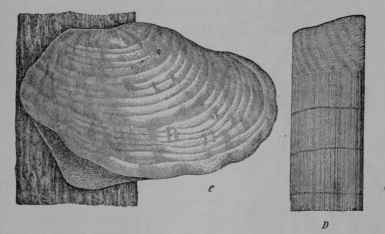
Fig. 226.-Amadou (Fomes fomentarius, Pore-mushroom Family, Polyporacece). C, fruit-body growing out like a bracket from the side of a tree, 1/3. D, The same cut vertically, to show the numerous fine tubes extending downward vertically from which the dust-like spores fall. 2/3. (Hennings.)-Brownish or grayish above, rich brown within. Native home, Eurasia, North America, parasitic on beech, etc.
Peat moss (Fig. 227) is largely used as packing material. It is especially valued by horticulturists on account of the readiness with which masses of the plant absorb and retain moisture.
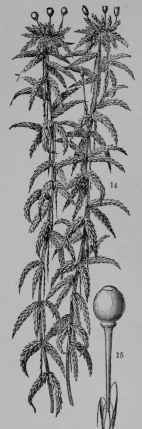
Fig. 227.-Peat-moss (Sphagnum cymbifolium, Peatmoss Family, Sphagnaceoe). 14, plant in fruit, 1/1. 15, spore-case, with lid still in place, 1/5. (Kerner.)- Plants soft, yellowish green or purplish; "fruit" dark brown. Native home, throughout the world in bogs and peat swamps.
Continue to:


My Books

