


Arsenic
Description
This section is from the book "The Materia Medica Of The Hindus", by Udoy Chand Dutt. Also available from Amazon: The Materia Medica Of The Hindus.
Arsenic
Three compounds of arsenic are used in Hindu medicine, namely, arsenious anhydride or white arsenic, red sulphide of arsenic or realgar, and the yellow sulphide or orpiment. Of these three, orpiment and realgar have been used in medicine from a very remote period, and are indigenous to India. Native white arsenic is not met with in India. It is brought from Burmah, China and the Persian gulf. It is not mentioned in the more ancient Sanskrit works, neither in the list of metallic ores, where orpiinent, realgar etc. are described, nor in any prescription for the treatment of diseases. In compilations of a later date, however, such as the Bhavaprakasa, and the Tantras, it is recommended as a powerful medicine for fever, and is now much used as such.

In these later works white arsenic is called by several names, such as

Sankha visha,
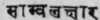
Sάmbala kshara.

Phenάsma bhasma, and

Dάrumuch. None of these terms, however, is to be found in standard lexicons, such as Wilson's Sanskrit-English Dictionary, or Sir Raja Radhakanta Deva's Sabdakalpadruma. Phenάsma bhasma is mentioned by Susruta in his chapter on poisons, where he says, it and haritάla (orpiment) are the two mineral poisons,* but it is very doubtful if Susruta meant any native white arsenic by it. The derivation of the term implies that it was obtained by roasting some sort of stone or ore. White arsenic was obtained artificially in ancient days by roasting orpi-ment (see orpiment), and probably this preparation was called Phenasma bhasma. At a later period imported white arsenic had been used in medicine under the designations of sambalakshάra, dάrumuch, and sankha visha.
Continue to:


My Books

