


Sinapis
Description
This section is from the book "The London Dispensatory", by Anthony Todd Thomson. Also available from Amazon: PDR: Physicians Desk Reference.
Sinapis
2 Spec. Plant Willd. iii. 534. Cl. 15. Ord. 2. Tetradynamia Siliquosa. Nat. ord. Cruciferae. G. 1246. Cal. spreading. Cor. claws erect. Gland between the shorter stamens and pistil, and the longer stamens and calyx. Species 4. S.alba. White mustard. Smith, Flora Brit. 721. Species 5. S. nigra. Common Mustard. Med. Bot. 3d edit. t.151.
Smith, Flora Brit. 722.
1. Sinapis alba.
Officinal. Sinapis albae semina, Edin. Sinapi; semina, Dub. White Mustard-seed.
Syn. Moutarde (F.), Senfsamen (G:), Mosterd (Dutch), Senep(Dan.), Senape bianca (I.), Grano de Mostaza (S.), Mostardeira (Port.), Gortschiza (Russ.), Kabar (Arab.), Sinap (Swed.), Gerzykare (Pol.).
This species of mustard is an indigenous annual plant, growing in the fields and by road sides; but it is also much cultivated for salads, in which the young plant is used. It flowers in June. The root is spindle-shaped; and the stem round, strong, branched, and rising nearly two feet in height. The lower leaves are deeply pinnatifid, the upper sublyreat; and the whole rough, with strong hairs on both sides, toothed, and of a pale green colour. The flowers are in racemes, with striated peduncles : the leaflets of the calyx are linear and green; the petals yellow, with the claws narrow, and the border obovate and entire. The pods are spreading, on almost horizontal peduncles, hispid, roundish, ribbed, swelling where the seeds are placed; and furnished with a very long, ensiform, keeled, greenish, rough beak. The seeds are large for the size of the pod, globular, and of a light yellow or pale yellowish brown colour.
1 Journal de Pharmacie. Fevrier, 1822.
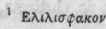
Dioscoridis.
2. Sinapis nigra.1
Officinal. Sinapis, Lond. Sinapis seminum pulvis, Dub, Mustard-seeds. Syn. Moutarde noir (F.), Schwarzer Senfe (G.), Senape (I.), Mostaza nigra
Common mustard is an indigenous annual; and although very plentiful in its wild state, yet it is cultivated for domestic and medicinal purposes. It flowers in June. The root is small. The stem, which rises three or four feet in height, is very much branched and spreading. The leaves are petiolate, variously lobed, and toothed; those nearest to the root being rugged, while those of the stem are smooth; and the uppermost narrow, quite entire, and hanging down, which distinguishes it at first sight from its congeners. The flowers are yellow, and small; the calyx is coloured; the pods erect, parallel to the stem, short, quadrangular, frequently smooth, many-seeded, and furnished with a short quadrangular beak. The seeds are small, globular, and of a deep brown colour.
Although the seeds of these two species of mustard differ in their botanical characters, yet they agree in other respects, the black being only more pungent than the white : they may be indiscriminately employed. The mark, after the oil is expressed, reduced to a fine powder, forms the common condiment every day used at our tables.
Qualities.-These seeds, in the entire state, are nearly inodorous, but when bruised they have a pungent, penetrating odour. Their taste is bitterish, acrid, and biting. Unbruised mustard-seeds, when macerated in boiling water, yield an insipid mucilage, which resides in the skin; but, when bruised, water takes up all their active matter, although it is scarcely imparted to alcohol, They contain a fixed bland oil, which is purgative in large doses. In distillation with water, mustard-seeds yield a very acrid volatile oil, on which their virtues are supposed to depend. It is united in the seed with fecula or starch: its force appears to be obtunded by a soft, insipid, fixed .oil, which can be separated by pressure; and the cake left after the expression is considerably more pungent and acrid than the unpressed seeds. The acrimony is not dissipated by drying, nor by keeping the seeds, and is rendered considerably more active by the addition of vinegar. When the seeds are triturated with lime and a few drops of water, ammonia is plentifully evolved; hence their constituents appear to be starch, mucus, a bland fixed oil, an acrid volatile oil, and an ammoniacal salt.
The researches of several eminent French chymists have ascertained that the active principle of white mustard is not volatile oil, but is a combination of a new substance (sinapisine) and some other product containing sulphur. The active principle of black mustard, however, is a volatile oil, which it is said does not pre-exist in the seed, and requires the presence of water for its developement.

Hippocratis.
Medical properties and uses.-Mustard-seeds are stimulant, emetic, diuretic, and rubefacient. Swallowed whole, they have been thought to be useful in dyspepsia, chlorosis, and the torpid state of the intestines which accompanies paralysis. The bruised seeds, or the powder, to the extent of a large tea-spoonful mixed with water, form an excellent emetic in paralytic, epileptic, and some apoplectic cases, often operating quickly and fully when other emetics fail. In small doses they are found to promote considerably the secretion of urine; and consequently they prove beneficial in dropsies. In these affections, however, perhaps the best mode of exhibiting mustard is in the form of whey, which is made by boiling 3iv. of the bruised seeds in O j. of milk, and straining to separate the curd. A fourth part of this quantity may be taken for a dose three times a day. But mustard is most frequently employed as an external remedy. The flour rubbed on the skin, or applied in the form of a cataplasm, made with crumbs of bread and water1, soon excites a sense of pain, considerable inflammation, and sometimes vesication. The volatile oil is a violent rubefacient.
In the form of cataplasm, mustard has been found serviceable in paralysis; and, when applied to the soles of the feet, in the delirium of typhus, and in comatose affections. It is proper to limit the period of the application of the cataplasm within the time of vesication, as where this occurs it is apt to run on to ulceration and gangrene.
1 Vinegar is usually ordered; but experiments have proved that water developes the acrimony of mustard better than vinegar.
Officinal preparations.- Cataplasma Sinapis, L. D. Emplastrum Meloes comp., E.
Continue to:


My Books

