


Alcohol Pharmacodynamics
Description
This section is from the book "Laboratory Manual Of Pharmacology", by A. D. Bush. Also available from Amazon: Laboratory manual of pharmacology.
Alcohol Pharmacodynamics
1. Pith the brain of a frog. Obtain normal heart tracings; bathe heart with 20°/o Alcohol, and note results.
2. Obtain normal heart tracings from a pithed frog. Administer by stomach 1 mil 20% Alcohol. Continue tracings on both slow and fast drums.
3. Repeat Experiment No. 2, except to administer drug by thigh lymph sac.
4. In the anterior lymph sac of one frog inject 2 mils 25% Alcohol. Give the same dose by stomach to another frog of equal weight and condition. What results ? Observe again next day.
5. Having secured the normals of a rabbit, administer by stomach 5 mils x kg. 40% Alcohol, and note variations produced on all systems, including temperature. When the animal becomes stupefied, inject hypodermically 0.3 Gm. Caffeine.
6. Anaesthetize a cat or dog. Obtain the usual mechanical registrations of normals; also note temperature. Into the jugular vein, at the rate of 1 mil a minute, run 25% Alcohol, using warm Locke's solution for diluent, discontinuing the ether. Continue administration until animal dies. Endeavor to determine from your tracings at what systemic point the drug exerts its toxic effect. Compute amount of Alcohol used.
7. Select two subjects, one short and stout, the other tall and thin. Obtain normals of all the systems as usual. Test their reaction times to touch, hearing, and sight; test their mental activity with the antonym test, the imagery test, and the multiplication test; test strength with the grip dynamometer. Administer 20 mils French brandy, well diluted. Continue observations for two hours, taking the extra tests every half-hour. (This test is somewhat vitiated by the subject's anticipation. How might this be remedied?)
8. Since Alcohol has no advantageous utility in internal medicine, hospital observation will be available in the dipsomaniac wards only. Here study should be made of the pharmacodynamic reactions which may be registerable in both acute and chronic alcoholism.
9. Summarize and criticise three recent articles on the use of Alcohol in medicine, giving in each case your authority for position maintained.
Experiment No. 1. Heart tracings, with local application of drug. Frog:
Experiment No. 2. Heart tracings, with drug by stomach. Frog:
Experiment No. 3. Cardiac tracings, with drug by lymph sac. Frog:
Effect of drug by stomach and by lymph sac. Frogs:
Frog No. 1, stomach | Frog No. 2, lymph sac | |||||||
Norm. | 20' | 40' | 60' | Norm. | 20' | 40' | 60' | |
Swimm. reflex | ||||||||
Gen'l. reflex | ||||||||
Activity | ||||||||
Appearance next day | ||||||||
Experiment No. 5. Effect on rabbit of internal administration of drug:
Experiment No. 6. Kymograph records of effect on:
Experiment No. 7. Report on two men: A, short man; B, tall man:
Normal | After 30' | After 60' | After 90' | After 2 hours | ||||||
A | B | A | B | A | B | A | B | A | B | |
AEsthesia | ||||||||||
React. Sight | ||||||||||
Sound | ||||||||||
Touch | ||||||||||
Mens, Antonyms | ||||||||||
Imagery | ||||||||||
Multiplication | ||||||||||
Dynamometer | ||||||||||
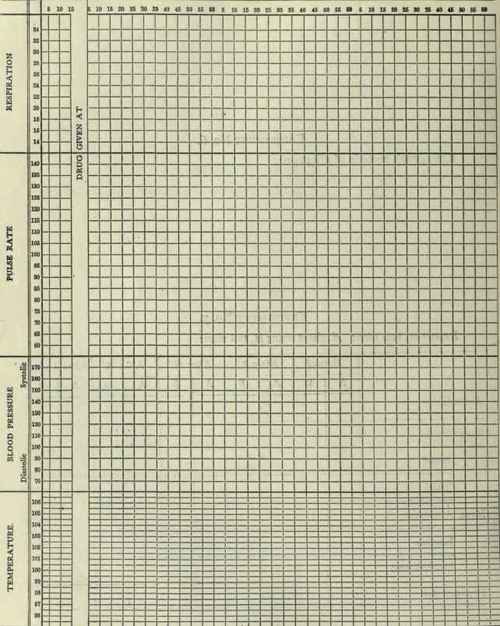
Subject's initials or No....................................................--------- Date........________________________________
Age.................Sex______Height...............Weight..........____ Medicine .....................-----------------------------------
Condition..........................................................................._________ Dose___________________________________
Thermometer................................................................................. How administered................-------------------------
Barometer........................................................_____............................. Remarks.....................................................................--------
Relative humidity..........................................._______________ Reporter......................................----------------...............
Experiment No. 8. Hospital reports. Reports concerning acute alcoholism:
Respiration | Heart-rate | Blood-pressure | |||||||||||||||
Hour of observation | |||||||||||||||||
Case | Age | 3rd | 6th | 9th | 12th | 3rd | 6th | 9th | 12th | 3rd | 6th | 9th | 12th | ||||
I | S | D | S | D | S | D | S | D | |||||||||
II | |||||||||||||||||
III | |||||||||||||||||
IV | |||||||||||||||||
V | |||||||||||||||||
Reports concerning chronic alcoholism:
Respiration | Heart-rate | Blood-pressure | |||||||||||||||
Day of observation | |||||||||||||||||
Case | Age | 2nd | 4th | 6th | 8th | 2nd | 4th | 6th | 8th | 2nd | 4th | 6th | 8th | ||||
I | S | D | S | D | S | D | S | D | |||||||||
II | |||||||||||||||||
III | |||||||||||||||||
IV | - | - | |||||||||||||||
V | |||||||||||||||||
Experiment No. 9. Summary and criticism of arguments anent Alcohol:
Continue to:


My Books

