


Glycerinum
Description
This section is from the book "Laboratory Manual Of Pharmacology", by A. D. Bush. Also available from Amazon: Laboratory manual of pharmacology.
Glycerinum
Glycerin, or Glycerol, is a trihydric alcohol obtained by hydrolysis of vegetable or animal fats, or fixed oils, and purified by distillation.
Properties:
Appearance ......................................................................................................................................... | Effect of exposure to air............................................................ |
Color ....................................................................................................................... | Miscibility and reaction: |
Odor ................................................................ | H20...................................................................................................... |
Taste ............................................................................ | C2H5OH......................................................................................... |
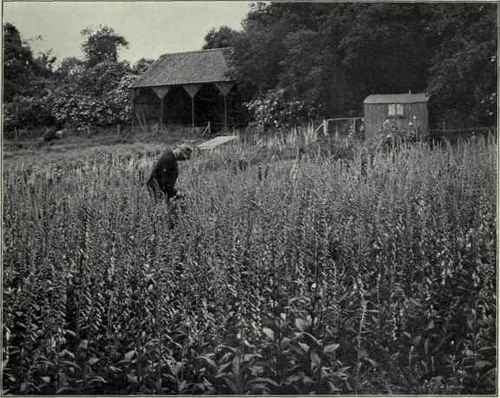
By permission of Burroughs Wellcome Co.
Digitalis In Flower (Digitalis Purpurea).
Incompatibilities: To some Glycerin add AgN03, T. S....................................................................................... K2MnO4, T. S..............................................................................
Glycerin forms an explosive compound with con. HNO3, or when triturated with any dry, quickly-oxidizing substances.
Aside from its great utility as a solvent, Glycerin is used chiefly for its emollient and extractive properties.
Official preparations are: Glycerinated Gelatin, Glycerin Suppositories, and Gly-cerites of Tannic Acid, Starch, Boroglycerin, Hydrastis, and Phenol.
Continue to:


My Books

