


Acetphenetidinum - Acetphenetidini - Acetphenetidin. U. S. P
Description
This section is from the book "A Text-Book Of Materia Medica, Pharmacology And Therapeutics", by George F. Butler. Also available from Amazon: A text-book of materia medica, pharmacology and therapeutics.
Acetphenetidinum - Acetphenetidini - Acetphenetidin. U. S. P
(Phenacetin.)
Description. - The derivation of acetphenetidin is shown by the following formulas:

Para-amidophenol.
Para-phenetidin (Paraamido-phenetol).
Acet-paraphenetidin (phenacetin).
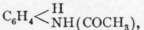
It may be regarded as acetanilide, in which one hydrogen atom is replaced by the ethoxy group (OC2H5). It occurs as white, glistening, crystalline scales, or fine crystalline powder, odorless and tasteless. It is slightly soluble in water (1: 925), much more so in boiling water (1: 70), and still more so in alcohol (1: 12). It is frequently adulterated with acetanilide, which may be recognized by the pharmacopceial test.
Incompatibility. - Incompatible with phenol, chloral hydrate, iodine, salicylic acid, and oxidizing agents.
Dose. - Average dose, 7 1/2 grains (0.500 Gm. =500 milligrammes), U. S. P.
Physiological Action. - Phenacetin differs from acetanilid only in the greater slowness of its action.
It is a distinct diuretic, but not so active as acetanilid. When large doses have been taken the urine is dark-yellow in color and gives the reaction for sugar.
As an antipyretic phenacetin is slower in its action than acetanilid, this slowness of action thus rendering it somewhat safer; nor is it so powerful as an analgesic and hypnotic.
Therapeutics. - Phenacetin is given in the same class of diseases as acetanilid.
Contraindications. - The same as for acetanilid.
Administration. - The drug may be dispensed in powders, pills, capsules, tablets, or suspended in mucilaginous drinks.
Continue to:


My Books

