


Anjesthesin
Description
This section is from the book "A Text-Book Of Materia Medica, Pharmacology And Therapeutics", by George F. Butler. Also available from Amazon: A text-book of materia medica, pharmacology and therapeutics.
Anjesthesin
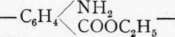
ethyl para-amido-benzoate, is a similar body oft like properties with the same general indications.
Stovaine is a recent (1903) addition to this group. It is a derivative of tertiary amylic alcohol; it crystallizes in little brilliant flakes, resembling cocaine. Its action in some instances is just as efficient as cocaine; in others nearly so. It is most certainly much less toxic, and therefore can be given in larger doses if required.
The following salts of cocaine have been manufactured and are used for much the same purposes as the hydrochloride and in the same dosage: Cocaine aluminium citrate, sulphate, borate, cantharidate, lactate, nitrate, phenate4 saccharate, salicylate, and stearate. Cocapyrine is a mixture of cocaine and antipyrine, 1: 100.
Contraindications. - No special or distinct contraindication to its use exists. In diseases of the kidneys with diminished urinary flow it should be cautiously administered, lest total anuria ensues. With subjects suffering from weak or diseased heart, caution is to be used, as collapse has been frequently noted.
Administration. - For hypodermic use, solutions of from 2 to 5 per cent. are generally employed.
It should be noted that children and females require smaller doses of the drug.
Itv is altogether possible that many of the coca wines on the market contain varying quantities of cocaine. The reckless and indiscriminate prescription of these preparations, therefore, is liable to induce the cocaine habit. It is questionable, indeed, whether the administration of cocaine with a view to curing the intemperate use of opium, alcohol, or tobacco is wise. It frequently happens that patients thus treated lose their craving for the latter drugs only to acquire an inordinate appetite for cocaine, which, as has been shown, is possibly as dangerous as either of them, in its physical and moral effects.
Continue to:


My Books

