


Class I. Cereals
Description
This section is from the book "Nutrition And Dietetics", by Winfield S. Hall. Also available from Amazon: Nutrition And Dietetics.
Class I. Cereals
Cereals are the seed of cultivated grasses. This name dates back to mythological times when the goddess Ceres is supposed to have been first to cultivate these grasses and to gather their seeds for food. Among the cereals, wheat, rice, corn, rye, oats, and barley are the most important, and are named here in the order of their importance. As a rule, these grains are ground into meal or flour. However, rice and barley are usually found in the market hulled, though rice flour and barley meal are also used to a limited extent.
Wheat
Wheat is the most widely used cereal in America and Europe. While it is sometimes used unground, it is used in vastly greater proportions ground into flour. The old process of milling flour was to grind it between two stones, the lower stone being fixed and the upper stone rotating about its axis. The wheat berries coming between these stones from the hopper were crushed into a fine powder, and this, through a process of sifting and bolting through fine sieves and bolting cloth, was divided into bran, middlings, and white flour. The bran and middlings represented no small part of the nutritious portion of the wheat, particularly the gluten. When the ground wheat was not separated by the bolting process it was called graham flour. Real graham bread should be made from such flour, rather than from any preparation that is being made by the roller process.
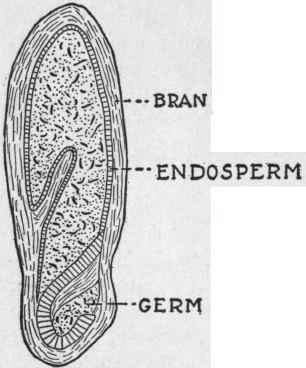
Fig. 2. - Wheat Grain (longitudinal section).
Table V. - Cereals
The modern milling of wheat is done by crushing the dried, clean berry between steel rollers. This roller process has two distinct advantages over the stone process: First, it separates the gluten layer completely from the bran or epidermis and crushes it so fine that it passes directly into flour. For that reason, the white flour of the roller process contains a larger portion of nutrient, particularly of nitrogenous nutrient, than does the white flour of the stone process. The second advantage of this process is that it facilitates the preparation of a "whole wheat flour," which contains absolutely everything within the epidermis of the wheat berry. It contains the whole gluten, it contains the germ with its rich proteins and oils, it contains all the salts and all the starches. This whole wheat flour is the most perfect cereal product that the ingenuity of man has devised. From it breads and biscuits, and crackers, cakes, and pastries in great variety may be made.
Water. Per Cent. | Protein. Per Cent. | Fat. Per Cent. | Ash. Per Cent. | |||
Starch, etc. Per Cent. | Crude Fiber. Per Cent. | |||||
Wheat.................. | 10.4 | 12.1 | 2.1 | 71.6 | 1.8 | 1.9 |
Rice.................... | 12.4 | 7.4 | 0.4 | 79.2 | 0.2 | 0 4 |
Oats.................... | 11.0 | 11.8 | 5.0 | 59.7 | 9.5 | 3.0 |
Rye.................... | 11.6 | 10.6 | 1.7 | 72.0 | 1.7 | 1.9 |
Breads and Crackers: | ||||||
Wheat bread........... | 32.5 | 8.8 | 1.9 | 55.8 | 1 0 | |
Graham bread......... | 34.2 | 9.5 | 1.4 | 53.3 | 1 6 | |
Rye bread............. | 30.0 | 3.4 | 0.5 | 59.7 | 1.4 | |
Soda crackers...... | 8.0 | 10.3 | 9.4 | 70.5 | 1.8 | |
Graham crackers....... | 5.0 | 9.8 | 13.5 | 69.7 | 2.0 | |
Oatmeal crackers.... | 4.9 | 10.4 | 13.7 | 69.6 | 1.4 | |
Oyster crackers...... | 3.8 | 11.3 | 4.8 | 77.5 | 2.6 | |
Macaroni.............. | 13.1 | 9.0 | 0.3 | 76.8 | 0.8 | |
Flours and Meals: | ||||||
Flour, wheat........... | 12.5 | 11.0 | 1.0 | 74.9 | 0.5 | |
Corn meal............. | 15.0 | 9.2 | 3.8 | 70.6 | 1.4 | |
Oatmeal............... | 7.6 | 15.1 | 7.1 | 68.2 | 2.0 | |
In recent years a large number of wheat preparations have been put upon the market to be used as breakfast foods. These preparations, such as vitose, cream of wheat, Pettijohn's breakfast food, wheatlet, etc., are all wholesome and highly nutritious. No one of these preparations can be said to possess distinct advantages over any of the others. They all require cooking before they are served. The time required for this cooking should be not less than three quarters of an hour, preferably two or three hours. They should be cooked in a double boiler. However, an even better method than this is the "fireless cooker "; stirring the preparation into boiling water in the proportions indicated in the recipe, one maintains the mixture at the temperature of active boiling for a period of about ten minutes, then places it in the fireless cooker, where it remains for eight to twelve hours - i. e., from evening until the next morning. When the lid is removed in the morning it will be found to be smoking hot and very thoroughly cooked. When these preparations are thus thoroughly cooked and thoroughly masticated they are most wholesome and palatable, and may well make an important part of the menu.
There is probably only one criticism to be directed against cereal breakfast foods prepared in this way, and that is that they require no work on the part of the teeth. Even if one goes through the motions of chewing, which is really difficult in case of a thoroughly cooked cereal, still, the soft food affords no resistance to the teeth. As a result of this eating of soft foods, the teeth may and probably will enter into early decay. Dentists report a great prevalence of tooth decay and degeneration due, without doubt, to the general use of soft-cooked breakfast food. At every breakfast where these boiled cereals make an important part of the meal there should also be served some hard resistant food, like dry toast, which gives the teeth the required exercise.
Rice
This cereal is next to wheat used more widely for food than any other cereal; especially is it the staple cereal in southern and eastern Asia, where hundreds of millions of people depend upon it as the chief source of their starchy foods. Rice is grown in low alluvial plains, and requires in the early part of its growth that the field on which it is growing be actually flooded with water. This requirement of the growing rice confines its production to limited districts. The freshly gathered rice has a brownish coat that sticks to the kernel. This coat being altogether indigestible and chaffy in its consistency must be removed from the rice grain in order to make that edible for the human subject. As rice appears in the market, then, it consists of the hulled berries of the cereal. Rarely it is milled and made into flour or meal, but as rice flour contains only a very small percentage of gluten it does not respond to yeast or baking powders, and is therefore not a bread flour. As a rule, rice prepared for the table is simply boiled. When this is properly done the rice grains are cooked soft throughout, but retain their form.
In Europe and America rice is used very largely in desserts and side dishes, its large proportion of starch and small proportion of protein probably accounting for its place in the dietary.
Corn
Indian corn or maize is a cereal peculiar to America, and very widely used throughout this country. As a rule, it is used in the form of a rather coarse meal, seldom as a bolted flour, its shortcomings as a flour for leavened bread being similar to those of rice, and due to its lack of gluten. Like rice, the corn has a rather tough, scaly epidermis. Whenever the corn is used as whole grains its epidermis must be removed. This "hulled" corn is known in the market as hominy. In the use of corn in the form of meal the hull is ground with the berry, and in many meals it is not removed by a sifting or bolting process. However, the quality of the meal is improved by the removal of the hull, unless this is very finely ground. Corn meal may be used as a cereal breakfast food, not uncommonly used in the so-called corn-meal mush, though it is more widely used in the various forms of corn bread and corn muffins. In large districts in the Southern States corn is almost the only cereal food used.
Continue to:


My Books

