


Picture-Frames
Description
This section is from the book "The Art Of Decoration", by H. R. Haweis. Also available from Amazon: The Art Of Decoration.
Picture-Frames
While on the subject of frames a few further suggestions may be useful. The frames that we allot to pictures even of high merit are sometimes most gaudy and destructive. Few persons consider how completely the frame forms part of the coup d'ceil as the eye encounters a picture, and how jarring appears either an obtrusive, newly-gilt margin around a very dark old painting, or a showy frame around one whose charm lies in its pallid delicacy of colouring. A frame covered with a minute and wearying pattern in stucco too often supports a subject full of large figures, and a 'bold' design as frequently effaces a landscape. Among artists, Mr. J. M. Whistler and Mr. Alma Tadema were among the first to give intelligent attention to their own frames. A stroll through the Pitti Palace shows us that during the Renascence there was constantly some intentional connection between a picture and its frame, as there was between a mirror and its mount. The larger pictures, especially those representing life-size men and women, have invariably frames at least a foot in width and in depth. The Madonna della Seggiola of course has much more; and in most of them the frame is a well-considered setting with appropriate ornaments.
In one, Schiavone's 'Cain and Abel' (Pitti Palace, No. 152),this idea is carried almost too far, the frame appearing almost to echo the subject. The upper part half indicates a fierce hawk-like or owl-like head - like the dream of a bird of prey about to pounce - which admirably suits the story; and that this notion is not quite fanciful we may reason from analogy.

Fig. 44. - ' Empire ' mirror.
For instance, in No. 427, we find fishes suggested in just such a vague manner by the scrolls of the rather violent pattern; and an owl's head is similarly formed at the junction of the fish-heads, in such a way as that you may see it or not see it. In No. 487 this idea has been seized and carried to excess; very definite fishes are carved in heavy relief, projecting six and a half inches from the wall, and form a quite inappropriate mount. This excess of elaboration in frames seems to have followed the general bent of decaying art. In No. 429 dragons form the corners to a frame for a Carlo Dolci quite the reverse of fierce. There are frames solid, and frames of dainty open-work; frames which seem to suck in, and curl round, the picture, and others which, equally heavy and broad, project the picture forward and retreat to the wall. There are frames which are obtrusive without deserving scrutiny, and others which are real works of art in their poetic design and dainty finish without being obtrusive. Of the latter kind a very pretty one exists in the Uffizj Gallery, just within the door of the room which leads out of the Tribune to the right hand, all leaves with cupids nestling in them. I myself possess as fine a one as I have ever seen, small, carved in oak, temp.
Hen. VIII, early Renascence, representing a vine with its small young fruit, which, being similar in colour to the leaf, are rightiy represented all in one colour, the conventional gold. This is a most unobtrusive, but most perfectly graceful and appropriate, setting for the portrait of a beautiful woman.
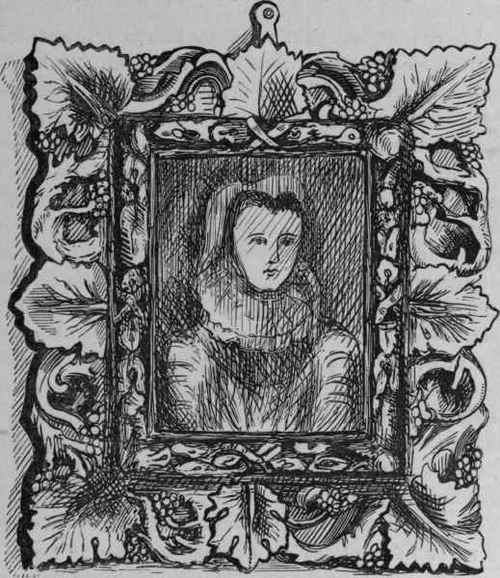
Fig. 45. - Early Renascence frame belonging to Rev. H. R. Haweis.
Continue to:


My Books

