


Furniture Balance
Description
This section is from the book "The Practical Book Of Furnishing The Small House And Apartment", by Edward Stratton Holloway. Also available from Amazon: The Practical Book Of Furnishing The Small House & Apartment.
Furniture Balance
In the arrangement of furniture Balance must also be considered - we must see that all the tall and heavy furniture does not gravitate to one portion or to one side of the room but that the large and small pieces are agreeably disposed. As a rule when the notable objects have been placed the smaller ones readily find their position.
The writer has elsewhere defined balance as an equal weight of effect. This depends upon colour and value (lightness or darkness) as well as bulk. When use dictates the placing of an object of insufficient size in opposition to another object which it should balance, the first may be built up.
As there is no better way of conveying meaning than by practical demonstration, the reader is asked to refer to Plate 2 for an examplification of both principles. Here the table to the left of the window has not of itself been of sufficient height to balance the piano and picture on the right. Its height has therefore been added to by the tapestry hanging above. The top of the hanging is placed at precisely the same height as the top of the picture over the piano: the objects on the two sides of the window are of similar general value and the balance is correct. Furthermore, that balance is extended to the adjoining wall. The panel of Japanese prints is exactly centred as to height on the mirror to the right. It will also be seen that the objects properly fill without crowding the wall-spaces and that they are in right relation to the lines of painted panelling. These things constitute correct balance. If the table were painted a pale tint and a light-toned drapery were substituted for the tapestry, it is evident that these furnishings would not then have sufficient "weight of effect" to balance those on the other side of the window.
Balance is of immense value in giving repose, the sense of restfulness, to the home. We saw its effect in the realm of colour when due harmony had been secured, and we now find it equally necessary here as a basis for furnishing.
It will be plain that in the interior referred to a considerable interest has also been gained by the objects on the two sides of the window being diverse, even though balancing. Strictly formal balance is that in which both sides are alike - as, for instance, when two precisely matching chairs are situated on opposing sides of a table at exactly the same distances from that object. But, supposing one of these chairs to be rather lighter in effect than the other (smaller in size, or more slenderly constructed, or paler in its colouring) what shall then be done? At equal distances from the table they do not balance: the lighter must be given greater leverage, and so it is moved a few inches farther from the central object, when it will be found to have the same weight of effect as the other chair and perfect balance will result.
If the difference between the chairs is great a substitution must be made for the one or the other. If it is desired to place a small book-case on one side of a central object and a large chair on the other, and they balance well except as to height, then a small picture may be hung over the chair to equalise them in this respect.

PLATE 10. A HALL WITH ITALIAN RENAISSANCE FURNITURE.
Caenstone wall, old Red Damask Portière.
Chamberlin Dodds, Decorator, New York.
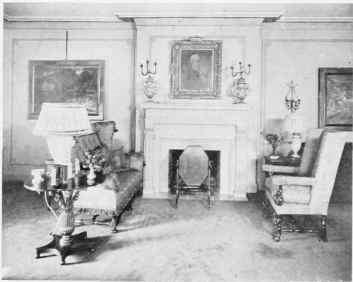
PLATE 10. A LIVING-ROOM IN ENGLISH STYLE.
Walls, putty colour; Carpet, taupe; Sofa and Wing Chair in Damask.
Chamberlin Dodds, Decorator, New York.
Furnishings In Which The Principles Of Form Have Been Properly Observed
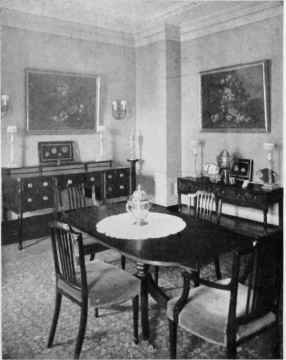
PLATE 11. DINING-ROOM WITH PALE GREEN WALLS IN A PARK AVENUE NEW YORK, APARTMENT.
Formal balance between two walls.
Neo-Classic Furniture.
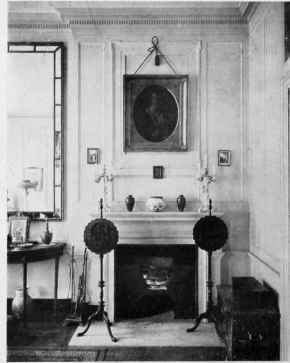
PLATE 11. MANTEL IN A NEW YORK CITY HOUSE.
Formal Balance in Accessories Glass-framed Venetian Mirror.
William Lawrence Bottomley, Architect.
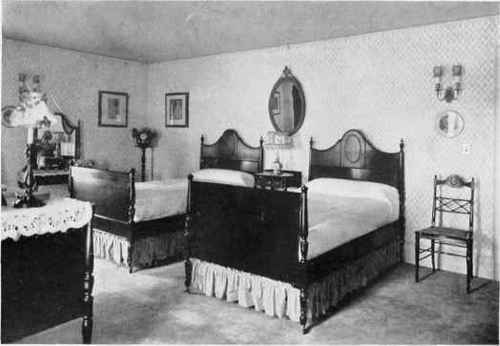
PLATE 12. A GUEST-CHAMBER WITH Modern FURNITURE OF SHERATON TYPE.
The furniture is well placed.
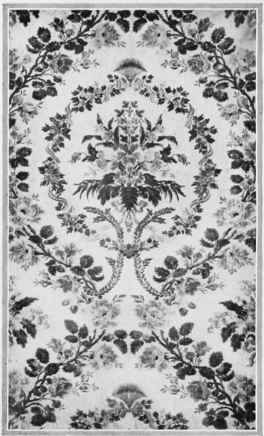
PLATE 13. NATURALISTIC ORNAMENT OF THE BEST CHARACTER.
Heavy écru silk with raised patttern in silk velvet in moss-green and rose.
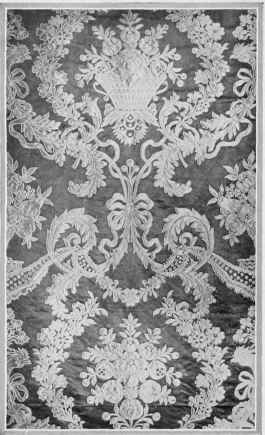
PLATE 13. COMBINATION OF NATURALISTIC AND CONVENTIONAL MOTlFS.
ELABORATE TEXTILES OF THE HIGHEST CLASS.
Rose satin with design in ashes-of-rose in an applique effect.
By Courtesy of Wm. Baumgarten & Co., Inc., Decorators. New York.
Similarly length may be balanced as well as height. One chair will not balance a settee on the opposite side of a central object but two chairs will - these being placed so that the total length of the chairs and space between them equals or slightly exceeds that of the settee. All these matters are capable of being worked out by mathematics but this is needless, and where furnishings are diverse but not greatly diverse a little "juggling" of a few inches in one direction or the other and a careful observation of the effect will secure an adequate balance.
Where there is no central object, furniture is disposed at equal distances from an imaginary central line, as the two bedsteads in Plate 12. The space outside the objects should be greater than that between them, as here, so as to avoid stiffness of effect.
Stiffness will be felt if a room contains too great an amount of strictly formal balance; so some variation is often advisable - note the agreeable composition of small objects on the sideboard in Plate 70. On the other hand much formality in certain directions often adds a desirable quaint-ness, as with the orderly row of little flower-pots in Plate 59A.
A study of the many illustrations given will be of aid in the solving of one's own problems in securing balance.
Each wall should not only look well by itself but in conjunction with that next to it, and by turning diagonally and looking toward the corners it will readily be seen whether this has been accomplished. The appearance from each entrance to the room should also be attractive. Engaging vistas from one room to another are especially pleasing and are well worth effort.
Continue to:


My Books

