


The Renaissance. Part 6
Description
This section is from the book "Dutch And Flemish Furniture", by Esther Singleton. Also available from Amazon: Dutch and Flemish Furniture.
The Renaissance. Part 6
Some of the terminal figures on the ends of the stalls are very fine, particularly Matthew, Luke, David, Solomon and Daniel in the lions' den. The heads and busts that are developed out of the foliage are of exceptional interest. The misericordes (seats) are decorated with humorous and Biblical scenes. The luxuriant foliage that forms no little part of the ornamentation is in the style of the first Italian Renaissance and in many places is mingled with musical instruments, heads, fruits, figurines, children and coats-of-arms.
Turween is supposed to have been born in Dordrecht, in 1511. He died in 1598. For other Gothic carved work during the early Renaissance the student may go to the Groote Kerk of Haarlem. This is also especially interesting on account of its transitional features; for while the magnificent choir-stalls and rood-screen still retain the Gothic character (the screen was erected in 1540 by Diderik Sybrandszoon, of Mechlin, and bears several municipal coats-of-arms), the side railings of the inner choir are in the style of the early Renaissance. A remarkable example of Mediaeval carved oak, called the "H.Geest Stoel," is also preserved in this church.
The church of St. Nicolas, at Dixmuiden, also contains a splendid rood-loft carved in the richest Flamboyant style, dating from about 1520.
The Gothic period, therefore, practically ended at the close of the fifteenth century. The Renaissance restored Greek and Latin taste. In furniture, it followed the forms and ornaments of architecture, as the Gothic had done; so that now, instead of pointed arches with trefoils, quatrefoils, or flamboyant tracery, we have pediments and various Orders with their columns, capitals, arcades and superpositions of colonnades.
After the transitional period, during which the Decorative Arts freed themselves from the domination of ecclesiastical influence and acquired individuality of form, we find a rapid development during the sixteenth century. The Renaissance quickly passed through its stages of growth in the styles of Louis XII and Francois I, and burst into full bloom in the Henri II style.
Before the invasion of the new school, Gothic tracery quickly disappears; and with all the wealth of decoration, cartouches, mascarons of gods, heroes, nymphs, etc., in order to produce the proper effect and the correct massing of details, it becomes necessary to submit furniture to the rules of Classic architecture; and furniture, therefore, breaks with all traditions of the past and becomes a special art. New tools, new methods, and a new technique are invented. Walnut becomes the fashionable wood, and to follow the taste of the day the Flemings forsake their much-loved oak. Nearly all the great pieces of the Burgundian school of this period are carved in this wood.
After slight hesitation, Flanders welcomed the Renaissance with open arms. Like the Venetian, the Fleming was artistic and commercial at the same time, and thoroughly understood how to turn his talents into profit. He scented a new fashion as soon as it made its appearance, assimilated it and added a touch or two of his own. The Renaissance found in Flanders, moreover, as we have seen, a ground already prepared by the princes of the House of Burgundy. Skilful engravers provided the studios with models and designs, wood-carvers multiplied to embellish the palace and church town-halls and guild-houses, castle of the lord and home of the burgher and merchant.
The great artists of the period were extraordinarily versatile: they were architects, sculptors, painters, glass-painters, goldsmiths, designers for furniture and triumphal arches, machinists, historians, engravers, numismatologists, and sometimes geographers and poets all at once; and a talent for art always seemed to run through all the members of one family through several generations, including both men and women.
They had great intellects that were equal to every conception, and their skilful hands were capable of the most minute as well as the most important work. If the Renaissance produced so many original works, the cause must be sought in the complete education of the masters of this remarkable period. The artists of the Low Countries knew how to assimilate in the most complete fashion the artistic principles of other schools; but although drawing inspiration from foreign sources they knew how to imprint on their creations a particular cachet, which distinguishes Flemish work. They used to great advantage the colour of the material, the exigences of the climate and produced picturesque combinations.
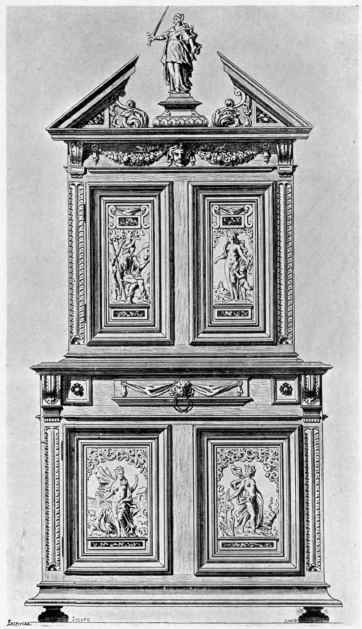
Plate VIII. - Cabinet (Sixteenth Century).
The Fleming was the traveller par excellence of the Renaissance - sculptor, cabinet-maker, painter, architect, potter, weaver, goldsmith - we find him everywhere. He even reaches Hungary, Russia and Turkey. Spain he finds a congenial soil, and also England.
Although Burgundy resisted the Italian invasion for a time, the Renaissance was destined to reach, perhaps, its most brilliant development, after Italy, in this very province. It is generally conceded that the Burgundian style owes its character to Hughes Sambin, an architect and master carpenter, born about the beginning of the sixteenth century. In 1535, he finished the porch of St. Michel's in Dijon, and in 1572, published in Lyons, after a period of study in Michael Angelo's studio, a book filled with wood engravings, and entitled Oeuvres de la diversite des termes dont on se sert en architecture, reduit en ordre par Maistre Hughes Sambin, architecteur en la ville de Dijon.
Sambin's most important work is the Palais de Justice in Dijon, where there is a very beautiful wooden door carved by him, or under his direction, and the Salle des Procurateurs, built under Henri II, the ceiling of which is carved wood. Sambin's book shows that he was an adept in the Renaissance style, and devoted to the study of antique monuments. Regarding him, Champeaux says:
Continue to:


My Books

