


Henri II. And The Second Half Of The Sixteenth Century. Part 4
Description
This section is from the book "French Furniture", by Andre Saglio. Also available from Amazon: French Furniture.
Henri II. And The Second Half Of The Sixteenth Century. Part 4
In some few examples that have been preserved it is very evident that the artists responsible took their decorative motives from the Dijon and Paris drawings they chanced to come across, combining sometimes, for instance, the Dianas of Jean Goujon with grinning satyrs. It was inevitable that this fusion of the two schools should take place, and the fact does not militate in the least against the classification we have adopted. A good example of this composite style is a dresser that belonged to the Soulages collection, and is now in the South Kensington Museum. It dates from the very end of the sixteenth century, and in it will be recognised chimaerae copied from Du Cerceau, female forms borrowed from Hugues Sambin combined with a figure of Justice inspired by some German medal. It was this combination of motives in a single work, the reason for which was not at first detected by provincial scholars, that led to the illusion of there having been some great schools in Southern France that flourished independently of those in the North. This very dresser at South Kensington is indeed quoted as one of the proofs of the ingenuity of the school of Languedoc, or rather of Toulouse, where a certain talented cabinet-maker, Nicolas Bache-lier, rose into notice, who, like Du Cerceau, travelled in Italy as a young man, and, like Sambin, was an engineer, architect, sculptor, and designer of furniture.
He made the plans of the chateaux of Assier and Montal, now destroyed, began the bridge of Saint Subra at Toulouse, designed and executed the tomb of Galiot de Genouilhac, Governor of Languedoc, and is credited with having been the sculptor of the main doorway of the church of Saint Saturnin at Toulouse, of the choir-screen of the Cathedral of Rodez, of an open-work stone screen in the chapel of Saint Sepulcre, and with having built several private houses in his native city, and produced also a quantity of furniture. Amongst the last were the choir-stalls of St. Saturnin, specially celebrated because one of the misereres represents Calvin - who has a pig's head - preaching. We have already shown that the originality of this master, and of the Langue-doc artisans who followed him, will not stand the test of serious examination. It is, however, only fair to add that they were inspired by other artists as well as those of the North, for they knew the work of the Spanish, and also of the Flemish masters.
The latter were the subjects of "the most Catholic King," and were especially in repute and much copied in the beginning of the seventeenth century - that is to say, at a time when not only Languedoc but the whole of France were more or less impregnated by the taste of their neighbours in the North, on whose influence we shall dwell more at length in our next chapter.
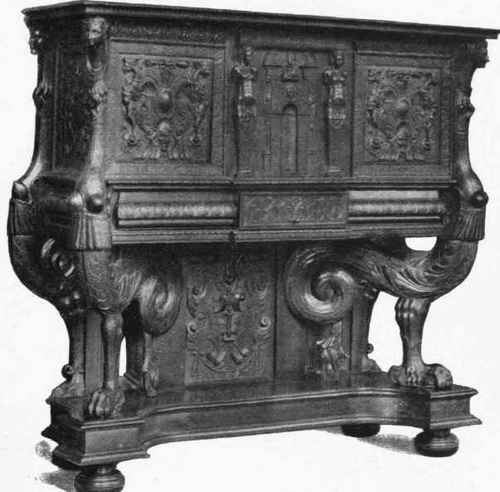
Plate XIX. DRESSER. Second half of XVI Century. School of Du Cerceau.
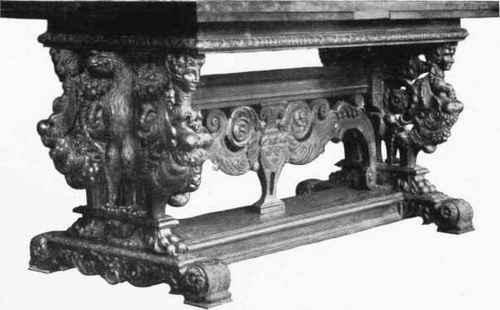
Plate XX. TABLE. Second half of XVI Century. School of Hugues Sambin. Dijon Museum.
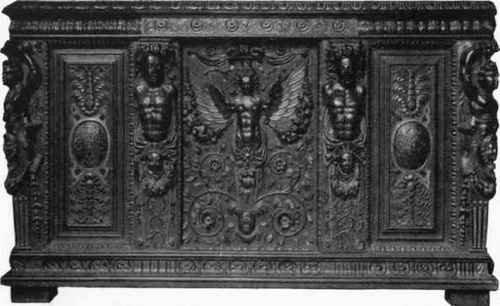
Plate XXI. CHEST. Second half of XVI Century. Louvre Museum.
The impression resulting from an examination of all this furniture of complicated structure and inordinate decoration, dating from the second part of the sixteenth century, is very much the same as that produced through studying the history of the manners of the time. French life under Henri II., Charles IX., and Henri III., all semi-Italian princes, dominated by their talented mother the Florentine Catherine de Medici, was an extraordinary mixture of terror and luxury, for in the midst of the horrible butchery of the religious wars, when such notorious crimes as the assassination of Conde at Jarnac, of Guise at Blois, and Coligny at Paris, were committed, luxury of the most effeminate type prevailed at the court of the last kings of the house of Valois. In this connection should be read Pierre de l'Estoile's description of the wedding of the Duc de Joyeuse, the festivities at the celebration of which cost the King twelve hundred thousand crowns, and Michel de Castelnau's account of the fetes held by Catherine de Medici, at which sirens haunted the water-channels of Fontainebleau, and a wooded island was improvised to receive the Queen of Spain, who was escorted to it by the French Court on a fleet of magnificent boats followed by musicians and singers dressed as Tritons! Private individuals followed the noble example set by these prodigal gallants.
Cardinal du Bellay, Ambassador at Rome, gave his guests at a banquet their choice of one thousand dishes of fish, and fifteen hundred of baked meats, and this was but a poor feast compared with the collation spread by the municipality of Paris for the wife of Charles IX., at which the entremet consisted of a presentation in sugar of the whole history of Minerva, from the moment when she issued in complete armour from the brain of Jupiter to that when she brought Perseus, slayer of the Gorgon, mounted on Pegasus, back to Athens, thus symbolising "the discomfiture of the enemies, past and future, of the King, overwhelmed by his magnificence and by his success in every enterprise through following the counsels of his Minerva."
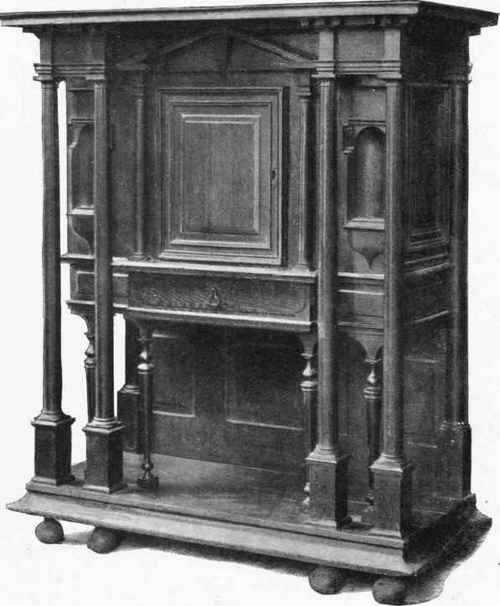
Plate XXII. DRESSER. Second half of XVI Century. Garde Meuble National, Paris.
This extravagant spirit was reflected in the domestic furniture of the home by the excess of ornamentation lavished upon it, such as volutes, flowers, and foliage, nymphs, dryads, and fauns. Everything must be alike costly and distorted, and for the sake of this an amount of constraint and discomfort was endured, very significant of a robustness of physique of which there is plenty of proof in the sanguinary exploits of Montluc, the Baron des Adrets, Francois de Guise, and the Valois princes themselves. If we are appalled at the martyrdom endured by the wearers of the huge, though dainty starched ruffs enclosing the throat as in a vice, the bodices with steel braces for drawing back the shoulders so as to give prominence to the bust, and the weight of the robes stretched at the hips over regular armour made by the blacksmith, we are no less astonished at the idea of any rest being obtained on chairs, the straw cushions of which did little to lessen their hardness, or in beds that could only be climbed into with difficulty, and bristled with balusters and posts, or caryatides, as provocative of night-mare as were the monsters that served as their pedestals.
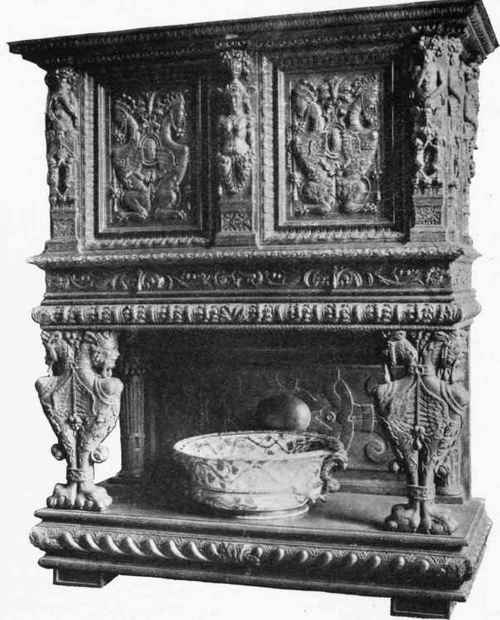
Plate XXIII. DRESSER. Second half of XVI Century. Louvre Museum.
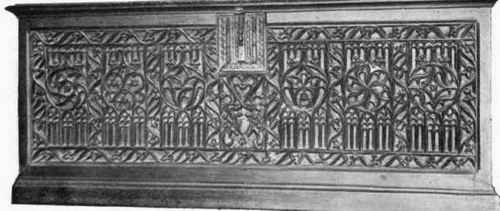
Plate XXIV. CHEST. End of XVI Century. Louvre Museum.
Continue to:


My Books

