


The Seventeenth Century Before The Accession Of Louis XIV. Part 4
Description
This section is from the book "French Furniture", by Andre Saglio. Also available from Amazon: French Furniture.
The Seventeenth Century Before The Accession Of Louis XIV. Part 4
It was in such alcoves that, in accordance with the most singular of all the strange fashions we have so far passed in review, ladies - imitating the so-called Precieuses of the Hotel Rambouillet - used to hold receptions as well as to sleep. Lying full length outside, or even sometimes inside, the bed in elegant deshabille, and with the light filtering through skilfully adjusted curtains, they would make their friends sit down in the ruelle, or narrow passage between the bed and the wall. This fashion prevailed throughout the whole of the reign of Louis XIV.
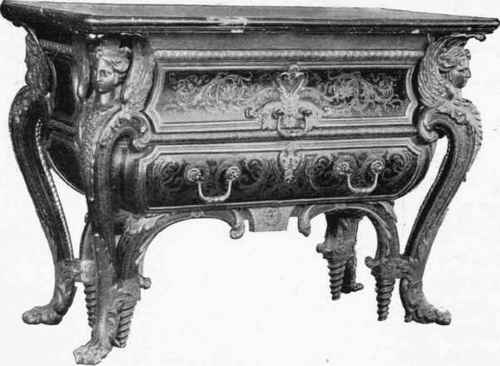
Plate XXX. CHEST OF DRAWERS of Louis XIV at Versailles; attributed to Charles Boulle. Bibliotheque Mazarin.
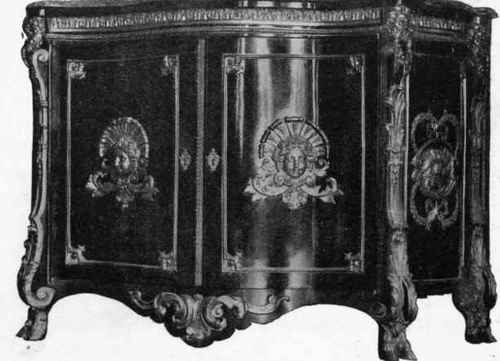
Plate XXXI. CHEST. Epoch Louis XIV. Palace of Versailles.
Furniture, as we have seen, became greatly simplified amongst the middle classes, and the loss so far as art was concerned was made up for by increase of comfort. It appears to us quite easy to account for this double evolution, which reached its fullest development in the second quarter of the seventeenth century. It cannot be denied that the influence of Calvinism had something to do with it; the formality and coldness of domestic decoration in the reign of Henri IV. succeeded too rapidly the brilliant and affected style that prevailed under his predecessor, for it to be possible to fail to recognise how important was the influence over popular customs of the triumph of a prince who remained a Huguenot behind the Catholicism he assumed, because "a kingdom is worth more than a Mass." The Bearnais monarch was popular, he was beloved, and as a result he was imitated. Now, like his comrades in the religious wars, he carried contempt for show to such an extent as to take a positive pride in exaggerated simplicity.
The lower classes liked to recall the fact that on his entry into Paris the sovereign only had five pocket-handkerchiefs and a dozen shirts in very bad condition, and that his best costume consisted of a doublet of white satin, a black cloak, and a plumed hat which he wore both on the occasion of his solemn recantation of Protestantism, as well as for the ceremony of coronation, and, indeed, a hundred other familiar anecdotes, such as that of his having received the Spanish Ambassador on all fours with his children riding on his back. All this is very much in the reformist spirit of the time, and explains the taste for the severe style of Protestant Holland, and also the fact that Henri IV.'s first act as an art patron was to send his best artisans to the Dutch school. The very evident resemblance in interior decoration in the two countries, Holland and France, which can easily be illustrated by a comparison between the work of Gerard Terborch and Abraham Bosse, is the result, it appears to us, of the impulse given by a king whom all his subjects took for their example.
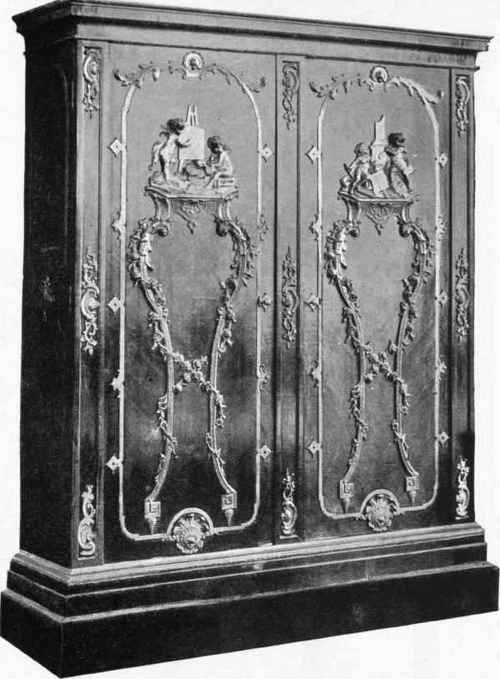
Plate XXXII. CUPBOARD. By Charles Cressent. Epoch Regence. Chappey Collection.
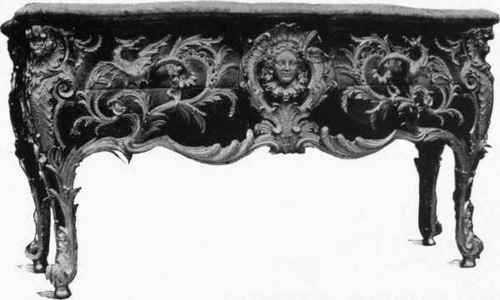
Plate XXXIII. COMMODE OF THE REGENCY PERIOD. By Charles Cressent. Wallace Collection.
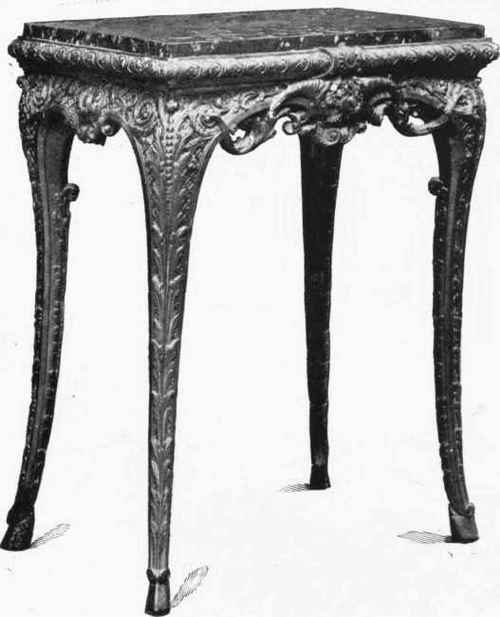
Plate XXXIV. GILDED REGENCE TABLE. Collection of Mme Brach.
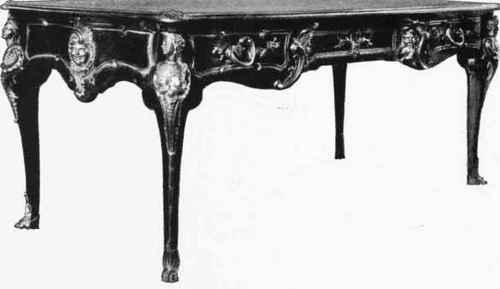
Plate XXXV. LARGE REGENCE DESK. Louvre Museum.
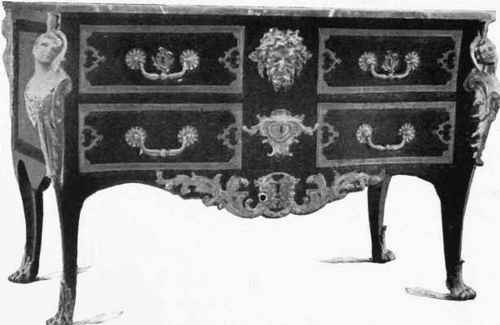
Plate XXXVI. CHEST OF DRAWERS Epoch Regence. In the Bishop's residence at Meaux.
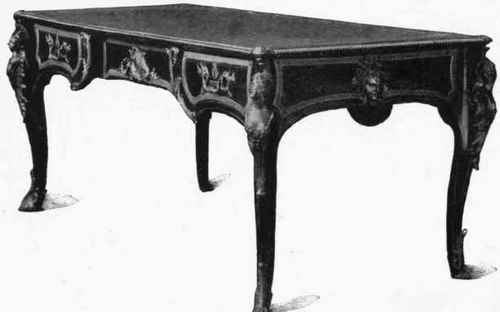
Plate XXXVII. TABLE. Epoch Regence Period. Retrospective Exhibition, Paris.
It has been said that the fashion of entirely covering furniture with drapery was but a revival and development of an Italian custom of the fifteenth century. This is going very far afield to seek an explanation, and needlessly to exaggerate the artistic domination of Italy, that was already great enough. She may be credited with the first use of bed draperies, at the same time as the introduction, during the Renaissance, of bedsteads with canopies upheld by columns, but certainly not with that of table-covers, which, as we have already pointed out elsewhere, were a natural contrivance for hiding an economy the owners did not wish to betray, which had led to their employment of turners instead of carvers in wood. There were now quantities of costly materials to be had in France, and there is no cause for surprise at the fact that the middle classes loved to show off pieces of stuff such as but recently the nobility alone were privileged to use. The cultivation of the mulberry-tree having been successful in the South, Lyons had begun to manufacture silk which rivalled even that of Florence and Genoa, Tours became celebrated for her coarse taffetas, workmen invited to come over from Anatolia and the islands of the Archipelago produced in Paris itself embroideries in the Oriental style, and numerous artisans working in the Louvre and in the Rue de la Tixerandrie decorated textile fabrics with designs founded on exotic plants which they copied in the Royal gardens recently laid out for that very purpose, and which were later to develop into the extensive Jardin des Plantes.
On the other hand, the Italians are to be credited with the introduction into quite humble rooms of certain minor decorative features which add greatly to their charm and comfort, such as crystal or glass chandeliers, sconces in the shape of an arm fixed on to the wall, the closed fist holding a wax candle, and above all the great mirrors framed in carved and gilded wood or in undecorated ebony, varied by the fertile imagination of the French with applique work cut out and chased in copper or silver. This mirror was the natural supplement of the cabinet, or of the bureau founded on it - bureau being the old name used in mediaeval times for the counter covered with a coarse brownish stuff called drap de bure* and later given to a novelty introduced towards the end of the reign of Louis XIII. It is scarcely necessary to describe the well-known shape of this familiar little piece of furniture. It is a chest set on a table, not so deep as the top of the latter, and pushed back a little so as to afford a rest for the hand of a writer seated at it.
About the beginning of the eighteenth century it became customary to call this variety of the cabinet by the name of commode, the lower part of which consisted of nothing more than a table provided with drawers, distinguished at the same period as the bas d'armoire, or the lower armoire. It is as well to make a point of giving these names, which we shall have to use constantly in dealing with succeeding reigns.
* The nearest English equivalent to drap de bure is drugget. - Trans.
Continue to:


My Books

