


The Gothic Style. Part 3
Description
This section is from the book "Furniture", by Esther Singleton. Also available from Amazon: Furniture.
The Gothic Style. Part 3
"Taken in its literal sense, certosino describes work made by the disciples of St. Bruno - the Carthusians - mosaic work of the most delicate description in bone, ivory, mother-of-pearl, metal, or woods chemically colored, and showing the greatest amount of patience though rarely in any save geometrical designs. Tarsia, on the other hand, rendered by means of chemically colored woods pictures which the mosaic-worker either copied or originated. The decorations of the armoires in the sacristy of the Duomo in Florence are evidently original with the artist who ornamented them. These mosaics were found to be very perishable: tarsia was costly and difficult to execute, and the atmospheric changes were very harmful. It was necessary to restore fine pieces frequently; so frequently, indeed, that little was left of the original ornamentation. Therefore at the end of the Fifteenth and beginning of the Sixteenth Century this style of decoration was supplanted by painting. The beautiful work in the sacristy of Santa Maria delle Grazie in Milan, attributed to Bernardino Luini, showed that painted panels were superior to those of marquetry. It was now but a step to those beautifully painted little caskets and coffers with delicate paintings on a gold background.
"Furniture was exquisitely painted during the Sixteenth Century. By 1550 tarsia-work had taken a subordinate place. Italian furniture of the first period of the Renaissance was conceived by painters and made by workmen who followed their designs. Very often they misunderstood the special purpose for which the special piece was intended. In this the French huchier was supreme: he never misunderstood the purpose for which any piece was intended - form and decoration had to be subordinate to the function and destination of every piece of furniture that he made."1
1 Molinier.
A beautiful example of inlaid work of the period appears on Plate X., representing a bed that belonged to the Princess Palatine, Susanna, and to which the date 1530 is attributed by the authorities of the Munich Museum, where it is preserved. It is probably of Italian workmanship.
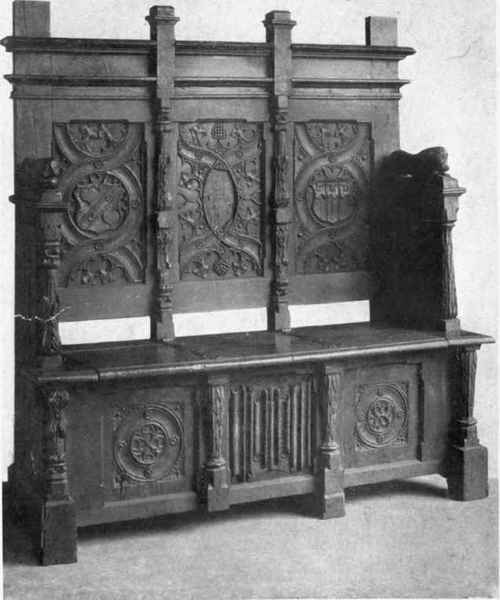
Plate III - Gothic Settle - Nuremberg Museum
In the Sixteenth, as in the preceding century, the Italians were particularly fond of the Roman triumphal arch and sarcophagus, as forms for furniture. The Classic Orders were in great vogue, and the arabesque and candelabra-shaped pilasters, introduced so long ago into decoration, were renewed and made popular by Raphael. To the ancient style of marquetry, composed of little geometrically-cut cubes of natural wood, there succeeded a marquetry of colored woods arranged to form actual pictures with perspective. Some of the furniture was carved, and then painted, or gilded; but other furniture shows large surfaces that are decorated with beautiful oil paintings.
The Italian furniture was particularly da pompa, made for the adornment of long galleries, enriched with paintings, gildings, tapestries, velvets, damasks, brocades, cushions, curtains, mirrors and sumptuous cassoni. Beds, chairs, tables, cabinets, mirror and picture frames, standing candelabra, bellows, coffers, chests, seats and buffets (cre-denza), are of the most luxurious nature. Plate XL shows a good example of an Italian chest of the period. To this period belonged the famous nuptial set in the Borgherini Palace, Florence.
When Salvi Borgherini's son, Pier Francesco, was betrothed to Margherita Acciajuoli, Salvi resolved to prepare for them a beautiful nuptial chamber decorated entirely by the first artists of the time. Baccio d'Agnolo carved all the ornaments of the doors and the bed and mantelpiece and made the superb furniture that consisted of high-backed chairs (spalliere), stools and seats (sederi), and coffers (cassoni), all of which were enriched with delicate carving.
But this was not all: the entire room was decorated with panels painted by such artists as Andrea del Sarto, Francesco Granacci, Jacopo da Pontormo and Bacchiacca, the subject being the story of Joseph. The wedding is supposed to have taken place in 1523. The beautiful bridal chamber excited the greatest admiration.
During the eight months' siege of Florence in 1527, a furniture-dealer named Giovanbattista della Palla, employed by Francois L, King of France, to secure for him whatever art treasures he could find, appeared before the Signory and suggested that the pictures and furniture of the Borgherini chamber should be purchased and presented by the city of Florence to Frangois I. Consent was given, and the wily furniture-dealer, knowing that Salvi Borgherini had recently died and that Pier Francesco was in Lucca, hurried to the Palace.
"Much to his surprise, however, he was confronted on the threshold of the bride-chamber by Margherita Acciajuoli herself, a valiant lady, worthy to be the wife and daughter of noble Florentine citizens, who at once assailed him with a torrent of violent reproaches. 'You, Giovanbattista?' she exclaimed, 'you! vile broker, paltry twopenny shopkeeper! you dare to come and seize the ornaments of gentlemen's rooms and spoil this city of its richest and noblest things, and all to embellish foreign countries and the homes of our enemies ? I do not wonder at you, plebeian that you are, and enemy of your country, but I am surprised at the magistrates of this city who allow your abominable wickedness. This bed which you seek to satisfy your own greed of gain, however much you may endeavor to conceal your evil intentions under the cloak of duty, is my own marriage bed. It was in honor of my nuptials that my father-in-law, Salvi, prepared all this magnificent and royal furniture, dear to me both for the sake of his memory and for the love I bear my husband, and which I intend to defend with the last drop of my blood. Get out of this house, then, with all your troop, Giovanbattista! Go and tell those who sent you that I will not suffer a single thing to be removed from this place; and if those who trust you, contemptible man, wish to send gifts to the King of France, let them go and spoil their own houses and the ornaments and beds of their own chambers! Go! and if ever you dare to show your face again in this house I will teach you, to your cost, the respect which the like of you owe to the houses of gentlemen.'"
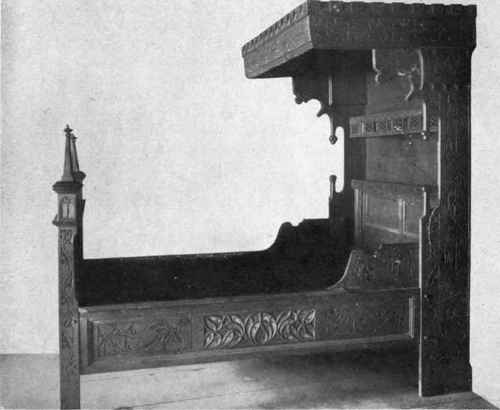
Plate IV - Gothic Bedstead - Munich Museum
Margherita Acciajuoli kept her treasures; but in the course of time they were dispersed. Andrea's and Pontormo's panels were preserved, and are now in the Pitti and Uffizi galleries. All the rest were lost. In the Sixteenth Century furniture more like that in use in our own day became more general; but much of it is often described as "camp furniture." Everything was made to take apart: the columns of the beds were jointed; the tables were slabs placed on trestles; the chairs folded up; and curtains were hung on poles with rings. Rugs, cushions and superb tapestries soon turned a temporary lodging into a luxurious and beautiful abode. Chests and bahuts were still of the greatest importance. Towards the end of this century, furniture became more abundant; and though much of it was "movable," much of it was made for its one permanent home.
Continue to:


My Books

