


French Furniture. Part 5
Description
This section is from the book "The Old Furniture Book", by Hannah Hudson Moore. Also available from Amazon: The Old Furniture Book.
French Furniture. Part 5
When a princess of France married it was no uncommon thing for the laces on her bed-spreads and linens to reach the sum of $100,000. The frills on her personal linen added $25,000 more. The ruffle on a handkerchief was cheap at $50, and a laced nightcap might easily double that. All this elaboration of elegance had fitting surroundings, and the case was worthy of its contents.
Like his predecessor, Louis XV. lavished vast sums on buildings, and Madame de Pompadour, an uncrowned queen, spent millions more. The Hotel d' Evreux, begun in 1718, was many years later finished under her personal direction. She had the virtue of being a liberal patron of the arts and an encourager of artistic merit wherever she found it. Her taste, her sincere love for art, enabled her at least to secure works of absolute perfection, and during the twenty years of her reign it was mainly her fostering guidance which developed so many of the applied arts. She not only assumed the direction of work at her cha-teaus and hotels, but she encouraged the manufactory of the beautiful porcelain of Sevres; she assisted engravers, and essayed to learn the art herself; and by taste, natural and acquired, she was looked upon by the group of artists of her time as a final court of appeal in all critical matters.
Her successors were no less extravagant, but they lacked her exquisite and artistic judgment, which amounted almost to genius. It was during this period of Louis XV. that the evolution of chests of drawers, writing-tables, and cabinets - that is chests upon trestle-work - was accomplished. The ornament changed constantly, but the form of the articles remained much the same. The changes wrought in Paris affected the country slowly, and provincial artists working at the period of Louis XV. might have been using the models that had been popular in a previous reign, In Figure 75 are depicted rosewood commodes with curved fronts and ends, handsomely decorated with ormulu work in leaves and scrolls. A French clock of the period, with ormolu mounts, stands on the marble top of one, and on the other is one of black and gold lacquer, with very choice water-gilt mounts.
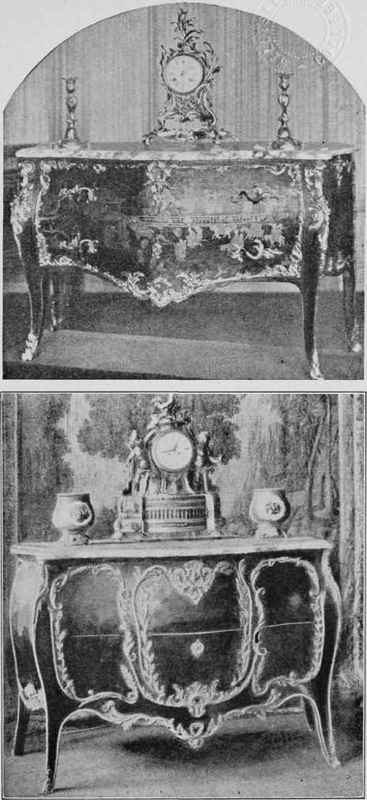
Figure 75. COMMODES OF THE TIME OF LOUIS XV.
In this period the names of the Cafiieri, father and two sons, who were workers in metal, became famous. They executed bronze mounts for furniture like those on the commodes shown in Figure 75, a style which they may be said to have created and by their genius rendered popular. The mounting on these pieces is very simple, and takes the subservient place that ornament always should. But in some of the work executed by the Caffieri the wood became merely the vehicle on which a wealth of ornament was hung. They made not only mounts for furniture, but girandoles, branch-lights, mounts for vases and clocks, and chandeliers - working in bronze and silver as well as in brass. This taste for metal mounts was carried to an extreme, even pieces of richly carved furniture being further ornamented with chiselled brass. It is an item of interest that the monument to General Montgomery which is placed on that side of St. Paul's Chapel, New York city, which faces Broadway, should- have been designed and executed by Caffier in Paris in 1777. The General was buried first in Quebec, and afterward removed to New York by act of Congress.
In Figure 76 is given what is called a garderobe, that is wardrobe, with a basket of flowers at the top, this and the two bunches of flowers at the tops of the doors being in ormolu.
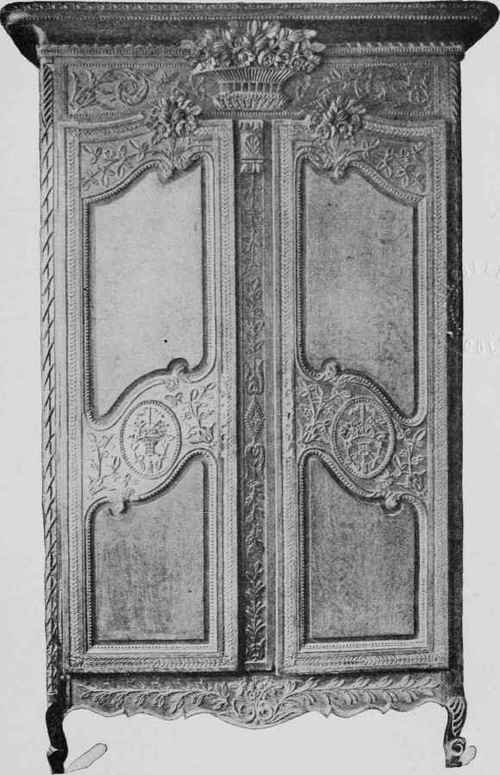
Figure 76. GARDEROBE, PERIOD OF LOUIS XV.
Even as early as the middle of the previous century there had been imitators of the splendid lacquer-work of the Orient. By 1723 the three Martin Brothers, Julien, Robert, and Simon-Etienne, had become quite famous for their use of a transparent varnish, which, as "master painters and varnishers," they had perfected in their business. They pushed their trade, and by 1748 were under national protection, so popular had their wares become. In 1742 they perfected a certain green varnish which was immensely popular, and for which they had many orders, some of them from the king himself. They never excelled as painters, but the beauty of this famous green ground, powdered with gold, is very charming. Very little of this famous work remains, a few fire-screens and some splendid coaches, with some small boxes for snuff or patches, are all that exist. But in these small pieces like the boxes, which were considered worthy of gold and jewelled mounts, we can see this famous work to the best advantage. There were ribbings, stripings, waves, and flecks which gleam wonderfully through the varnish. Sometimes there are a few flowers or a Cupid scattered on the surface, but usually, when the green ground was employed, no decoration was considered necessary.
With the death of Robert Martin in 1765 the skill necessary to continue this work was lost, and this charming style of decoration dropped back merely to a trade, and "Vernis-Martin" became hardly more than a name.
Among the other great workers of this period were Oeben, whose marquetry in coloured woods was of extreme elegance, and Riesener, who began to execute his beautiful pieces of furniture under Louis XV. in what is known as his earlier style, but who finally created the straight-legged types of Louis XVI. style with which his name became associated. In the work which he did for Marie Antoinette at the Little Trianon in 1777, the pure Louis XVI. style is carried out. The earlier pieces, delivered as early as 1771, still betray the influence of a previous period.
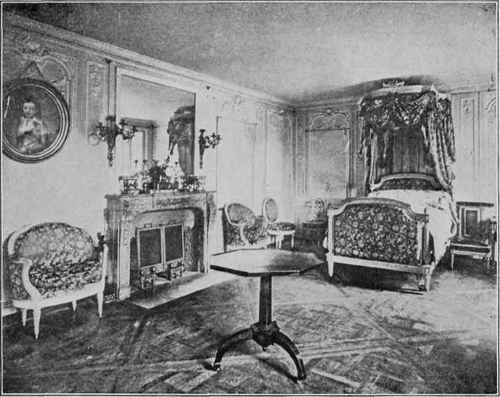
Figure 77. BEDROOM OF MARIE ANTOINETTE AT THE LITTLE TRIANON.
In Figure 77 is shown the bedroom of Marie Antoinette at the Little Trianon. Here we see the later style set by Riesener, with the straight carved legs, the woodwork being painted and gilded. The silk factories at Lyons were no longer as well patronized as they had been, and to revive interest in them new furniture-was ordered for the queen, to be upholstered in brocade, and with curtains and hangings to match. Everything in these rooms breathes of dainty ele-gance, - the carvings of the mantelpiece, the walls decorated with garlands of flowers and Cupids, even the metal mounts, chiselled wreaths and rosettes, were wrought with the beauty and finish of goldsmith's work. In the small chair by the bedside is seen a style with gilt framework and embroidered cushions, a kind of covering which was always in demand.
Continue to:


My Books

