


How To Make A Rustic Table
Description
This section is from the book "Carpentry For Beginners - Things To Make", by John D. Adams. Also available from Amazon: Make Magazine.
How To Make A Rustic Table
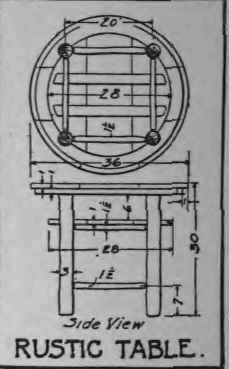
At the outset it may be well to state that, in the construction of the rustic table, it is not imperative the top be circular in form, although a round one is prettier. The top is in two thicknesses, the upper one projecting about an inch be-yond the lower all around. Each layer is made up of three or four boards, and the two circles are fastened together with glue and numerous screws set in from the under side. The grain of the two top sections is crossed, so that the possibility of warping is practically avoided.
The four legs should be first cut to length and the lower ends rounded, after which they are bored for the lower and upper cross-pieces, the latter for supporting the shelf. Taper the holes very slightly and then work up the eight crosspieces to match. The two legs of each side should be connected and then the two sides connected, making all of the connections as indicated in the detail sketch. The boards for the shelf should now be made ready and connected with substantial cleats across the under sides, as shown in the working drawing. Mark off the positions of the legs and then cut out circular notches so that the shelf will set down on the upper cross-pieces and fit about half-way around the legs. Secure it in place with screws set in through the crosspieces. Reverse the top, place the assembled legs in position, and secure each leg to the top by means of large screws set in at an angle. A coat of oil or filler and spar varnish on the wood wherever unprotected by bark will prolong the usefulness of the table.
Continue to:


My Books

