


Top Rails
Description
This section is from the book "Woodwork Joints", by William Fairham. Also available from Amazon: Woodwork joints.
Top Rails
At Fig. 151 is shown the method of joining the top rails to the post of a tool shed or similar outhouse. The two rails, which are at right angles toeach other, are half-lapped and mortised; the tenon on the post runs entirely through them.
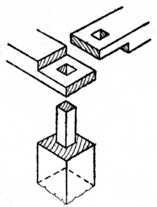
Fig. 151. - Joining Top Rails to Upright Post.
A Tusk Tenon Joint, with wedge, as used to secure the binder to the girder when making floors, is indicated at Fig. 153 . The tenon here is narrow and engages the mortise, which is situated in the compressional fibres immediately adjoining the neutral layer. Fig. 152 shows a tusk tenon furnished with a drawbore pin.
 Fig. 152. - Tusk Tenon.
 Fig. 153. - Wedged Tusk Tenon.
Fig. 154 is a variation of Fig. 152 .
Fig. 155 shows tusk and wedged tenons as used when making a portable book or medicine cabinet. The shelf is housed into the end, and the tenons run through the end and are secured by wedges. This allows the article to be quickly and easily taken to pieces for removal or re-polishing. The dotted line in Fig. 155 indicates that the shelf may be shaped if desired.

Fig. 154. - Another Type of Tusk Tenon.

Fig. 155. - Tusk Tenon and Wedge.
 Fig. 156. - Wheelwright's Self-wedging Tenon Joint.
In Fig. 156 a self-wedging mortise and tenon joint used by wheelwrights is shown. The dotted line (left-hand diagram) will indicate the amount of taper given to the mortise.
Dovetailed and Wedged Tenon ( Fig. 157 ). - When two pieces such as the cross rail and leg of a carpenter'sbench are required to be held together by a mortise and tenon, and to be readily taken apart, the tenon is dovetailed on one side and the mortise is made of sufficient width to permit the widest part of the dovetailed tenon to pass into it. When the tenon is in its position a hardwood wedge is driven in above the tenon, as shown.
 Fig. 157. - Dovetailed and Wedged Tenon.
 Fig. 158. - Method of Fox-wedging.
Fox Wedged Tenon ( Fig. 158 ). - This is the method of securing a stub tenon by small wedges. The mortise is slightly dovetailed and two saw cuts are made in the tenon about 3⁄16 in. from each side. Into each saw kerf a wedge is inserted and the joint glued up. The cramping operation forces the wedges into the saw cuts, thus causing the end of the tenon to spread and tightly grip the mortise.
Mortise and Tenon with Mitred Face ( Fig. 159 ). - This is a useful method of jointing framing which has square edges as shown; and it is equally useful even if the face edges have moulds worked upon them. If the joint has square edges a rebate may be formed to accommodate a panel by fixing a bolection moulding around the frame. A section of the bolection mould planted on the frame is shown in the lower figure.
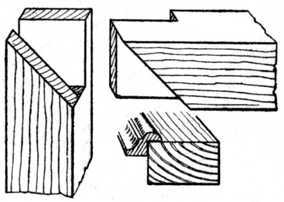 Fig. 159. - Tenon Joint with Mitred Face.
Continue to:


My Books

