


A Cheaply Constructed Fireless Cooker
Description
This section is from the book "Handy Man's Workshop And Laboratory", by A. Russell Bond. Also available from Amazon: Handy Man's Workshop And Laboratory.
A Cheaply Constructed Fireless Cooker
A cheap and efficient fireless cooker was made by the writer as follows: A box measuring 34 1/2 inches long, 12 inches wide, and 16 inches deep inside measure was bought from the grocer. After lining it well with newspapers lapped at the corners and tacked in place, a bed of newspapers A was placed on the bottom to a depth of 4 inches. The false bottom B was then nailed above them, and a sheet of asbestos placed upon it.
Three pieces of sheet zinc, 7 by 26 1/2 inches, were made into cylinders and soldered at the joint. These cylinders were then soldered to a sheet of zinc, D, cut to fit the false bottom, B, the cylinders being spaced 10 inches between centers. To facilitate the soldering of the cylinders E to the zinc plate D, small ears may be left in the cutting and bent outwardly.
Three holes the diameter of the outside of the cylinders, 10 inches between centers, were made in a board F 34 1/4 inches long and 8 1/2 inches wide, and nailed in place around the cylinders, the cylinders being nailed to the board F. A strip of asbestos was then wrapped around each cylinder and tied in place with string.
The space around the cylinders was now well packed with sawdust, K, and the small strips of wood, f, were inserted and nailed to the box to complete the shelf F. Three half bricks, G, and three enameled-ware pails 5 by 6 1/2 inches covered by an old feather pillow, H, which in turn was pressed firmly over the pails by a hinged lid, L, held closed by a suitable fastening, completed the cooker. To improve the appearance of the box the outside. with the exception of the bottom, was padded with paper tacked in place and covered with cretonne. Handles placed at the ends were found useful as well as ornamental. The novelty and efficiency of this cooker lies in the use of the half-bricks, G, which being placed around the gas burner, or on the stove with the pad resting on them, while bringing the contents of the pail to the boiling point, absorb considerable heat (the hotter they get the better). They are then used as shown in the illustration.
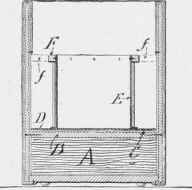
Fig. 271 - Cross-section through one of the zinc cylinders.

Fig. 272 - Section and plan views of the fireless cooker.
Continue to:


My Books

