


Star
Description
This section is from "The American Cyclopaedia", by George Ripley And Charles A. Dana. Also available from Amazon: The New American Cyclopædia. 16 volumes complete..
Star
Star (Gr. άστηρ, άστρον), a luminous body beyond the solar system, not nebulous. The study of the stars includes two chief divisions: 1, the determination of the exact position and changes of position of individual stars; 2, the inquiry into the laws according to which the stars are distributed throughout space, or rather throughout that portion of space within which, by means of the telescope, astronomers are able to carry on their researches. In the infancy of astronomy the stars were divided into constellations, chiefly for the sake of convenient reference, though partly also, as we learn from Aratus, Manilius, and others, because of fanciful ideas connected with mythological and astrological superstitions. Unfortunately, this rough and imperfect method of distributing the star groups has continued to our own time, but with a modification of the method of indicating particular stars. Originally the brighter stars received different names; but Bayer introduced the plan of assigning to the stars of each constellation, in the order of their brightness, the letters of the Greek alphabet. Since his day cataloguers of stars have introduced several new methods, more or less incongruous.
For instance, Flamsteed numbered the stars in each constellation according to their right ascension in his time; Piazzi numbered stars in hours of right ascension, the first in each hour being called 1, the next 2, and so on; W. Struve numbered all the stars he dealt with (in forming a catalogue of double stars), from Oh. 0m. 0s. onward, till the complete circuit of the sphere had been made in right ascension; variable stars have received the letters R, S, T, etc, for each constellation, in order of discovery, the letters A, B, C, etc, from the other end of the alphabet, having been already employed in continuation of Bayer's system; and still other methods have been introduced, to the confusion of learners. Moreover, the regions occupied by the different constellations have not been definitely assigned; some astronomers include the new constellations added by Bode and others, while many only allow the constellations of Ptolemy, Hevelius, and Halley (in the southern hemisphere) to appear in the maps, omitting generally the constellations Antinous, Cerberus, and Scutum Sobieskii from Hevelius's list, and Robur Carolinum from Halley's. Similar confusion exists as respects the method of indicating the brightness of stars.
Astronomers agree in dividing the stars visible to the naked eye into six orders of brightness called magnitudes, from the first magnitude or brightness to the sixth, the faintest which ordinary eyesight can perceive in dark and clear nights without telescopic aid; but for the fainter or telescopic stars four different methods of classification have been employed by Sir J. Herschel and Admiral Smyth in England, and by W. Struve and Argelander on the continent. The relation between the magnitudes of these different systems is indicated in the following:
Herschel.. | Smyth. | Struve. | Argelander. | |||
6.4 | = | <i | = | 5.7 | = | 5.9 |
7.0 | = | 6.5 | = | 63 | = | 6.4 |
74 | - | 7 | - | 6.5 | - | 6.8 |
7.8 | = | 7.5 | - | 6.9 | - | 7.5 |
8.2 | = | 8 | = | 74 | = | 8.0 |
8.8 | - | 8.5 | - | 7"). | - | 8.6 |
9.5 | = | y | = | 8.3 | - | 90 |
10.1 | - | 9.5 | . = | 8.9 | = | 9.4 |
10.4 | = | 10 | = | 9.3 | - | 9.4 |
11.3 | = | 11 | - - | 10.0 | = | 10.0 |
11.7 | = | 12 | = | 10.4 | = | 10.6 |
12.5 | - | 13 | = | 10.7 | - | 11.2 |
13.3 | = | 1-1 | = | 10.9 | = | 11.8 |
14.5 | = | 15 | = | 10. 9 | = | 12.4 |
15.9 | = | 1(5 | = | 10.9 | - | 13.0 |
It will be perceived that while the systems of Sir J. Herschel and Smyth are nearly enough alike to be practically interchangeable, the systems of Struve and Argelander are unlike for the fainter orders, and both differ markedly from the English system of indicating magnitudes. Unfortunately no system has been adopted uniformly by astronomers, or even by the astronomers of any given nation. Perhaps Argelander's is on the whole the best. Herschel's and Smyth's systems err in requiring that nicer distinctions should be drawn among very faint stars than ordinary observers can be expected to recognize. Struve's system appears to err in the opposite direction, by allowing too many stars to be included in the different orders of very faint stars. - The word "magnitude " as used in connection with stars refers only to apparent brightness; for the true magnitudes or volumes of stars are unknown. To determine a star's real magnitude, its distance must be determined and also its apparent diameter. But it is only in a few instances that the annual parallax of a star has been determined; and not a single star, however highly magnified, shows a true disk. Hence it is impossible to determine the volume of any star.
In the few cases where the distance has been determined, it becomes possible to infer from the star's apparent brightness the total quantity of light emitted by it; and if we assume that equal portions of the star's surface and of our sun's emit equal amounts of light, we can compare the surface of such a star with our sun's surface, and so deduce its diameter and volume; but the assumption is not by any means safe. Very few stars have a measurable annual parallax. The following table includes all hitherto dealt with :
STARS. | Magni-tude. | Parallax. | Latest measures. |
a Centauri........................ | 1 | 0,976" | 0.91" |
61 Cygni.......................... | 6 | 0.348 | 0.55 |
Lalande, 21258.................... | 8 | 0.26 | |
Oeltzen, 17415-6................... | 9 | 0.25 | |
a Lyrae ............... | 1 | 0.16 | |
Sirius .................. | 1 | 0.150 | 0.27 |
70 Ophinchi:...................... | 5 | 0.16 | |
1 Ursae Majoris................... | 3 | 0.13 | |
Arcturus......................... | 1 | 0.13 | |
Polaris ........... | 2 | 0.067 | 0.11 |
Capella ................. | 1 | 0.05 | |
Procyon.......................... | 1 | 0.12 |
Of the above measures, we owe the earliest, that of 61 Cygni, to Bessel; but it will be perceived that later measures differ appreciably from his. Henderson gave the earliest measures of a Centauri and Sirius, the corrected estimate for Sirius having been obtained by Mr. Cleveland Abbe, formerly of the observatory of Pulkova, now of Washington; most of the remaining measures are due to the labors of Kruger and Peters. When we observe that only a Centauri has given consistent results, we may well doubt whether as yet astronomers possess instruments competent to measure small parts of a second of arc. The distance of this star corresponds to the space traversed by light in about 3¼ years, the distances of the other stars being greater according as the parallax is less; so that, for instance, if the parallax of Capella in the above list were strictly exact, Capella would be 19½ times further away than a Centauri, and light would not reach us from it in less than 63½ years. It would be a fair inference that the light of many telescopic stars reaches us now only after the lapse of many thousands of years.
To apply to a Centauri the method for inferring a star's volume, indicated above, we proceed as follows : The star's distance exceeds the sun's 230,000 times, so that the sun removed to that star's distance would shine with only 1/52,900,000,000 part of his observed lustre. But it has been found by Zollner that a Centauri shines with about 1/16,950,000,000 part of the sun's brightness. Hence the star emits three times as much light as the sun, or (if our assumption as to equal intrinsic surface brightness be correct) a Centauri has a surface three times, a diameter √ 3 times, and a volume 3√3 times (i. e., more than five times) greater than the sun's. If we dealt with Sirius in like manner, we should deduce a volume exceeding the sun's about 2,700 times (taking the mean of the values above given for his annual parallax). But there is reason to believe that the real volume of Sirius, though far exceeding the sun's, is much less than that we have thus deduced; whence it is to be inferred that the larger stars shine with a greater intrinsic lustre than our sun, or in other words that a square mile of the surface of a large star like Sirius gives out much more light than a square mile of the sun's surface.
It is not improbable that we may find hereafter in such considerations the means of distinguishing between the various orders of real star magnitudes, since stars of different intrinsic brightness might be expected to give different results under spectroscopic analysis. We have shown under Spectrum Analysis that such differences unquestionably exist in stellar spectra; but as yet it has not been found possible to associate them satisfactorily with differences in the sizes of stars, in fact, when we observe that Ca-pella, though a star not only of the leading order of apparent magnitude, but also, judging from its minute annual parallax, one of the largest in real volume, yet belongs to the second spectral class, that is, the class of stars resembling our sun, we can scarcely place much reliance on this method of discriminating large from small stars. - Closely connected with the question of the various orders of stars is the circumstance that many stars are colored. Of stars visible to the naked eye, only the brightest show recognizable color, at least as so viewed. Antares, Betelgeuse, and Aldebaran are ruddy; Arcturus, Pollux, and Procyon yellow; Vega and Altair bluish; Oapella, Sirius, Canopus, and many others, brilliantly white.
But among telescopic stars more marked instances of color occur, some stars being blood-red, garnet-colored, rich orange, golden yellow, and so on. It is noteworthy that few single stars show such colors as blue, green, violet, or indigo; but among double and multiple star systems not only are these colors recognized, but such colors as lilac, olive, gray, russet, and so on. A beautiful feature in many double stars remains to be noticed: it is often found that the components exhibit complementary colors. This is oftener seen among unequal doubles; and then the larger component shows a color from the red end of the spectrum, as red, orange, or yellow, while the smaller shows the corresponding color from the blue end, as green, blue, or purple. The colors are real, not merely the effect of contrast, for when the larger star is concealed the color of the smaller remains (in most cases) unchanged. Spectrum analysis shows that the colors of many double stars are due to absorptive vapors cutting off certain portions of the light. - The existence of double and multiple star systems is itself remarkable, and the theory of a real physical connection between the members of such systems was long opposed because of the strangeness of a conception which in our own day has become familiar to us.
Of course, many stars apparently double are in reality far apart, and merely brought into accidental association because both lie nearly on the same visual line. But not only is the number of such pairs far greater than it should be to be thus explained, but also many pairs have been watched during long periods, and it has been found that the components are circling around each other, or rather around their common centre of gravity. Among the most remarkable instances of this kind are the double star 70 Ophiuchi, which completes a revolution in about 80 years; the stars of the pair ξ Ursae Majoris, which complete the circuit around their common centre of gravity in about 00 years; Castor, γ Virginis, ξ Bootis, ζ Cancri, and other doubles, which exhibit equally noteworthy motions. Many catalogues of double stars have been formed by astronomers since Sir W. Herschcl first paid special attention to the work. He observed 2.400; W. Struve of Dorpat observed 3,063; Dem-bowski, Secchi, Webb, and others in Europe have observed many double stars, carefully measuring the distance between the components, the angle of position, color, and so on, thus forming a fund of materials from which future astronomers can determine what changes are taking place in these interesting systems.
Among such catalogues, those recently formed by Mr. Burnham of Chicago will hold a distinguished place because of the "difficulty" of the double stars he has observed, arising chiefly from the nearness of the components, or from the smallness of one or both. It is remarkable that though every region of the heavens contains double stars, they are more abundant by far in some regions than in others; while again some regions of the heavens contain double stars of particular orders only or chiefly. This leads us to notice the circumstance that aggregations of stars of greater and greater, extent are recognized as we extend our survey of the heavens. Of all such aggregations the most complex is the galaxy or milky way (see Galaxy), in which millions of stars shine with lustre so blended, and softened by distance as to present a milky luminosity. - Many stars are variable in brilliancy. These may be divided into periodic variables, irregular variables, and temporary stars. Periodic variable stars are those which undergo increase and diminution of light at regular intervals. Thus the star Mira or o Ceti varies in lustre, in a period of 3311 days, from the second magnitude to a faintness such that the star can only be seen with a powerful telescope, and thence to the second magnitude again.
It shines for about a fortnight as a star of the second magnitude, and then remains invisible for five months, the decrease of lustre occupying about three months, the increase about seven weeks. "Such," says Sir J. Herschel, "is the general course of its phases. It does not always, however, return to the same degree of brightness, nor increase and diminish by the same gradations; neither are the successive intervals of its maxima equal. From recent observations and inquiries into its history by Argelander, the mean period would appear to be subject to a cyclical fluctuation, embracing 88 such periods, and having the effect of gradually lengthening and shortening alternately those intervals to the extent of 25 days one way and the other. The irregularities in the degree of brightness attained at the maximum are probably also periodical." These irregularities are considerable. Thus between October, 1672, and December, 1676, Mira was never visible to the naked eye, while on Oct. 5, 1830, it was half a magnitude above its usual brightness, outshining a Ceti and β Aurigre, which usuallv are brighter than Mira at its maxi-mum. It suggests a probable explanation of these changes of brightness, that when the star is near its minimum its color changes from white to a full red, which, from what we know of the spectra of colored stars (see Spectrum Analysis), seems to indicate that the loss of brightness is due to the formation of many spots over the surface of this distant sun.
Algol (or the Demon) is another remarkable variable, passing however much more rapidly through all its changes. It is ordinarily a second magnitude star, but during about seven hours in each period of 69 hours its lustre first diminishes until the star is reduced to the fourth magnitude, and after it has remained 20 minutes at its minimum, its lustre is gradually restored. Thus Algol remains a second magnitude star for about 62 hours in each period of 69 hours. These changes seem to correspond to what might be expected if a large opaque orb is circling around this distant sun in a period of 60 hours, transiting its disk at regular intervals. The star β Lyrae has a full period of 12d. 22h., divided into two periods of 6d. Hh., in each of which the star has a maximum brightness of about the 3½ magnitude, but in one period the minimum is about the 41/3 magnitude, while in the other it is about the 4½ magnitude. This peculiarity points to an opaque orb with a satellite, the satellite being occulted by the primary in the alternate transits, and therefore the total loss of light less.
The star δ Cephei varies in a period of 5d. 8h. 48m. from the fifth to the 3.5 magnitude, taking Id. 14h. in passing from minimum to maximum of brightness, while it occupies 3d. 19h. in passing from maximum to minimum. Two or three hundred variable stars are already known. Among irregular variables the most remarkable is the star η Argus. In 1677 Halley catalogued it as of the fourth magnitude; in 1751 Lacaille estimated it as of the second. Between 1811 and 1815 the star was of the fourth magnitude, and from 1822 to 1826 of the second; on Feb. 1, 1827, it had increased to the first magnitude; it fell again to the second magnitude, and remained so till 1837; in 1838 it increased in brightness, till it nearly equalled a Centauri; and it diminished again till 1843, when, however, it was still of the first magnitude. In April, 1843, it rapidly increased "until it nearly equalled Sirius in splendor." At present it is barely visible to the naked eye, and though it has lately been slightly increasing in brightness, it is still only of the sixth magnitude.
The star a Orionis is another remarkably irregular variable, but amid all its changes it never descends below the first magnitude. - Temporary stars include the so-called new stars, as well as those which were formerly recorded in the catalogues of astronomers, but can no longer be seen, or have at least so changed in brightness as not to be recognized. The most remarkable instance of a new star is that which appeared in 1572 and was observed by Tycho Brahe. "It suddenly shone forth in the constellation Cassiopeia with a splendor exceeding that of stars of the first magnitude, or even Jupiter and Venus at their brightest, and could be seen with the naked eye on the meridian in full day. Its brilliancy gradually diminished from the time of its first appearance, and at the end of 16 months it entirely disappeared, and has never been seen since. During the whole time of its apparition, its place in the heavens remained unaltered, and it had no annual parallax; so that its distance was of the same order as that of the fixed stars. Its color, however, underwent considerable variations.
Tycho described it as having been at first of a bright white; afterward of a reddish yellow, like Mars or Aldebaran; and lastly of a leaden white, like Saturn." A somewhat similar instance occurred in 1604, when a first magnitude star suddenly appeared in the right foot of Ophiuchus. It presented appearances resembling those shown by the former, and disappeared after a few months. In 1866 a star appeared in the Northern Crown, the observations of which threw great light on the subject of so-called new stars. In the first place, it was found that where this new star appeared there had been a tenth magnitude star; the new star then was in reality a star long known which had suddenly acquired new brilliancy. When first observed by astronomers with this abnormal lustre it was shining as a star of the second magnitude. Examined by Huggins and Miller with the spectroscope, its light revealed a startling state of things in those remote depths of space. The usual stellar spectrum, rainbow-tinted and crossed by dark lines, was seen to be crossed also by four exceedingly bright lines, the spectrum of glowing hydrogen.
Either the star was actually "in flames" at the time, that is, surrounded by burning hydrogen, or else some cause had raised the hydrogen around the star to a state of intense heat, but without actual combustion. The greater part of the star's light manifestly came from this glowing hydrogen, though it can scarcely be doubted that the rest of the spectrum was brighter than before the outburst, the materials of the star being raised to an intense heat. The maximum brightness of the star exceeded that of a tenth magnitude star nearly 800 times. After shining for a short time as a second magnitude star, T Coronae (as the star was called thenceforth) diminished rapidly in lustre, and it is now between the ninth and tenth magnitudes. - The stars are not absolutely at rest, though many years pass before the motion of any star can be detected. Halley, comparing the observed places of Arc-turus, Aldebaran, and Sirius with the places assigned by the Alexandrian astronomers, found reason to believe that these three stars are approaching the ecliptic.
This surmise was confirmed by the elder Cassini, who observed that Arcturus had shifted southward 5' in latitude since the time of Tycho Brahe. Bradley made observations to give means for detecting stellar motions', and before long astronomers began to recognize many instances of measurable motion. In 1783 Sir W. Herschel took up the idea that the stellar motions are in part due to a proper motion of the sun himself. Tobias Mayer had suggested this idea in 1771, but comparing Romer's observations with his own could find no evidence in its favor. Herschel was more successful. From the motions of seven stars, as estimated by Maskelyne, he deduced the inference that the sun is moving toward a point in the constellation Hercules in right ascension 257°. From a more exact inquiry, using Mayer's list of proper motions, he was led to place the point toward which the sun is moving (or, as it is called, the "apex of the solar way ") near the star Hercules. In 1805, using Maskelyne's catalogue of the proper motions of 36 stars (published in 1790), he set the apex in right ascension 245° 52' 30" and X. declination 49° 38'. Bessel in 1818 expressed his agreement with Tobias Mayer, in regarding the evidence as insufficient for determining the direction of the sun's motion; but since then Madler, Argelander, O. Struve, and Sir G. B. Airy have dealt with the problem, with results continuing the views of Sir W. Herschel in a very remarkable way, considering the imperfect evidence available in Herschel's time.
Nevertheless it is noteworthy that, although the balance of the stellar motions indicates the real existence of a proper motion of our sun toward Hercules, yet on any of the usually accepted theories of stellar distribution, the stellar motions accounted for by the sun's motion do not form nearly so large a proportion of the observed stellar motions as they should do. The present writer has shown by a simple geometrical method that they should constitute one half of the total; or rather, that the sum of the squares of the observed displacements should be reduced one half on making the proper correction for the effects due to the sun's motion. The real reduction, instead of being one half, is between 1/25 and 1/26. This does not throw any doubt on the fact of the sun's motion, but it renders altogether untenable the commonly accepted theories as to stellar distribution. - The motions hitherto mentioned are apparent motions of the stars on the celestial sphere. Motions of recession or of approach would of course not be indicated in this way,; nor would they produce any appreciable change in a star's brightness. This is easily perceived when we consider that motions of recession or of approach would be of the same average order as thwart motions.
What thwart motions may be in actual amount we do not know, but we do know what proportion they bear to the distances of the stars they respectively appertain to. Thus if a star were displaced 10" in a year (and no star has yet been observed to have so large a proper motion), the actual distance traversed in one year would be to the star's distance as sin. 10" to 1, or as 20,626 to 1. A corresponding motion of recession or approach would therefore diminish or increase a star's brightness in one year by 1/10323 part, and the brightness would be diminished or increased only by 1/100 part in 100 years. Such a change would be quite inappreciable even if the observation of irregular variations of stellar brightness did not prevent us from placing any reliance on apparent changes of brightness as indications of distance. It might then appear hopeless to attempt to determine whether the stars have motions of recession or approach; but spectroscopic analysis affords a means of dealing with this problem which has been successfully applied by Huggins and Vo-gel, and may hereafter be widely extended.
If a star is changing its distance from us, light waves of any given order proceeding from the star must reach the observer with their length increased if the star is receding, and decreased if the star is approaching. On comparing, then, any known line in a stellar spectrum _ with the corresponding line in the spectrum of the terrestrial element, any shift of the lino which can be detected will indicate recession if toward the red end of the spectrum, and approach if toward the indigo end. Applying this method, Huggins has recognized motions of recession and approach ranging from 10 m. to nearly 50 m. a second. - Some of the stars have proper motions in the same direction and at the same apparent rate. Madler, noticing this peculiarity in the constellation Taurus, was led to surmise that the centre round which all the stars are moving lies in that constellation, and he assigned Alcyone, the principal star of the Pleiades, as the centre in question. Beyond the observed community of motion in Taurus there was not any direct evidence for this theory; and this observed phenomenon was held by astronomers to afford but weak evidence for a theory of importance.
Yet Mad-ler's views were described in every text book of astronomy, in terms which would have been scarcely justified if there had been an overwhelming mass of evidence in their favor, and if astronomers had been practically unanimous in accepting them. In point of fact, even the one piece of direct evidence which seemed to support Mtidler's theory is found on examination to have no weight whatever. It is true that if there is a centre around which all the stars are movimr, the stars lying toward that centre should exhibit a community of proper motions, and the stars in Taurus do exhibit the peculiarity; but unfortunately for the theory, the same feature exists in other parts of the heavens. A map constructed by the present writer, showing all the stellar proper motions as yet satisfactorily determined, exhibits many such cases, and some of them are more remarkable than the case of the stars in Taurus. One singular instance of this "star drift" is observed in- the constellation Ursa Major, in which the stars β,γ,δ,ε, and ζ are all travelling in the same direction and at the same rate.
As these are bright stars, it appeared to the writer that they would afford an instructive test of the theory of star drift, if their motions of recession or approach could be determined. This was effected by Huggins a year after the theory of star drift had been enunciated, and it was found that, as the theory required, the five stars had a common motion in the direction of the line of sight, and that they are all receding at the rate of about 17 m. a second from the solar system. The inference fairly deducible from this fact, that these stars form a single system or family travelling together through space, is interestingly confirmed by the fact that all five belong to the same order. (See Spectrum Analysis.) - Although many speculations were broached respecting the constitution of the sidereal heavens from the earliest ages of astronomy, the first to enter on the systematic study of the subject, combining observation with theory, was Sir W. Herschel. Mitchel, it is true, had theorized carefully and soundly, but his labors were not extended beyond a few points of detail; and though Wright of Durham made some observations for the purpose of determining the structure of the milky way, yet the telescope he used (only one foot in focal length) was far too small to give any really satisfactory results.
At the beginning of his labors Sir W. Herschel took as the basis of his conceptions the belief that our sun is a member of a system of suns, scattered with a certain general uniformity throughout a region of space having a defined figure, possibly determinable if only a telescope could be constructed powerful enough to reaeh the limits of the system in all directions. To effect this, he devised his system of " star gauging by counting." It is clear that the further the sidereal system extends in any given direction, the greater will be the number of stars lying toward that direction, since the distribution is supposed (in a general sense) uniform; and therefore, if the same telescope, with unchanged power, were directed toward every part of the heavens in turn, then by counting the number of stars brought into view in these different directions the relative extension of the svstem along those visual lines could be determined - in other words, the shape of the star system. Let it be noticed that this plan of star gauging required that one and the same telescope should be applied to different parts of the heavens; it assumed a general uniformity of distribution within the limits of the system; and it required that the telescope should penetrate to those limits.
Recognizing these points, we shall not fall into the mistake made by many (including Arago and the French astronomers generally, Smyth, and others, and repeated in almost all the text books) of confounding this method of star gauging with the method devised by Sir W. Herschel when a long experience had convinced him that the assumptions on which he had based the former method were unsound. While he still supposed these assumptions sound, however, he deduced as the result of applying his first method the inference that the sidereal svs-tern is shaped like a cloven flat disk. (See Galaxy.) But gradually his observations showed him that special laws of aggregation exist within the star depths. He saw, first, that the milky way is not produced by the combined lustre of stars scattered like those around us, but extending to enormous distances. Next he perceived that the stars forming the richer parts of the milky way are not arrayed along great ranges in distance, but really spread more richly within limited and roughly globular regions.
In the same paper fall the passages we quote are from the "Philosophical Transactions") he wrote as follows: " On a very slight examination it will appear that this immense starry aggregation [the milky way] is by no means uniform. . . . By referring to some one of these clustering aggregations in the heavens, what will be said of them will be much better understood than if we were to treat of them in a general way." He selects the great double clustering aggregations in Cygnus, which form such conspicuous star clouds on clear summer nights. Here, he says, " the stars are clustering with a kind of division between them, so that we may suppose them to be clustering toward two different regions. By a computation founded on observations which ascertain the number of stars in different fields of view, it appears that our space [i. e., our selected region] in Cyg-nus, taking an average breadth of about five degrees of it, contains more than 331,000 stars; and admitting them to be clustering two different ways, we have 165,000 stars for each clustering collection.
Now the above mentioned milky appearances deserve the name of clustering collections, as they are certainly much brighter about the middle, and fainter near their undefined borders. . . . We may indeed partly ascribe the increase both of brightness and of apparent compression to a greater depth of the space which contains the stars, but this will equally tend to show their clustering condition; for since the increase of brightness is gradual, the space containing the clustering stars must tend to a spherical form if the gradual increase of brightness is to be explained by the situation of the stars." That is to say, whether we consider the greater richness in the centre to be due to the clustering of stars toward the middle of these aggre-gations, or to the shape of the groups themselves, or partly take both causes of central richness into account, wo are alike led to the conclusion that the groups are roughly spherical in shape. This conclusion, it need hardly be said, is utterly opposed to Herschel's old belief in a star system generally uniform throughout its whole extent; for here, and in all similar cases, we see rounded clouds of stars as distinct from the stars scattered around us as rounded clouds in the sky are distinct from a thin low-lying fog through which their shapes are seen.
Accordingly, before long Sir W. Herschel saw the necessity of devising a new method of star gauging, based, not on the numerical richness of star fields, but on the telescopic power necessary to effect the resolution of the milky light of clustering aggregations into discrete stars. By this process he hoped to determine the relative distances of star groups. Supposing that a particular aggregation began to be resolved into discrete stars with a certain telescopic power, and was entirely resolved when a certain higher power was employed, there would be prima facie evidence as to the distance of the aggregation, if the stars forming different aggregations are similarly distributed. For, given a group of stars of certain sizes and set at certain distances from each other, it is clear that the further away the group is placed, the higher will be the telescopic powers required (1) to begin and (2) to complete the resolution of that group into separate stars. How perfectly unlike this method was, at once in principle and in practical details, to the former, will be seen from a comparison of the earlier method, above, with the following summary of the qualities of the later method.
In the new method, the same part of the heavens was to be examined successively with different telescopes; the observer was not to count stars, but to note the extent to which resolution was effected; it was assumed that the stars within the clustering aggregations were distributed far more richly than elsewhere; and the telescope was required to effect resolution within a particular region of space, not to merely extend vision to particular distances. It is manifest that the new method and the assumptions on which it is based are open to exception. Herschel had found that the stars are not spread uniformly through the star system, as he had before surmised; and one would have supposed that having thus been misled by one assumption, he could not adopt others differing from it in degree only, not in kind. Yet his second method of star gauging could only give him, as he hoped, the means of " ascertaining a scale whereby the extent of the universe, so far as it is possible for us to penetrate into space, may be fathomed," if, first, the stars were spread uniformly within each clustering aggregation, and secondly, if different clustering aggregations were similarly constituted.
For clearly, if one and the same aggregation included several orders of stars, each order dis-[ tributed with a degree of richness peculiar to itself, and still more if there were not even any law of distribution for the several orders, then no reliance could be placed on the method; for a telescope might effect resolution with respect to some particular order of stars within the aggregation which would leave orders of smaller or more closely set stars within it quite unresolved. . Nor again could any comparison be instituted between the distances of two aggregations resolved by particular telescopes, even though there were reason to believe that within each there was a general uniformity of distribution, unless we were certain that they were alike in constitution. If the more remote of two aggregations consisted of large stars sparsely strewn, and the nearer consisted of small stars closely set, the two aggregations might require exactly the same power for their resolution, notwithstanding the difference of distance. On the latter point Herschel's observations by the new method could throw little light, since there is no telescopic means of discriminating really large from really small stars.
But on the former point he obtained evidence which should have been decisive against the new method of gauging, or rather against the assumptions on which it was based. For he observed several clusters which began to be resolved with very low telescopic powers, but were not entirely resolved even with the largest telescopes and highest powers Herschel employed. As these clusters were of small extent and round in figure, it followed that if the stars were spread uniformly within them, the extension of these clusters in the direction of the line of sight must enormously exceed their thwart diameter; in other words, that they were all of them shaped like gigantic cylinders, of length vastly exceeding their breadth. This supposition being altogether untenable, it is certain that these clustering aggregations contain stars of many orders of real magnitude, distributed according to various laws of richness. In fact the range of magnitude and of richness of distribution must be as great as in the case of the solar system, from the giant bulk of Jupiter and Saturn to the minute and (relatively) closely aggregated asteroids.
And here in passing we may note that this legitimate inference from the observations of Sir W. Her-schel is abundantly confirmed by Sir John Her-schel's examination of the Magellanic clouds, in which all varieties of stellar magnitude and aggregation, from sparsely strewn stars of the eighth and ninth magnitudes to a nebulosity irresolvable by his 18-inch mirror (besides all orders of nebulae), coexist within limits of distance not differing in proportion more than as 10 to 9. According to the assumptions on which Sir W. Herschel's second method of star gauging was based, the limits of distance to include such varieties of stellar distribution should differ in proportion more than as 300 to 1. Passing over the work of Sir J. Herschel, who, so far as stellar distribution is concerned, contented himself by extending his father's first method of star gauging to the southern heavens, we come to the work of W. Struve, whose researches are distinguished by a further extension of the theory of non-uniformity in stellar distribution. He, first of all astronomers since Herschel's papers were written, perceived their real purport, and the incorrectness of the description given by Arago, at least partially.
He does not seem to have sufficiently weighed the significance of Herschel's remarks respecting the rounded figures of many clustering aggregations, and he quite misunderstood Herschel's observation that " when he could not resolve rich stellar regions, it was because they were unfathomable." (He appears to have read the word " when," in this sentence, as equivalent to the German wenn, since it is rendered by si in Struve's Etudes d'astronomic stellairc.) But he clearly perceived that Herschel had given up as early as 1802, if not earlier, the theory of a general uniformity of stellar distribution. Having found, indeed, that the stars down to the eighth magnitude are more richly spread over the milky way than elsewhere (whereas if stars were uniformly distributed within the system, these brighter orders, lying all far within even the nearer limits of the galaxy, should appear uniformly distributed over the heavens), he at first supposed that he had obtained a result opposed to the views of Sir W. Herschel; but having reexamined the whole series of Herschel's papers, he found that the result was quite accordant with Herschel's later views, and opposed only to views which Herschel had abandoned early in his career as an observer.
But now Struve, having thus obtained evidence of a want of uniformity in the distribution of the stars, and having found that Sir W. Herschel had recognized an even wider range of irregularity, nevertheless proceeded (as Herschel had done, but in other directions) to assume laws of uniformity which, to say the least, should have been demonstrated before they were adopted as the basis of stellar theories. He assumed that stars gather more richly toward the medial plane of the galaxy, but that at equal distances from that plane the distribution is equally rich (on the average for that distance), and that stars in different regions have equal average dimensions. He counted all the stars down to the ninth magnitude in each hour of right ascension between 15° N. and 15° S. of the equator (or rather he took the numbers from Weisse's catalogue), and supposed them gathered on the equator, toward each "hour" of the equator its proper number, spread uniformly. Then he supposed the equatorial ring of stars thus formed spread over an equatorial disk, in horary sectors, and uniformly over each segment of such sectors limited by radii corresponding to star magnitudes.
Thus, suppose E E' to be a horary arc of the equator, and therefore 15° in length, AED, BE'C parts of hour circles, A B, D 0 parts of parallels having 15° 1ST. and S. declination, S the sun; and let S b, S c represent the greater limit, and S a, S d the lesser limit of stars of the seventh magnitude. Then Struve, having counted the stars of all magnitudes down to the ninth in the space ABCD, conceived them first distributed uniformly along the equatorial arc EE', and next spread them over the sectorial area SEE', distributing all of the seventh magnitude uniformly over the plane surface adcd. Thus he obtained his equatorial section of the galaxy; and he persuaded himself that this artificial method of distributing the stars was based entirely upon observation, without any arbitrary hypothesis whatever. Prof. Forbes said justly, speaking of Struve's method: "I am persuaded that the popular writers and reviewers who have given additional publicity to the most striking and positive of M. Struve's conclusions, have (very naturally) done so on the strength of the author's well deserved reputation as an observer, and without attempting to analyze his reasoning, which it must be owned is sometimes obscure.
My objections," he proceeds, "to M. Struve's argument were put in writing several years ago (1850), but not published except in my lectures. It was only in 1855 that I saw for the first time a memoir by Prof. Encke in the Astronomische Nachrieliten, vol. xxvi., No. 622 (published in 1848), maintaining the same view of the invalidity of M. Struve's reasoning, and questioning the hypotheses (of which M. Encke reckons live) tacitly assumed by him." The present writer, led independently to the same general views respecting Herschel's labors which Struve had formed, and afterward to the same general views respecting Struve's labors which Forbes and Encke formed, adopted the following as the principle on which fresh researches should be based: That as regards the laws of stellar distribution, the range of stellar magnitude, intrinsic brilliancy, and so on, we must assume nothing, all assumptions having been proved by the clearest possible evidence'to be untrustworthy. We must be guided by the facts alone. Nor are we thus compelled to abandon as hopeless the great problem of the star depths. Even where Ller-schel's methods seemed to fail, they afford excellent promise of success.
His first method, for example, had to be abandoned, so far as his original purpose was concerned, because he found reason to believe that the great rich regions of the milky way are situated like mighty clouds of stars in space, and are not mere ranges of stars extending continuously from our own neighborhood. But it was the method itself which taught this, which in fact effected this capital discovery. The second method, again, cannot be interpreted as Her-schel hoped; it cannot tell us how far off, relatively, are different star groups. But this application of the method has to be abandoned simply because the use of the method itself has taught us that the architecture of the heavens is far too complex to be interpreted in so simple a manner. Here then is another great discovery effected by a method of star gauging which, so far as its original purpose was concerned, has had to be rejected. But so soon as we recognize these facts, a method of research is suggested which combines the trustworthy qualities of both methods, and is free from the faults of either. We must employ Herschel's first method of star ganging, counting the stars in equal fields with the same telescope; but we must not limit ourselves to the study of a star field here and there.
The whole heavens must be surveyed, and this not with one telescopic power only, but with many, from the lowest powers to the highest available. The results obtained with each power must be compared together, after being carefully indicated in suitable charts; a method altogether more satisfactory than any processes of statistical enumeration. Differential charts, showing by how much each increase of power increases in each region the number of stars brought into view, ought also to be constructed. No preconceived opinions should be suffered to mar the teachings thus obtained; but the architecture of the heavens must be viewed precisely as it is presented to us by these results. Principles of interpretation, however, may legitimately be applied to the evidence, so long as they are founded on just considerations. It appears to the writer that the following principles are not open to question in this respect: 1. Where two surveys made with different telescopic powers indicate concordant laws of distribution over the heavens, the rich regions thus indicated are regions where the orders of objects dealt with by the two telescopes are intermingled. 2. Where instead of such accordance a law of contrast is indicated, regions rich in one order of objects being poor in another and vice versa, the two orders still belong to one system, but some peculiarity in the laws according to which they were formed causes them to occupy different parts of the system, segregating as it were from each other. 3. Where no connection whatever either of agreement or contrast can be recognized, it is probable, and in general presumable, that the two orders are altogether distinct and lie at different distances from each other. 4. Where partial or local agreement or contrast is indicated, the inference is that the true arrangement of the objects in space is affected both by laws of aggregation or segregation and by diversities of distance, and by one cause or the other to a degree corresponding to the extent of such agreement or contrast.
What is here said of objects brought into view by different telescopic powers is true of different orders of objects, as nebulas, double stars, colored stars, variables, and so on. These principles have been applied by the writer already to stars visible to the naked eye in both hemispheres, to stars down to the tenth magnitude of Argelander in the northern hemisphere only, and to the known nebulaj (5,500 in number) in both hemispheres. As an illustration of the fertility of the process, the following results may be indicated: First, the stars visible to the naked eye are not distributed uniformly through surrounding space, but are gathered markedly in two rich regions, one northern, the other (larger) southern, ami are particularly rich in the region of the milky way; but the leading orders of these stars are gathered zone wise in a region somewhat inclined to the milkv way: a circuni-stance first noted by Sir J. Herschel, but independently by the present writer and also by Prof. B. A. Gould. The northern stars, down to the tenth magnitude inclusive, are gathered in the most marked manner in the galactic zone, not increasing gradually in richness of distribution as they approach it, but being gathered richly in the nodules, clustering aggregations, streams, and whorls of stars of which the galaxy consists.
This circumstance proves that the milky way is not only apparently but really so formed; and since Herschel's gauges show that wherever the milky way appears bright to the naked eye, there the fainter orders of stars, down to the least brought into view by his great telescope, are most richly strewn, it follows that these fainter orders and the brighter stars of the first ten magnitudes are really intermingled in space, whence the fainter must be very much smaller than the brighter in these regions; though of course this does not prevent us from believing that a certain proportion of the fainter stars are really far more remote than the brighter stars. The nebulae are found to be strewn in such a way that the second of the above laws is directly applicable to the relation between them and the fixed stars. For along the zone of the milky way few nebulas are found, and those belonging only to two orders, the irregular (gaseous) nebulas and star clusters. The further we proceed from the galactic zone, the more richly do we find the nebulas scattered. This relation was first noticed by Sir W. Her-schel, but not thoroughly established until Sir J. Herschel had completed the survey of the southern heavens.
Mr. Cleveland Abbe made a more exact analysis, in which he dealt with all the nebulas in Sir J. Ilerschel's latest list, classifying them according to their resolvability, and showing that the density of nebular distribution increased with the distance from the galactic zone for the irresolvable nebulas, but diminished with that distance for the clusters. These researches were statistical. The present writer has employed Mr. Abbe's tables in the construction of an equal surface chart of the nebulas, showing the law of their distribution to the eye. It is thus seen that there is not a gradual condensation of nebulas toward two opposite regions, near the poles of the galactic zone, but that the nebulas are gathered into streams, nodules, and irregular aggregations such as we find in the grouping of stars. "We . have said that law 2 characterizes the relation between stars and nebulas; in other words, that their arrangement follows the law of contrast-There are two remarkable exceptions to this law, the Magellanic clouds.
In these, where stars of all orders, from the ninth magnitude to irresolvable stellar aggregations, are as richly gathered as on the galactic zone, nebulas of all orders are also gathered richly, even more so than anywhere else over the whole heavens. - It will be evident from what has here been shown, that the sidereal system is not the simple scheme imagined by the earlier astronomers and still described in most of the text books of astronomy. No law of uniformity of distribution can now be accepted, for one law after another has been disproved by the clearest possible evidence. Accidental numerical correspondences, found in the distribution of stars of various orders spread over large regions, cannot be admitted as evidence of uniform distribution of stars throughout surrounding space, or of any law of uniform condensation, when we find on analysis that these relations have to be otherwise interpreted. We know, for example, that the excess of stars of the fainter orders is not brought about by the mere extension of telescopic range, as Struve and Littrow have surmised, but has to be partly explained by the actually observed gathering of such stars in certain streams, clouds, sprays, and nodules of milky light.
We must not allow any statistical rules (arbitrarily laid down in the first instance) to blind us to the facts thus disclosed. The future study of the sidereal system must in fine be based more exclusively on observation than heretofore; though even more laborious processes of deductive reasoning will have to be applied, since this, like all the greater problems of science, lies far beyond the range of the purely inductive method. STARCH (also called amylaceous matter and fecula), a proximate vegetable principle existing at certain periods of vegetable life in every plant that has been examined for it. It occurs especially in the seeds of cereals and other plants, in the tubers of potatoes, in tap roots, such as carrots and parsnips, in the pith of stems, as the sago palm, and sometimes in the bark. It is white, glistening, and pulverulent, composed of microscopic spheroids or granules of a firm consistency, varying according to their origin from 1/200 to 1/3000 of an inch in diameter, and contained in the cells of the cellular tissue of the plant, several being enclosed in one cell. (See fig. 1.) According to Payen, starch is found only when the nutriment is in excess, being consumed at the later stage of the vegetative process, when the nutriment becomes deficient.
The young granules are exceedingly small, spherical, and homogeneous; but in developing they become ovoid, lenticular, or polygonal. They have a characteristic form and structure, being composed of a series of layers presenting the appearance of concentric markings, which, in connection with the size, are characteristic of the plant to which they belong. Each granule is marked by a peculiar spot called the hilum, at which point it is attached to the cell wall in its early state. When viewed by polarized light, each granule is seen to be marked by a dark cross having its point of intersection at the hilum, as in fig. 2, representing the granules of tons les mois, a starch obtained from the tubers of the canna edulis, a plant belonging to the order marantacece, which includes also the maranta arundinacea or West India arrow root, fig. 3. When a plate of mica or selenite is interposed, to produce interference of light, the cross becomes gorgeously colored. (See Light, vol. x., p. 448.) The size of the granules in each plant is not uniform, but there is an average which is generally not much departed from, although sometimes, as in the potato, the difference is great (see fig. 5), but then it is characteristic.
It is now believed that each granule consists of two substances intimately mingled, which are alike in chemical composition, having the same proportion of elements as the cellulose (C6H1005) which forms the cellular structure of plants. These two substances are called granulose and cellulose, the former being soluble, the latter insoluble in boiling water. Starch is insoluble in cold water, and in alcohol and other liquids which do not decompose it; but when treated with about 20 parts of boiling water its granules swell, become gelatinous, and fuse into a thick opaline liquid; this on cooling solidities into a homogeneous paste, or hydrated starch, which when dried becomes a hard horny substance like gum. If the starch is treated with 100 or 150 parts of boiling water, it forms an opaline liquid, which does not gelatinize, but on standing allows the cellulose constituent to form a turbid deposit, while the granulose, or soluble starch, remains in the transparent solution. Starch may be converted into dextrine and grape sugar by the action of diastase, or by boiling in a dilute acid. (See Dextrine, Diastasis, and Fermentation.) It may be readily distinguished in the laboratory by the deep indigo-blue compound which it forms with iodine.
The test is one of exceeding delicacy, but the iodine must be in a free state, for if it is combined with almost any other substance the affinity of the starch is not sufficient to abstract it. Starch may be obtained by rasping, bruising, or grinding the vegetable structure to pulp, and washing the mass upon a sieve, which retains the torn cellular tissue, or the gluten, while the starch passes through with the dissolved sugar and is precipitated, when it may be collected by decantation or elutriation, and washed and'dried. The following table shows the percentage of starch in various kinds of food, according to Payen:
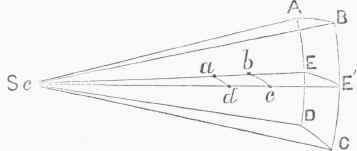
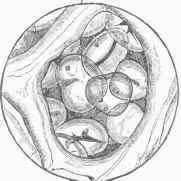
Fig. 1. - Bean Starch lying in Cellular Tissue, magnified 200 diameters.
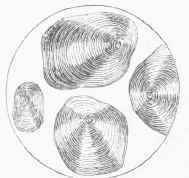
Fig. 2. - Starch Granules of tous lea mois, magnified 150 diameters.
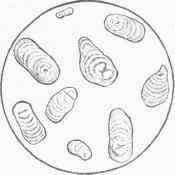
Fig. 8. - Starch Granules of Maranta arundinace e, or West India Arrowroot, magnified 200 diameters.
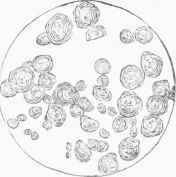
Fig. 4. - Starch Granules of Manihot utilissima, or Brazilian Arrowroot, magnified 225 diameters.
Wheat ............. | 57.88 |
Rye.............. | 64.65 |
Oats .......... | 60.59 |
Barley .......... | 66.43 |
Indian corn ........... | 67. 55 |
Rice ................. | 88.65 |
Potatoes | 20.00 |
16.05 | |
Peas | 37.30 |
Beans | 33.00 |
Flaxseed............ | 23.40 |
Cacao | 11.00 |
The size and appearance of the several different kinds of starch granules when examined by the microscope are given in the engravings. - Starch is extracted from grain by two principal processes, the old or fermenting, and the new or non-fermenting process. In employing the fermenting process the grain is steeped in water till it becomes soft enough to mash easily between the fingers. It is then passed through a malt mill or between rollers, and again mixed with water. Fermentation sets in, and lactic and acetic acids are formed, which disintegrate the cellular structure and liberate the starch granules. These are collected by repeated washings and precipitations, the process being continued for several days. The gluten under-goes putrefaction, emitting a most noisome odor. The sugar and a portion of the starch are converted into alcohol, and a part of this into lactic and acetic acids, which dissolve the gluten that has escaped putrefaction. Thorough washing and draining remove the soluble matters, and the starch left behind is next dried in blocks about 6 in. square; as the water escapes from them, the masses break up into the columnar fragments peculiar to starch.
The other method, introduced by M. Emile Martin of Vervins, France, consists in kneading the flour into dough with.water, and then washing on a sieve of No. 120 wire in a stream of water, as long as the water passes through milky. The starch in suspension and the sugary portion in solution are caught below the sieve, and the gluten nearly all remains behind in a sticky mass. What passes through is left to ferment 24 hours in an oven at G8° F., and a little leaven is added, or the skimmings of a former operation, to hasten the process. The portion of gluten carried through with the starch is thus separated and removed by skimming. The starch is then treated like that otherwise obtained. The product by this method is about 50 per cent, of the weight of the flour, while by the other process it is only from 35 to 40 per cent. Nearly the whole of the gluten also is saved in a condition suitable for food, either by mixing it with flour and making of it macaroni and similar pastes, or with boiled potatoes, and thus making a cheap and nutritious bread, by adding to the potatoes a nutritive element in which they are deficient. Potato starch is made from rasped or grated potatoes, by a process similar to that just described.
This variety does not assume the columnar form in drying, and is also peculiar in retaining a large amount of moisture, generally 20 per cent., or when saturated 23 per cent. - Rice is treated by a process patented in 1840 by Orlando Jones, which is also quite as applicable to the other grains. It is macerated in a weak alkaline solution, a gallon of water to every 2 lbs. of rice, and about 200 grains of caustic soda or potash to the gallon, which dissolves the gluten but leaves the starch. After standing about 24 hours, the alkaline liquid is drawn off, and. the rice after being well washed, is drained, and is then ground into flour. A fresh quantity of lye is added to it, and it is again digested for 24 hours, with frequent stirring. It is now left for 70 hours, in which time the dissolved gluten rises and is all found in a turbid, yellowish stratum at the top. This portion is carefully drawn off, leaving the fibrous portion of the grain at the bottom intermixed and covered with starch. The deposit is then stirred up and washed with abundance of cold water, and the mixture being left to repose, the fibrous portion is deposited with very little starch, and the remainder is drawn off by a siphon through a fine sieve into a cistern, when it is further washed and purified.
The gluten is recovered by neutralizing its solution with sulphuric acid, by which means it is precipitated. The water is then drawn off and the gluten collected, dried, ground, and mixed with other flour. A patent was granted to James Colman of England in 1842 for making starch from maize and other grains by a process similar to that of Jones; but an application for a renewal of the patent of the latter in 1854 was refused because a similar one had been granted to Thomas Wickham in 1824. The manufacture of starch from Indian corn by an alkaline process was introduced in this country by Thomas Kingsford in 1842-'3, while foreman in the starch factory of William Colgate and co., in New Jersey. The two largest starch manufactories in the world are in the United States: one at Oswego, N. Y., established in 1848 by Thomas Kingsford and son, producing 21,500,000 lbs. annually; the other at Glen Cove, Long Island, established in 1858 by the Messrs. Duryea, and producing 19,000,000 lbs. annually. Their products, both laundry and edible corn starch, are largely sent to European and other foreign markets, and have taken the first prizes at international industrial exhibitions.
Each establishment employs its own processes, and the recovery of the gluten is not practised, but this, with other parts of the grain separated from the starch, is sold as food for domestic animals. - The part taken by starch as a constituent of food is the most important of its numerous uses, being the principal element in the food of graminivorous and herbivorous animals, and an important one in that of man. It is used in the manufacture of dextrine or British gum, for stiffening linen and cotton goods, and for making size for paper and various other articles. It is employed in medicine for diluting and otherwise modifying the form of various articles of the materia medica; in surgery for preparing splints and bandages; and in the chemical laboratory for the detection of iodine. - Animal starch, called glycogen because it has the property of being transformed into glucose or starch sugar, exists in the livers of all healthy vertebrate animals, and in some of the tissues of other animals. It resembles vegetable starch, but yields a violet red instead of a violet blue color with iodine. (See Liver).
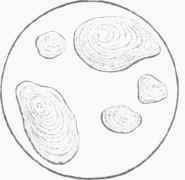
Fig. 5. - Potato Starch. magnified' 225 diameters.
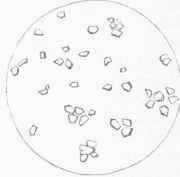
Fig. 6. - Rice Starch, magnified 300 diameters.
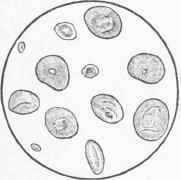
Fig. 7. - Wheat Starch, magnified 225 diameters.
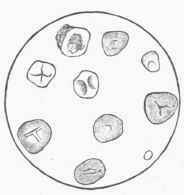
Fig. 8. - Corn Starch, magnified 400 diameters.
Continue to:


My Books

