


Cowes
Description
This section is from "The American Cyclopaedia", by George Ripley And Charles A. Dana. Also available from Amazon: The New American Cyclopædia. 16 volumes complete..
Cowes
Cowes, a seaport town and watering place of the Isle of Wight, Hampshire, England, situated at the mouth of the river Medina, which flows into the Solent channel nearly opposite the estuary called Southampton water, 11m. S. S. E. of Southampton; pop. in 1871, 11,126. It is built on both banks of the river, the two parts being distinguished as East and "West Cowes. It has a number of good hotels and lodging houses for summer visitors, a botanical garden, custom house, assembly room, town hall, mechanics' institute, and seven places of worship. The parish church of Northwood is an ancient edifice, with a handsome tower and spire built in 1864. The castle stands at the N. extremity of the parade, and is used by the. royal yacht squadron as their club house. The streets are steep, narrow, and in many quarters disfigured by old and wretched dwellings. Its beautiful scenery, good situation, and facilities for sea bathing at a fine beach very near the town, render it one of the most popular bathing places in England. The harbor is excellent, and there is constant steam communication with Portsmouth, Southampton, etc.
A brisk trade is carried on in provisions and other marine stores; wheat, flour, malt, barley, wool, and salt are largely exported to France, Spain, Portugal, and the Mediterranean. In 186/4 a public walk, about 1,100 ft. long, was laid out along the shore, and from 1866 to 1868 a pier for steamers 310 ft. long was built. Osborne house, the marine villa of Queen Victoria, is in the vicinity.
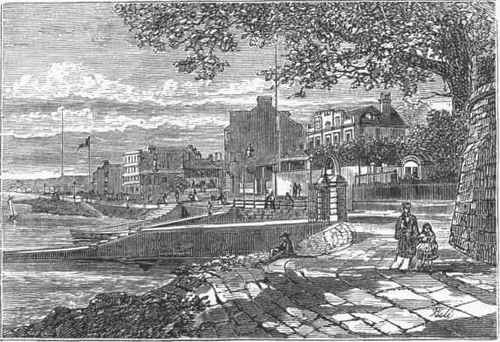
Cowea.
Continue to:


My Books

