


Agrigentum
Description
This section is from "The American Cyclopaedia", by George Ripley And Charles A. Dana. Also available from Amazon: The New American Cyclopædia. 16 volumes complete..
Agrigentum
Agrigentum (called by the Greeks Acragas; now Girgenti), an ancient Sicilian city, the rival of Syracuse, on a lofty eminence on the S. W. coast. It was settled by a Doric colony from Gela, about 580 B. C. During the 5th century B. C. it attained its highest prosperity, when its population was probably above 200,-000. The city was celebrated for the beauty of its architecture, both public and private. Its greatest public edifices were the temples of Concord and of the Olympian Jupiter, of which gigantic ruins remain. Shortly after its foundation it was ruled by the tyrant Phalaris, and in the following century by Theron (488 to 472).
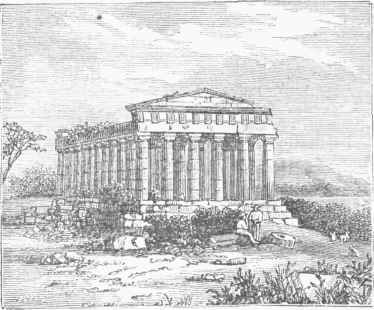
Temple of Concord, Agrigentum.
It was repeatedly involved in hostilities with Carthage, and in, 405 B. C. was razed to the ground by an army of that nation. It was rebuilt by Timoleon, and in 210 became permanently subject to Rome, growing to be one of the most prosperous of the cities of Sicily, with a great trade in corn, wine, and oil. The Saracens captured it in A. D. 825, and kept possession of it till 1086. (See Girgenti.)
Continue to:


My Books

