


Angora
Description
This section is from "The American Cyclopaedia", by George Ripley And Charles A. Dana. Also available from Amazon: The New American Cyclopædia. 16 volumes complete..
Angora
Angora (Turk. Engurieh; anc. Ancyra), a city of Asia Minor, capital of a Turkish eyalet of the same name, 220 m. E. S. E. of Constantinople; pop. about 45,000, including about 30,000 Turks, 10,000 Armenians, 4,000 Greeks, and 1,000 Jews. It is situated in the midst of a vast elevated plain, abounding in fruits and pasturage, over which the roving tribes of the Turcomans tend their sheep, goats, and horses. The citadel is situated on a steep rock, and its walls are covered with inscriptions.
The trade with the west is chiefly in the hands of the Greeks and Armenians, and thus the city in social life is rather European than Mohammedan. It is the see of a Greek and of a Catholic Armenian bishop. On July 20, 1402, Angora was the scene of a terrible battle between Timour and the sultan Bajazet I., in which the latter was captured. There are some ancient remains. (See Ancyra.) - The Angora goat, with its silken fleece, is the most curious product of this region. Its hair, which is white and soft, and about eight inches long, is shorn twice a year, and is much esteemed as material for shawls. In 1809 the number of these goats
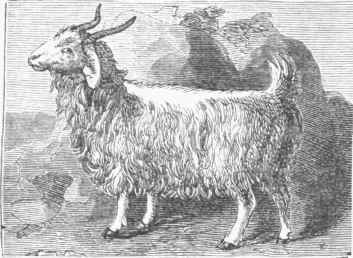
Angora Goat.
Continue to:


My Books

