


Kuhl's Coriphilus
Description
This section is from the book "Parrots", by Prideaux John Selby. See also: Alex & Me: How a Scientist and a Parrot Uncovered a Hidden World of Animal Intelligence.
Kuhl's Coriphilus
Coriphilus Kuhlii - Wagler.
Coriphilus Kuhlii, Mon. Psitt. in Abhand. etc. p. 494, and 566. - Psittacula Kuhlii, Vig. in Zool. Journ. v. 1. p. 412. pl. 16. - Lear's Parrots.
This beautiful little bird was first described and figured by Mr Vigors in the Zoological Journal, from one of several specimens received by Mr Cross, formerly of Exeter Change, and now proprietor of the Surrey Zoological Gardens, from an island in the vicinity of Otaheite. In beauty of plumage, and elegance of aspect, it yields to few of the race; but it appears to be of a wild and timorous disposition, at least in regard to strangers, as Mr Vigors states that he was unable to enter into its characters to the extent he wished, from its impatience of observation and a near approach. Its voice is weak and sibi-lou8, similar to the other species of this group, which contains, in addition to the present, the Cor. sapphiri-nus, Wag. (Psittacus Taitanus, Auct.), Cor. euclorus, Wag. (Psitt. fringillaceus, Lath., Kuhl, &c), and the Cor. solitarius, Wag. (Psitt. Phigy, Bechst., Kuhl,etc.) The bill is small and short, of a red colour. The irides are composed of three circles, the exterior being red, the second grey, and the third or inner yellow. The forehead and crown are of a lively green, the double occipital crest is of a rich violet-purple, and composed of long narrow feathers, which it can erect at pleasure, but most frequently when irritated or alarmed. The face, fore-neck, breast, and abdomen, are blood-red, the thighs of a deep purplish-red, the vent and upper tail-coverts are sulphur-yellow. The hind-neck, the back and wings are of a lively yellowish-green. The tail, which is pretty long and broad, is red, tinged with purple, the tips of the feathers green. The legs and toes are red, the latter short and strong; the claws are black and hooked.
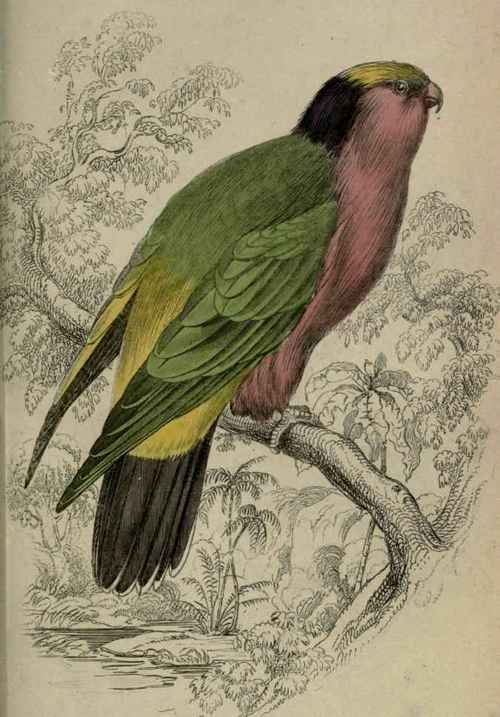
Plate 23. Coriphllus Kuhlii. Kuhl's Coriphilus. Native Of Otaheite.
E.Lear del.
Lizarus sc.
Another very beautiful and interesting bird, which appears to belong to this little group, is the Psitt. Taitensis, Gmel.: - Blue, but having the throat, fore part of the neck, and cheeks, white. It frequents the very summits of the cocoa-trees, examining their flowers at the moment of bursting, for the sweet liquid which is there abundant.
Apparently in near connection with Wagler's genus Coriphilus, in the weak structure of the bill, and in the length and shape of the wings, is another group of diminutive Parrots, inhabiting the Indian and Australian islands, for which we adopt the title of Psittaculus, and which, we believe, will enter into the present subfamily, though we cannot speak positively as to the structure of their tongue, or whether it is furnished with papillae similar to the members of the other nectivorous groups. Our figure represents what we suppose to be the young Male of the Sapphire Crowned Psittacule.
Continue to:


My Books

