


Lesser Sulphur-Crested Cockatoo
Description
This section is from the book "Parrots", by Prideaux John Selby. See also: Alex & Me: How a Scientist and a Parrot Uncovered a Hidden World of Animal Intelligence.
Lesser Sulphur-Crested Cockatoo
Plyctolophus sulphureus. - Vieillot.
Plyctolophus sulphureus, Lear's Parrots.-Psittacus sul-phureus, Lath. Ind. Orn. i. p. 109, sp. 81; Shaw's Zool vol. viii. p. 480, pl. 73. - Cacatua sulphurea, Wagler, Mon. Psitt. in Abhand. etc. p. 695, sp. 7. - Lesser White Cockatoo, with yellow crest, Edwards, 7, t. 317.
This species we frequently see in confinement; for though rarely able to articulate more than a few words, its handsome appearance, docile disposition, and amusing habits, render it a great favourite with those who delight in feathered pets. It is kind and affectionate to those it is accustomed to see, and who feed and take care of it; but suspicious of strangers, whose caresses it rarely admits of with impunity. When alarmed or irritated, it erects the crest to the fullest extent, making a peculiar noise; at other times it is kept depressed, and hanging over the nape of the neck.
The general plumage of the body is white, slightly tinted upon the breast, sides, and inner wing-coverts with pale sulphur yellow. The crest, in form like that of the other species, and auricular spot, are fine sulphur yellow. The legs and toes are grey: the irides red. It is a native of the Moluccas, and other Indian islands; but of its natural habits we have again to regret deficiency of information. In captivity, the female sometimes produces eggs, and we now have specimens by us which were laid by one at rather peculiar periods, viz. the 21st June, 21st of September, and 21st of December; but whether this resulted from the peculiar economy of the bird, as acted upon by the seasons, or was the effect of the confinement, we are unable to determine.
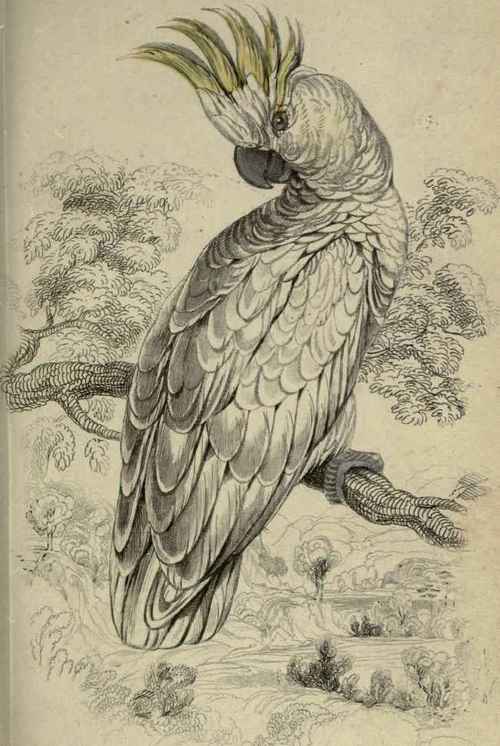
Plate 14. Plyctolophus Sulphureus. Lessersulphur Crested Cockatoo.
E. Lear del.
Native of the Moluccas.
Lizars sc.
In addition to the species described, the following" belong to this present genus, viz. Plyctolophus Philip-pinarum, Red-crested Cockatoo, a native of the Philippine Islands; Plyct. Moluccensis, Wag., the Great red-crested Cockatoo, which is found in the Moluccas, Sumatra, etc.; Plyct. cristata, Wag., also a native of the Moluccas, and the Plyct. rosei-capil-lus, Vieill. (Psittacus Eos. of Kuhl), which, however, departs from the type in the form and structure of the crest, approaching in this respect nearer to Wagler's genus Licmetis, which is represented by the Psittacus nasicus of Temminck, described in the 13th volume of the Transactions of the Linnaean Society, and in the "Planches Coloriees," plate 351.
Nearly allied to the Cockatoos, and included in that genus by many authors, is the Red-crowned Parrot (Psittacus galeatus of Latham, Kuhl, etc.) It forms the type of Wagler's genus Corydon, and, according to the views of that author, forms the connecting medium between the Cockatoos and the genus Calyptorynchus of Vigors and Horsfield, upon which we are about to enter, and for which group we propose to give the title of Geringore, taken from the name applied to one of the finest and largest species by the natives of Australia. The characters of the genus Calyptorynchus are: - Bill thick, very strong, much higher than long, wide at the base, compressed towards the culmen, greatly arched, and describing in its profile nearly a semicircle, the tip not much elongated, and bending inwards; under mandible massive, dilated, wider than the upper, toothed, and deeply emarginate in front, nearly concealed by the feathers of the cheeks; orbits and lores naked; tongue simple, smooth; nostrils large, round, lateral, placed behind the corneous base of the bill; wings ample, rounded, the second, third, fourth, and fifth quills the longest, and nearly equal, their exterior webs emarginate towards the middle; tail of mean length, broad, slightly rounded ; feet and toes rather weak, the tarsi short. The width and peculiar form of the lower mandible, and the shortness of the whole bill, as compared with its depth at the base, as well as its semilunar profile, are characters alone of sufficient importance to separate the members of this group from the true Cockatoos. In addition, the crest which exists is of a different form ; the tail is more elongated and rounded, and the ground or prevailing colour of the species, instead of being light, is always dark, varying from black to blackish-grey and blackish-green. So far as our limited acquaintance with their habits extends, they appear to be birds of a wilder and fiercer disposition than the generality of the Psittacidae, and less gregarious than the conterminous genera. They are said to feed greatly upon bulbous roots, as well as on fruits and seeds; and the denuded tip of the ra-chis of the tail-feathers indicates something peculiar, and with which we are yet unacquainted, in theireconomy. The holes of decayed trees are the receptacles for their eggs, which are said rarely to exceed two or three in number. They are natives of Australia, to which the group appears to be confined. The subject selected to illustrate the genus is the Stellated Geringore.
Continue to:


My Books

