


Swindern's Love-Bird
Description
This section is from the book "Parrots", by Prideaux John Selby. See also: Alex & Me: How a Scientist and a Parrot Uncovered a Hidden World of Animal Intelligence.
Swindern's Love-Bird
Agapornis Swinderianus.
Psittacus Swinderianus, Kuhl, Consp. Psitt. in Nov. Act., etc.,p. 104, pl. 2. - Psittacula Swinderiana, Wagler, Mon. Psitt. in Abhand. etc, p. 621.
This beautiful little species is a native of Southern Africa, and was first described and figured by Kuhl, in his "Conspectus Psittacorum," under the title of Psittacus Svoinderianus; it was included in that section named by him Psittacula, in which he placed the whole of the smaller species with short and even or slightly rounded tails - an artificial division, and established without due regard to the structure, habits, or distribution of the species. Little is known respecting its natural history, being a bird of rare occurrence, and even now only seen in a few collections. In the form and strength of its bill, it shews an affinity to the larger parrots, which is still more strongly indicated in another species, the Psittacus Malaccensis of Latham. In size it is among the smallest of its race, its extreme length being about six inches. The bill is black, strong, with the upper mandible emarginate. The head and nape are of a beautiful lively green, bounded by a black nuchal-collar; the neck and breast are yellowish-green; the mantle and wings are green; the lower back and upper tail-coverts are deep azure blue. The tail, which is short and nearly even, has the two intermediate feathers wholly green; the rest on each side have their basal half vermilion-red, bounded by a bar of black, the tips being green. The legs and toes are greyish-black. The wings are long, and, when closed, reach to the end of the tail.
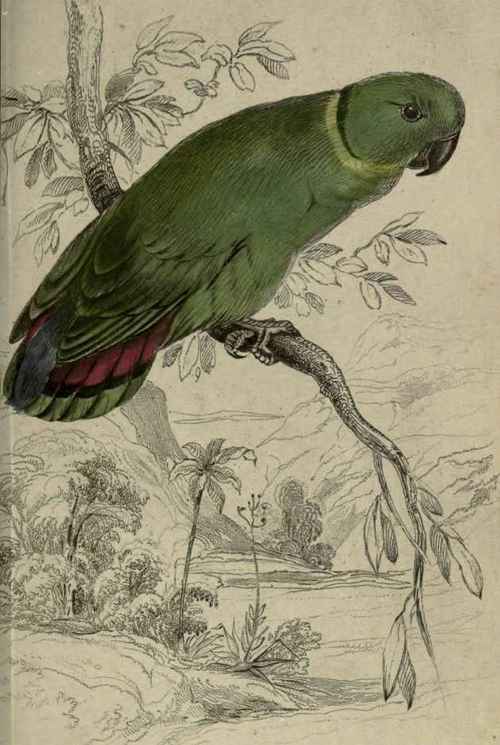
Plate 11. Agapornis Swinderlanus. Swindern's Love Bird.
Native of S.Africa.
Lizars Sc.
In this subfamily we have also placed another very interesting form, from Australia; it is represented by the Psittacus Nestor of Latham, and now forms the type of Wagler's genus Nestor. This bird is supposed to form a connecting link between the Parrots and Cockatoos, though it must be confessed that more correct information respecting its history and habits is necessary, before its true situation and direct affinities can be satisfactorily ascertained. The characters of the genus Nestor of Wag-ler are: - Bill elongate, the upper mandible compressed, hooked; the tomia sinuated, but not distinctly toothed; the tip projecting, with its under surface sulcated and deeply excavated for the reception of the tip of the under mandible; under mandible narrow, compressed, slightly convex, or forming, when closed, an obtuse angle with the upper; wings rather long, ample; tail of moderate length, and even at the end, the tips of the shafts bare, and slightly projecting beyond the feathered part. The following plate represents the Southern Nestor.
Continue to:


My Books

