


Thermit In Foundry Practice
Description
This section is from the book "Welding Theory, Practice, Apparatus And Tests Electric, Thermit And Hot-Flame Processes", by Richard N. Hart. Also available from Amazon: Welding: Theory, Practice, Apparatus And Tests, Electric, Thermit And Hot-Flame Processes.
Thermit In Foundry Practice
Thermit may be introduced into the ladle before pouring for a casting. If the piece to be cast is long and thin, or if it has intricate parts which require a very hot metal to produce, the temperature of the iron in the ladle can be raised by plunging a can of thermit into it and holding it at the bottom until both thermit and can have burned up and the slag has come to the surface. The excess heat of the thermit will raise the temperature of the ladle (Fig. 77).
How much thermit to use for a given amount of iron cannot be stated definitely - probably 5 per cent. It depends on the initial temperature of the ladle, the demand of the casting, and the cost. The cost prohibits its use except for special work, such as the casting of stern-posts for ships, and the production of small castings which can be made at any time without the capital investment for a special converter plant.
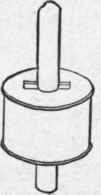
Fig. 78. - Detail of thermit plunger can.
1 "Mending a Casting with Thermit," Pat Redington, Foundry, April, 1905.
The company also recommends placing a can of thermit in the riser of such a casting as a ship's stern-post. If the post is to be a long one, "the metal cools very rapidly during its passage through the mold, and becomes so sluggish that the pressure of the runner is not sufficient to force the metal up the rising heads more than one-half of their length." The thermit can will reinforce the heat of the rising metal.
To prevent "piping" of steel ingots, a can of thermit may be plunged into the ingot. The operator waits until the ingot has begun to solidify. The "pipe" will then begin to form, due to the chilling of the steel on the outside and its contraction. Break through the top crust, and thrust the can well down into the ingot. It will ignite and raise the temperature of the upper part of the ingot to remelting. A solid ingot will result (Figs. 79 to 81). This is another use for thermit, questionable, because of its cost. Poling. - As has been described, the foundryman often freshens his "burnt iron," by stirring the ladle with a green stick of wood. "Burnt iron" contains oxygen in the form Fe203. This oxid of iron impairs the strength of the iron very much.
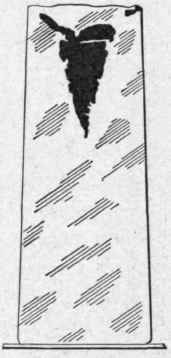
Fig. 79.

Fig. 80.
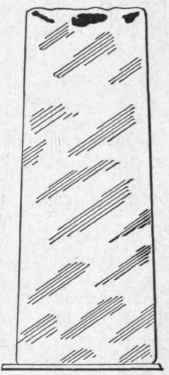
Fig. 81.
Fig. 79. - Steel ingot showing defective head piping without anti-piping thermit.
Fig. 80. - Showing ingot with box of anti-piping thermit in position.
Fig. 81. - Ten-ton steel ingot having been treated with anti-piping thermit.
By stirring the molten mass with a green limb, the workman has added carbon which reduces the iron oxid, as follows:
2Fe203+3C = 4Fe+3C02.
The limb being full of water also throws out steam which causes the iron to boil. This makes the reaction complete throughout the mass. When the oxid is all reduced, the ladle is " fresh." But this operation, called "poling," lowers the temperature. Now "poling" can be done with a thermit can on the end of a rod instead of with a green limb. The composition of the thermit must be varied so as to have a positive effect on the oxid of iron; that is, there must be a slight excess of aluminum. Thermit "poling" has the advantage that it raises the temperature of the molten iron. But it should not be used except in ladles of steel, because at the heat of molten steel there is complete reaction with the excess aluminum in the thermit. While at the lower temperature of molten cast iron, the reaction would be confined to the thermit can. The excess of aluminum would not react on the iron oxid of the burnt mass, and both would stay in solution. In other words, the iron would be poorer than ever.
A better method recommended by the company is the use of manganese with the thermit, though no doubt the thermit can be omitted if we do not wish to raise the temperature. Pure manganese, made "thermochemically," can be used. Manganese, in the form of ferro-manganese and spiegel, have long been known to furnace men as a cure for "burnt iron" and a toughener of their product.
W. M. Carr1 is authority for the statement that a large ladle can be used for a small converter if thermit be added to the first pour in the ladle immediately preceeding the second pour. The ladle held 5 tons, the converter 2 tons, the pours were forty-five minutes apart. The thermit was poled into the first pour, as usual, in a can on a rod. It freshened the iron and raised its temperature to about that of the second pour.
Adaptability
In summing up the thermit process as a whole it will appear that it is especially suited for welding and repairing large pieces. In pieces ranging below 4 square inches cross-section, it has to meet competition with the oxy-acetylene, oxy-gas, oxy-hydrogen, electric, and smithing processes. Its application to butt-welding is very often the cheapest, handiest, and most workmanlike.
1 "Development of the Thermit Process in Foundry Practice," Foundry, July, 1906.
In rail welding it has to compete with the electric process, which was the pioneer in this field.
In welding motor cases for steel cars it has to compete with the oxy-actylene process.

Fig. 82. - Fracture on locomotive frame, opened up by drilling and held in place by jacks in preparation for thermit welding.
In welding fractured locomotive frames it is used with success, and is evidently as cheap as can be had - certainly, much cheaper than the old blacksmithing, for the weld may be effected often without dismantling. It is used in their repair shops by many of the railroads in this country and abroad for repairing engine frames and also driving rods and spokes, and occasionally the repair machinery. The Central Railroad of New Jersey first introduced thermit in their shops.
It is used for occasional repairs of fractured gun-carriages and parts.
Also for crank shafts, embossing dies, shears, and anvils, in cases where it is cheaper to repair than to replace.
For broken rudder and propeller shafts, skegs, and stern-posts of vessels it is invaluable. This is the most notable feature of the process. Before the advent of thermit, a break in one of the parts named meant the dry-docking of the vessel for weeks, the displacing of the part broken and its repairing at great expense and trouble, or sometimes its displacement. Besides the actual expense entailed, much was lost by having the boat out of commission.
Since the use of thermit for such repairs, dry-docking is still necessary, but the whole operation can be gone through with in much less than a week; the vessel is not dismembered and the weld may be made the strongest part of the piece. Broken anchors can be mended in a few hours. As already described, there are many instances of such quick, cheap, and strong welds.
Thermit is almost a new subject. It has been known to the repair men since about 1904. It is already a definite success, and under the energetic experimentation of the Goldschmidt Co. it is likely to prove useful in ways at present unthought of. It is likely that special thermits will soon be invented for welding other metals than iron and steel.
Typical Welds
In the welding of rail joints in quantity there are a number of large contracts that have come to notice. Among them the joining of the third rail of the Paris subway; the welding of 10,000 joints of the Electric Traction Company of Adelaide, Australia; the welding of the Lexington Avenue line in New York City. The latter was especially difficult because of the heavy traffic. It was impossible to do the job by daylight without tying up the traffic. In the early morning hours, when the cars run on a ten-minute schedule, the company succeeded in carrying on their welding with only the occasional holding up of a car.
The cost of thermit rail welding has been variously estimated. Track at Holyoke,1 Mass., welded in 1904, cost $6.23 per joint. The longest unit rail made was 2300 feet. In the same year rail welding at Hartford,1 Conn., cost $5.00 per joint, which figure includes repaying.
1 Street Railway Journal, Feb. 18, 1905.
Among pipe-welding contracts, that carried out for the Manhattan Refrigerating Co.,2 of New York City, is noteworthy. Their entire system of piping was welded by the thermit process. There were twenty-nine 1 1/4-inch joints, and twenty-seven 2-inch joints, both under a cold pressure of 180 pounds. The result is reported as successful. This is a decided improvement on the sleeve joint for ammonia systems, because the contraction of the pipes due to the extreme cold is certain to allow leakage in the sleeve joint.
Continue to:


My Books

