


Diamond Mining In Brazil
Description
This section is from "Scientific American Supplement". Also available from Amazon: Scientific American Reference Book.
Diamond Mining In Brazil
It was in 1729 that the Portuguese government learned of the discovery of the diamond that had been made in the rivers of the environs of Diamantina by some adventurers who had entered this region in search of gold. Since that epoch the exploitation of this gem, pursued under varied regimes, and with diverse success, has never ceased. As soon as it heard of this discovery, the Portuguese government thought it would make as much profit out of it as possible, so it no longer authorized any other exploitation in the Diamantina regions than that of the diamond, and it imposed upon such exploitation a tax that was fixed at 28 francs per laborer in 1729 and 224 in 1734. From 1734 to 1739 all operations were suspended, and a more lucrative organization for the treasury was sought for. In 1739 the era of contracts was inaugurated. The exploitation of the diamond was farmed out for four years to a contratador, who was to work a certain territory with a number of men, fixed at 600 as a maximum, and to pay into the treasury a sum per workman (whether working or not) that varied from 1,288 francs per year in 1734 to 1,344 francs for the last contract, that ended in 1772. At this epoch the government took the exploitation of the diamond in hand, and gave it in charge of a special administration, which was submitted to the direction of the treasury of Lisbon, and which had at its head a comptroller.
This new regime lasted till 1845. In order to render the surveillance of the treasury agents efficient, and prevent smuggling (which can be so easily done with an object like the diamond), it was necessary to impose a special regime over the entire region of Diamantina, and, in fact, the latter was, up to the independence of Brazil, submitted to Draconian regulations.
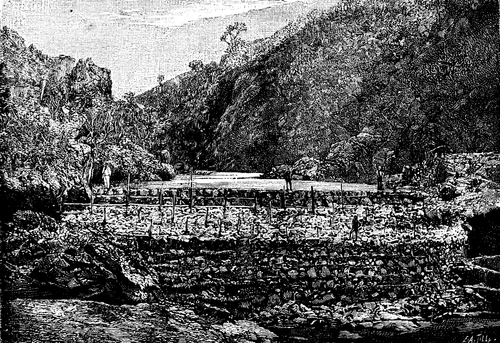
FIG. 1. - DAM ON THE RIBEIRAO INFERNO AT PORTATO DE FERRO.
We only know the quantity of stones that were discovered during the period when operations were directed by the Royale Extraccao, from 1772 to 1845, and this was 269,870 grammes, or more than 1,300,000 carats. It should be understood that what was taken by stealth does not enter into this total, and it must be stated that during the latter years, when the Extraccao existed only in name, smuggling must have been active.
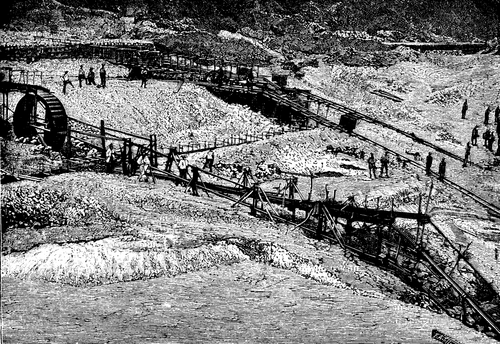
FIG. 2. - ARRANGEMENT OF THE MACHINERY AT THE PORTATO DE FERRO DIAMOND DEPOSITS.
Since that epoch the exploitation has been continued by lessees of the diamondiferous grounds. It is almost impossible to estimate what the territory has produced. The discovery of the Cape deposits has given it a terrible blow. Although the Brazilian diamond is much more beautiful, and for this reason is held at a much higher price, these new exploitations, by annually throwing large quantities of stones upon the market, have led to a great reduction in the price, and the Diamantina exploitations, which have become long, difficult, and costly, have received a serious set-back. So the annual production of this region, which was estimated for the years preceding 1870 at 3,000 oitavas (about 52,000 carats), is now scarcely 500.
The rivers in the environs of Diamantina rim at the bottom of deep and narrow gorges that have been scooped out to depths of 300 or 400 meters through the denuded plateau in whose center stands the city of Diamantina. In the bed of these rivers, in places where they have not yet been worked, there may be found, underneath a stratum of modern sand, another of rocks, and finally a diamondiferous deposit of rounded pebbles, mixed with sand. This gravel, which is characterized in the first place by the fact that all its elements are rounded, and next by the presence of a large number of minerals (among which the most important are all the oxides of titanium, different oxides of iron, tourmaline, and a whole series of hydrated phosphates of complex composition), is called in the language of the country cascalho. It is the matrix of the diamond, and the latter is extracted from it by washing. It is arranged in roundish masses upon the beds of the rivers, and is met with at depths ranging from a few decimeters up to 25 and 30 meters.
The same material, with the same name, is also found deposited at all heights upon small terraces at the sides of the valleys through which the rivers flow. It is coarser and less rolled, and has very likely been deposited by risings of the rivers during the period when the valleys were being formed. These deposits bear the name of gupiarras. Finally, it is found in a still coarser state, mixed with red earth and deposited in horizontal strata upon the upper plateau. It is then called gorgulho.
Of these different deposits, the most important are those of the river beds, the material here having undergone a true mechanical preparation and being richer. These are the deposits that have been the object of the most important exploitations.
The year is divided into two distinct seasons - the dry, from May to September, during which rain is exceptional, and the rainy, from October to April. As water is necessary for all the operations, no work can be done upon the high plateaux except through rain water stored up in large reservoirs. These beds form what are called the "rainy season washings." In the rivers the working of the beds requires a preliminary drying, which is effected by diverting the river's course. Now in all this rocky and denuded region the water that falls runs immediately to the river, and causes terrible freshets therein; so operations capable of keeping the bed dry would be out of proportion to the probable results of the exploitation, whence it follows that the latter is only possible in dry weather, and these deposits are therefore called "dry season washings."
Continue to:


My Books

