


Exercises That Bring Grace Amd Beauty
Description
This section is from "Every Woman's Encyclopaedia". Also available from Amazon: Every Woman's Encyclopaedia.
Exercises That Bring Grace Amd Beauty
Indian CLUBS - No. 3
By Beatrice E. Bear
Fellow of the Gymnastic Teachers Institute, Member of the British College of Physical Education
Consecutive Circles with One Hand - Combined Exercises Introducing Circles A, B, C, D - Alternate
Circles - How to Arrange Exercises
The last exercise described in the previous article (see page 4199, Vol. 6) may be written thus in short notation : 1/2 A 1/2 L, 1/2 L 1/2 A. These movements should follow each other smoothly and continuously. There must be no jerk when the arm bends or straightens. Two counts (or two bars of waltz music) must be given to this exercise; the first count " one " is said when the arm is doing 1/2 A 1/2 L, and " two " for 1/2 L 1/2 A. This circle should be practised with the back to a wall.
Fig. II illustrates the Outward Hip Twist (modified) done by the left hand. The position shows the club at the finish of the hip twist, just before straightening the arm for the ascending half of the outward front swing. In Fig. II the right hand is also illustrated making a Front Twist at full distance, G", just at the commencement of the last quarter of the circle. The back of the hand will be seen turned uppermost to enable the club to make the circle in front of the arm.
Outward Cross Hip Twist (M). (Fig. 12.) Left hand. Hold the right arm up, to keep it out of the way. Bring the left hand across the back (the forearm rests against the waist) until it is under the right arm, just above the right hip, the back of the hand touching the waist, the club pointing upwards in front of the right shoulder. Now let the club swing round to the left, making a circle in front of the right hip. The wrist must be allowed to turn, and the fingers may be slightly opened. As in the previous one, this circle is better practised as part of a series of circles - in this case, three.
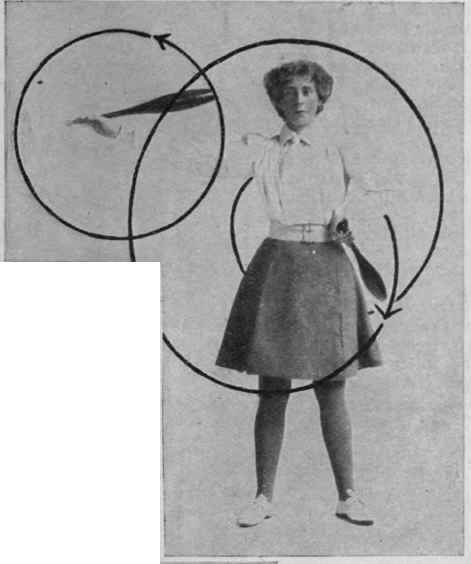
Fig. II. Left hand. Outward hip twist modified (1/2 A 1/2 L, 1/2 L 1/2 A). Position at finish of hip twist, before straightening arm for ascending half of front swing (1/2 A). Right hand. Front twist at full distance (G") at commencement of last quarter of circle. These two circles are not shown as though being swung together twist (M). Approaching lowest point at
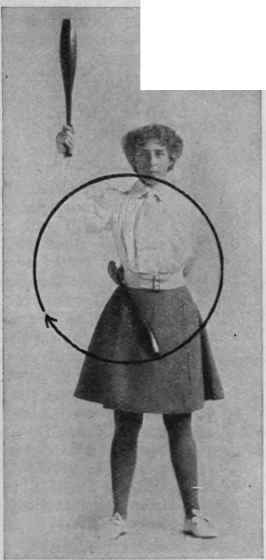
Fig. 12. Left hand. Outward cross hip end of first half of circle
Begin as in the last circle (L), but swing the arm (bending it) right across the back ; and let the club swing up, under, and in front of the right arm, till it points upwards in front of the right shoulder. It has now arrived at the starting position described above. In reaching this position, the club has made the descending half of a Front Swing, and the ascending half of a Cross Hip Twist (1/2 A 1/2 M). Next follows the descending half of a Cross Hip Twist, and the ascending half of a Hip Twist - whilst the club is ascending, the hand must slide round the waist and across the back to the left - (1/2 M 1/2 L). The club should now be pointing upwards, as at the start of circle L. Now do the descending part of the Hip Twist and the ascending part of the Front Swing (1/2 L 1/2 A). This exercise consists of parts of three circles (A, M. L), and must be done to three counts or three bars of a waltz. In short notation it is written - 1/2 A 1/2 M 1/2 M 1/2 L 1/2 L 1/2 A. By comparing the letters with the movements made by the club, it is quite easy to follow the sequence of the circles.
Inward Circles
Outward circles have now been fully described, from A to M, but every circle can be swung in the reverse direction. It is then called an inward circle - that is to say, an Inward Front Swing with the right hand will start across the body, instead of away from it. And all Swings or Twists made in the same direction (without reversing the swing) as this Inward Front Swing, will be Inward Swings or Twists. They are denoted by the same letters as the corresponding outward circles, but are written in small letters, instead of capitals.
It is desirable, in swinging a series of circles, to reverse the swing as little as possible, because this breaks the continuity. If Outward circles are started, the succeeding circles should all be Outward, until all have been done. They may then be reversed, of course, and swung as Inward circles.
As soon as the first four circles have been learnt and carefully practised separately, combinations of those circles with one hand should be tried. The following are a few examples of consecutive circles, introducing only the first four circles, A, B, C, and D. Each group should be repeated a definite number of times, with each hand separately. Count eight, twelve, or six-teen whilst swinging.
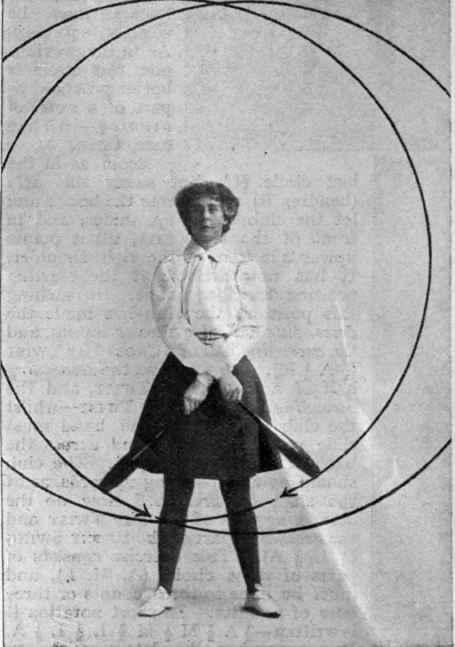
Fig. 14. Both hands. Combined inward front swings (a) just before the clubs reach their lowest point outward back twist, after outward front
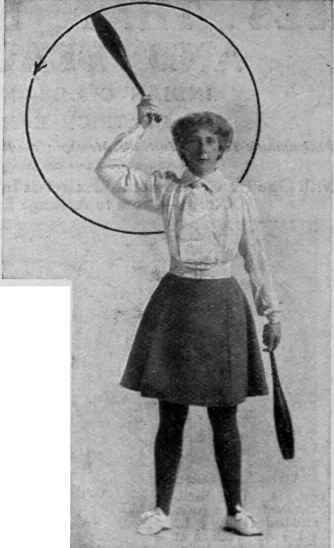
Fig. 13. Right hand. The start of the swing. Arm just beginning to bend
Continue to:


My Books

