


Exercises That Bring Grace Amd Beauty. Part 2
Description
This section is from "Every Woman's Encyclopaedia". Also available from Amazon: Every Woman's Encyclopaedia.
Exercises That Bring Grace Amd Beauty. Part 2
The following symbols, to denote the position of the shoulders, will be used in describing these consecutive circles :
- Shoulders square.
/ Shoulders half-left (the feet are not moved). \ Shoulders half - right (the feet are not moved).
Shoulders full-left (the feet are turned on heels).
- Shoulders full-right (the feet are turned on heels).
When no symbol is used, " Shoulders square " is understood.
Outward Front Swing followed by Outward Back Twist (A B) ; also Inward Front Swing, followed by Inward Back Twist (a b), Fig. 13 illustrates this exercise, showing the start of the Outward Back Twist, after Outward Front Swing, with the arm just beginning to bend.
It is obvious that in passing from one circle to another it is necessary to modify them slightly. For example, in this particular exercise, the Front Swing will not finish in exactly the starting position, but will be carried further back over the shoulder, so as to prepare for the Back Twist. The Back Twist is started during the bending of the arm (see Fig. 13) and finished during the straightening of the arm, preparatory to repeating the Front Swing. The aim, however, is to make each circle as perfect as possible - that is to say, in this exercise the Front Swing must be finished with a straight arm, before the Back Twist is started. Fig. 14 illustrates Combined Inward Front Swings (a), showing the clubs just before they have reached their lowest point.
The following are examples of consecutive circles with one hand.
Outward Front Swing, followed by Cross Front Twist (A C).
In this exercise only three-quarters of the first front swing can be made, as it has to stop when it reaches the position for the Cross Front Twist. The succeeding front swings are begun (in the case of the right arm) by straightening the arm during the upward half of the cross front twist, beyond the left shoulder, and in an upward direction.

(right hand).
The turn must be made on the heels just as the arm reaches its highest point at the end of each circle, and there must be no pause.

This is a very good exercise for learning direction. It should be swung facing a wall. The swing must in no way

differ from except in the position of the shoulders-i.e., in both circles the club should touch the wall throughout.


The turn is made on the heels before starting. B' is a back twist made with the arm half bent (at half distance). Practise this against a wall; start with the back 9" from it; then turn full right, and keep the club touching the wall throughout both circles.
Another circle can then be added - e.g., or four

circles thus : etc., etc.

Any number of combinations can be made, and the different varieties of the same circles introduced. Each series should be done inward as well as outward. When consecutive circles with one hand can be swung with ease and correctness, exercises with both may be started.
The following are examples of simple combined (with both hands) exercises, introducing circles A, B, C, D. Both clubs may be swung in the same direction - that is to say, one club will be doing outward circles while the other is doing inward. These are called parallel exercises. Or the clubs may swing in opposite directions, both clubs doing outward or both inward circles. These are called alternate exercises. When written in short notation, the top line represents the right hand, the lower line the left hand.
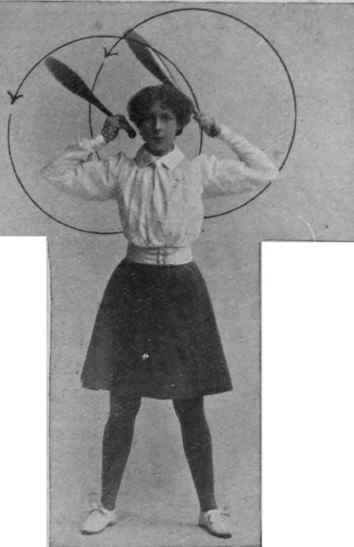
Fig. 15. B Clubs passing through b first quarter
Parallel Exercises
No. I: I.
A a
A a
\ a
4. Return to the "carry" Repeat the exercise four times, then swing to the left;
a A
a A
a
4. Return to the "carry."
No. 2 : I.
A a
B. b
Repeat up to 8 ; then swing to the left :
a A m ■ b. B
(See Fig. 15, which represents
B b
just as the Back
Twists are passing through the first quarter of the circle.)
Note the position of the hands. The usual fault is to force the hands too far back, and to bring them across the back of the head, instead of keeping them close to the ears. It is best not to attempt to make the Back Twist at first, but just bend the arms, and allow the clubs to drop down the back, being careful to bring the hands into the right place near the ears. Gradually, a little more twist may be given to the club in dropping and raising it, until the correct circle is made.
Continue to:


My Books

