


(15) Speed Of The Finger Movements
Description
This section is from the book "Human Vitality And Efficiency Under Prolonged Restricted Diet", by Francis G.BENEDICT, Walter R. Miles, Paul Roth, And H. Monmouth Smith. Also available from Amazon: Human Vitality and Efficiency Under Prolonged Restricted Diet.
(15) Speed Of The Finger Movements
Finger-movement records were taken both evening and morning. This test is a rather simple one to arrange and to perform, and it has proved itself useful in earlier investigations at the Nutrition Laboratory.1 The apparatus, method, and form of the record for this measurement is readily understood from figure 53, which is a schematic representation of a part of the apparatus shown in figure 31, page 160. The exposure apparatus E (fig. 31) has been disconnected, undamped, and withdrawn. The subject's hand clasps the post P; his arm is comfortably supported at S. The lower part A of the lever system used for recording the muscle-thickening of the patellar reflex is removed and a light, adjustable, but rigid connection W is placed (fig. 53) between the metal recording-point R and the finger at F. A small rubber band about the finger between the first and second joints forms an easy connection with W, which is adjustable in length, its longer portion being a very light-weight wooden member for purposes of insulation from the high tension sparks.
The high tension terminals of a transformer T of commercial design are connected with the frame of the kymograph and the metal recording-pant R. A suitable current (0.7 ampere) from a 110-volt D. C. source is used on the low-tension ride of the transformer. A contact C in this circuit is opened every 2 seconds by the swing of the pendulum in a large Seth Thomas clock. When the clock pendulum opens the contact in the primary circuit, a spark from the tip of the metal pointer dislodges the smoke in the immediate vicinity on the kymograph paper, and so incorporates time intervals directly with the record. The speed of the kymograph drum D was 50 mm. per second, and as its periphery represents the distance of 500 mm., it was convenient to make the finger-movement series 10 seconds long. Movements were counted in five 2-second blocks. Three series of movements were recorded, with a rest interval of at least 1 minute. Ten seconds at maximum finger movement speed is not so long as to be fatiguing. The subject was allowed to use whatever amplitude of movement he thought consistent with his best performance. The tracing was to be a record of finger movements and not of hand or arm movements. For this cause the subject was instructed to grip the post P rather tightly. The first and second fingers of the hand were moved together simultaneously, a form of movement which Langfeld1 has shown favors the greatest speed. Sections of finger-movement records may be seen in figure 29, page 158. It was experimentally expedient to place the finger-movement records on the same kymograph sheet with the others taken in room B. They could be traced over the word reactions without causing any particular.

The intersection of the dark and light bands with the border is more prominent at positions 1 and 3 than at 2 and 4. By this intersection phenomenon, many subjects are able to judge correctly the axial direction of bands before being able to see them at the black fixation dot in the center of the field. See p. 173 for method of avoiding this difficulty.
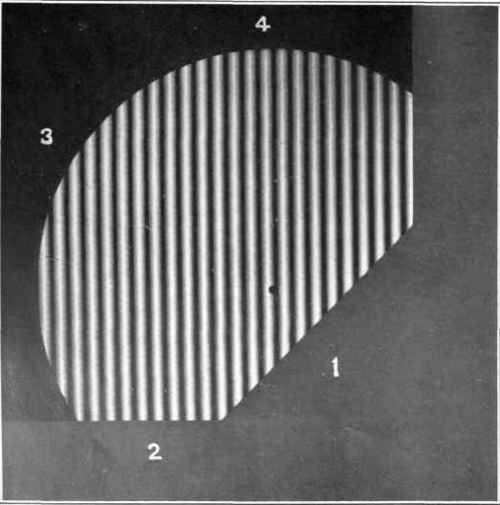
Fig. 51. - Full-size reproduction of a portion of the visual-test object window.
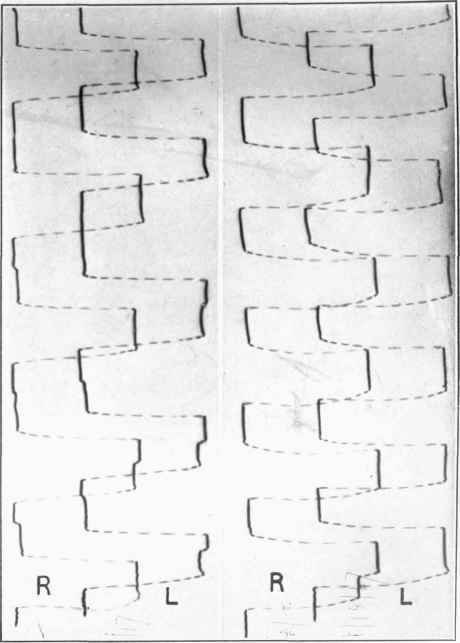
Fig. 52. - Sample eye-movement records, unretoucbed, reproduced nearly full size from contact prints of the original plates.
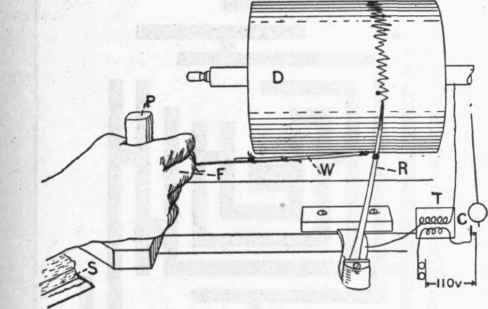
Fig. 53. - Schematic representation of apparatus and hand in position for recording finger movements.
S, support for wrist and arm; P, post to be gripped; F, finger connection to recording point, R, by insulation material, W; T, induction apparatus of commercial design with nigh tension winding connected to kymograph drum, D, and metal recording point, R; C, pendulum of large clock to break primary circuit of transformer and so, by the jump sparks, record time directly on the finger movement record.
1 Langfeld, Psychol. Review, 1915, 22, p. 453.
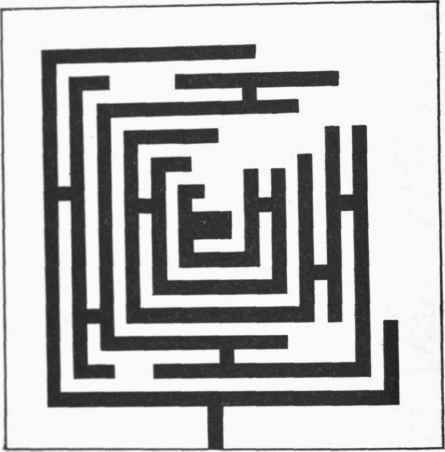
Fig. 54. - The form of the right-angle maze. The subject began in the center and worked outward on the black pattern.
Continue to:


My Books

