


Second Period of The Renaissance. Part 5
Description
This section is from the book "Dutch And Flemish Furniture", by Esther Singleton. Also available from Amazon: Dutch and Flemish Furniture.
Second Period of The Renaissance. Part 5
Folding-tables were also in use; in Margaret of Austria's inventory, mention is made of "a little table in the Spanish fashion which opens and closes."
Chairs are still heavy and carved more or less richly. Two typical specimens appear in Plate XII. As shown in these examples, the seats and backs were often covered with stamped leather, velvet, silk, or some woollen material and ornamented with tassels. The covers are tacked to the frame by means of large-headed nails that also form part of the decoration. A chair and footstool by Vredemann de Vries, of very characteristic model, are shown in Fig. 23. The chair is three-cornered, with a triangular seat, and the legs are connected with straining-rails. It much resembles the voyeuse of which Cardinal Mazarin had several; and which was again popular in the days of Louis XVI, in France and elsewhere. It was essentially a chair for a man, who faced the back and rested his arms on the top rail.
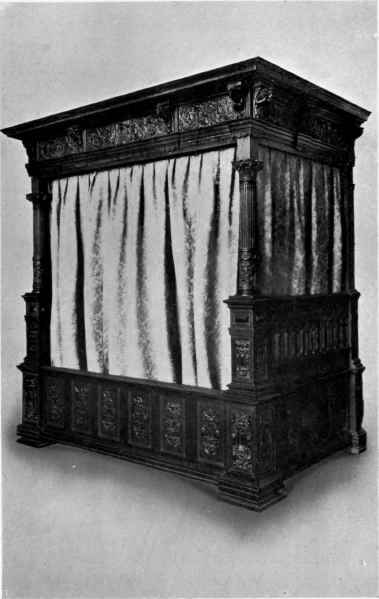
Plate XIV. - Bedstead. RIJKS MUSEUM, AMSTERDAM.
A Flemish chair of the second half of the sixteenth century is reproduced in Figs. 24 and 25. This is pure Renaissance in its simplest and certainly its least elegant form. The legs consist of Doric columns connected by stretchers close to the ground. The back slants, and is of somewhat confused carved decoration consisting of a mascaron and Classic architectural and floral motives.
When not built in the panels of the room, the armoire bears a very close likeness to the large double cabinet with doors, which is, as we have seen, merely a chest-upon-chest, and which we shall find developing into the great Dutch kas of the seventeenth century. Plate XV shows the great double cabinet, or armoire, of the Renaissance with carved panels, pillars and caryatides. This stands on ball feet. It is of the same period as the bed represented in Plate XIV.
A magnificent specimen of the late sixteenth century, now in the Musee des Arts Decoratifs, Paris, is reproduced in Plate XVIII. This is in two stories and is frankly architectural. The doors of the armoire, or cabinet, are decorated to look like windows, and the niches and pilasters lend their aid in making the front of this piece of furniture look like the facade of a handsome Renaissance residence.
Cabinets or armoires designed by De Vries are reproduced in Plate XIX and Plate XX. As usual, we have a large choice in central and side supports, pediments and panels. There is a good variety of mascarons for the cabinet-maker to select from. It will be noticed that the "cuirs" so popular with the designers of the period, enter largely into the decoration of the doors and drawers.
Spanish influence was now making itself felt. His-pano-Flemish carving appears on many a panel and drawer front towards the end of this century. Characteristic carving of this style is shown in Fig. 26 and Fig. 27.
Perhaps of all kinds of furniture, Flanders excelled in making cabinets. Antwerp was especially renowned for them. The cabinet is, of course, an object of special luxury, for the display of little articles of value possessed only by the rich. Whether carved or inlaid, its shelves were lined with crimson velvet, cloth of gold, green taffeta, or beautifully tooled leather; and very frequently silvered ribbon twined into a kind of geometrical lattice-work into the initials or monogram of the owner of the cabinet was hung behind the glass and supplied with hooks from which jewels, watches, pocket-mirrors and other pretty trinkets were suspended. A cabinet collection in the sixteenth century included watches, jewels, rings, bracelets, necklaces, pearls from the Orient, gold and silver work, buttons, perfumed gloves, costly musk and amber, scent-bottles, pomanders on handsome chains, small scissors, pocket knives, pocket mirrors, coral beads, rosaries of rock-crystal, little books, eau de Damas, eau de rose, eau d'oeillet, and other delicate essences, medals, little pictures, rare stones, fans, etc.
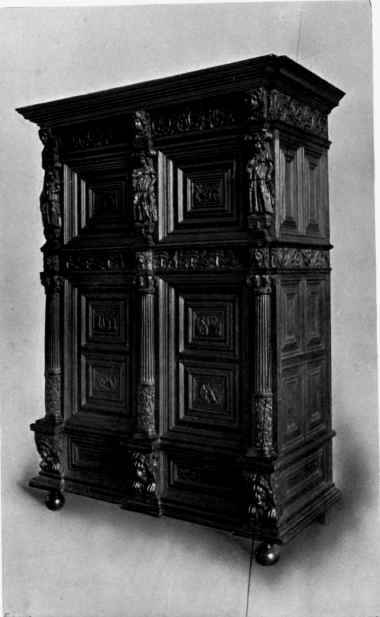
Plate XV. - Armoire. RIJKS MUSEUM, AMSTERDAM.
French noblemen had such a fancy for collecting Flemish cabinets that Henri IV, sent French workmen to the Netherlands to learn the art of making these choice pieces of furniture, and particularly the trick of carving in ebony. On their return, he established them in the Louvre. The first was Laurent Stabre; another was Pierre Boulle (uncle of the great Andre Charles Boulle), supposed to be of Flemish origin. Jean Mace, who called himself "menuisier-ebeniste de Blois," was also given a studio in the Louvre, "on account of his long practice of this art in the Low Countries, and the skill he has shown in his cabinet-work in ebony and other woods of various colours that he has presented to the Regent Queen."
Another cabinet-maker who lived in the Louvre was Pierre Golle, a native of the Netherlands, whose name was originally Goler, and who left Holland at Mazarin's request to settle in Paris. He made various artistic pieces for the Dauphin, the great Cardinal and other patrons of art.
Burgundy was also remarkable for its cabinets, and made a specialty of wall-cabinets that hung at the sides of a room on invisible supports. A famous specimen of Burgundian work was bought several years ago at the Soltykoff sale by the Baron Sellieres, for no less than 16,500 francs ! It was a large double cabinet, the two parts of nearly equal dimensions, both ornately carved with satyrs, fruits, garlands, palms, Tritons and Nereids.
The chest is as important as ever. It is found in every room in the house. In it are kept household linen, clothing and many treasures and gifts. When the top is flat, in which case the article is still called huche, it often serves as a seat. Although the chest is finely carved in the sixteenth century, it never attains the sumptuousness nor the delicacy of either dressoir or cabinet; it always remains a robust piece of furniture. It is decorated with architectural motives, fantastic arabesques, panels ornamented with bas-reliefs representing Biblical or mythological scenes, allegorical subjects, pilasters in the form of terms, and not unfrequently mascarons. Sometimes chests are covered with stamped leather and sometimes decorated with marquetry.
Continue to:


My Books

