


The Renaissance. Part 2
Description
This section is from the book "French Furniture", by Andre Saglio. Also available from Amazon: French Furniture.
The Renaissance. Part 2
M. Emile Molinier, who is one of the most learned and expert writers on these subjects, refers in his "Histoire generale des Arts appliques a l'lndustrie," apropos of the Chateau of Gaillon to certain Italian plaques and engravings, the motives of which were evidently reproduced by French artists in the decorative, and even in the monumental work, produced during this period. The double corbels introduced by Michelozzi above the gateway of the Palace of the Medici at Milan, were very possibly familiar to French cabinet-makers through Mantegna's engraving of the Flagellation; the dolphins that occur so frequently at Gaillon and at Cluny appear to have been borrowed from the frontispieces of such collections of engravings as the St. Jerome printed in Venice in 1498; the illustrations of the "Strife of Love as seen in a Dream by Poliphilo,"* by Francesco Colonna, issued in the same town in 1499, seem to have suggested the idea of the siren and many other motives; and the dolphin rolling itself round an anchor introduced on the tomb of Guillaume Gouffier in the Chapelle d'Oiron is really nothing more than an imitation of the trade-mark of the great Venetian printer Aldus Manutius. The easy transportation of such decorative details was not the only reason for the rapid propagation throughout France of the so-called antique style.
It must be added that the cabinet-makers themselves were ready enough to travel alone or in groups from one town to another where much building was going on and good wages were paid. There they produced works which in their turn served as patterns to the native artists and were hawked about in other places. These facts, of which there are plenty of proofs, are enough to upset the ingenious theory evolved by certain learned writers, otherwise reliable enough, that it is possible to classify geographically the various centres of art production of the French Renaissance. We must give up the idea of being able to define the characteristics of a Norman school, a school of Champagne, of Auvergne, of the South, of Lyons, of Tours, of Burgundy, and so on. The truth is that the new style took possession at the beginning of the reign of Francis I. of all the provinces at once, appearing at first, as we have seen, side by side with the Gothic and then gradually ousting it. Prudence dictates the necessity of relegating to the first part of the sixteenth century all works in which any traces can still be made out of the old style, even if every detail of the construction be foreign, and then to consider those that are evidently entirely Italian in spirit.
In both, whether produced in the North, the South, the East, or the West, identical motives are everywhere prevalent; such as candelabra, columns with floral capitals, figures in relief beneath a canopy of foliage and fruit, or a mere moulding known as a chapeau de triomphe or chaplet of victory, dolphins, arabesques of conventionalised flowers, and flat mouldings called bandelettes. It was in a comparatively short time that Gothic design, already thoroughly outworn, merged itself in the graceful style borrowed from Italy. In the examples preserved, the progress year by year of the latter can be distinctly followed, traces of the pointed arch becoming rarer and rarer, taking refuge only, as it were, in the cornices or in the attenuated mouldings, and then finally disappearing. About the end of the reign of Francis I., therefore, the triumph of the style brought over from Italy may be said to have been complete, but in the very moment of victory it found itself transformed in the hands and at the initiative of French artists, and compelled to submit to the strenuous influence of their traditional taste, out of which resulted a national art of individual character, alike vigorous and versatile, known in history as the Henri II. style. We will consider that style in the next chapter.
The "antique school," strictly so-called, has produced too many fine works to be dismissed in a few lines, in spite of those purists who choose to see in it nothing but the decadence, or, to be more accurate, the complete disappearance, of French genius.
* A facsimile of this rare and valuable book, of which but very few copies remain, was published in 1894 by Messrs. Methuen, under the original title, "Poliphili Hypnerotomachia," with a pamphlet giving its history. - Trans.
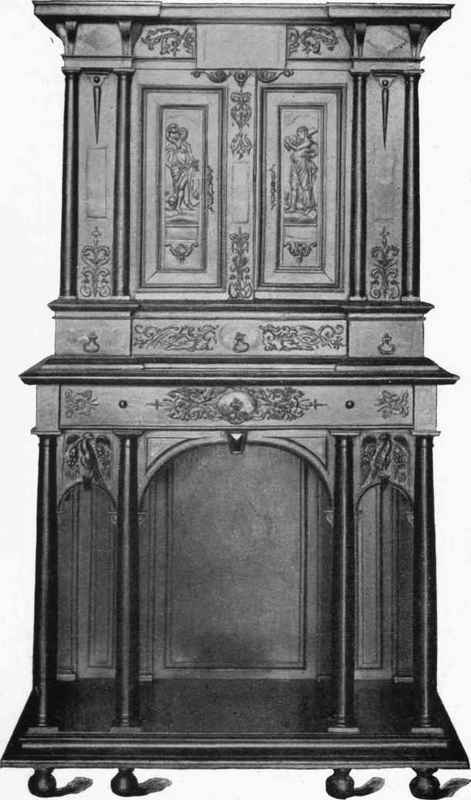
Plate VII. RENAISSANCE DRESSER. Louvre Museum.
The word decadence should really be replaced by that of evolution, for transition between two artistic systems, bearing witness to the intellectual as well as the aesthetic vigour of a nation, cannot be likened to a decline leading to ruin. Moreover, the evolution now to be considered was extremely brief, undeniably brilliant, and far more French than a mere cursory examination of external appearances would lead us to suppose. If the art that prevailed in Italy in the time of Francis I., such as the painted marqueterie and plaques, in which quantity excelled quality, be studied, it will be seen that the craftsmen of France did not really produce mere counterfeits of those designs, and that even when they borrowed motives, detail by detail, they assimilated them with a discretion and refined taste that really recalled the work of the Italians of the fifteenth rather than of the sixteenth century. Some writers who recognise this fact as we do, have not chosen to explain it in this simple manner, so glorious for French craftsmen, but make out that the works of this period of the Renaissance were actually produced by Italian artists.
Of course we are unable to contradict these learned critics when they claim such an origin for the panels and marqueteries that adorn the chapel of the Chateau of La Batie en Forez, built by Claude d'Urfe, or the panels of the chapel and sacristy of the Chateau of Ecouen that are now at Chantilly, but it is very probable that these were all actually executed in Italy and brought over at immense expense by wealthy connoisseurs. The question becomes an even more delicate one when we have to deal with such works as the panels of the Chateau of Fontainebleau, of which it is true but a very small portion, badly restored some fifty years ago, now remains, but with which many old engravings have made us familiar. We read, indeed, in the "Comptes des Batiments du Roi" that French and Italian artists were at work at the same time at Fontainebleau, and it is significant that one of the latter, a certain Francisque Seibecq, called De Carpi, received the highest salary of them all. It is, however, permissible, as much of all this is pure hypothesis, to suggest that it is possible that this De Carpi was a kind of architect or director of the works, in the execution of which he took no actual share, especially as we know for certain that a great part of the wood-work was produced at Tours by Masters Aman and Antoine Les Bruns, who sent it to Fontainebleau in 1530. This hypothesis would apply equally well to the work in the Louvre and St. Germain-en-Laye royal chateaux, to which the cabinet-maker-in-ordinary of the King, Francisque de Carpi, was undoubtedly summoned, and perhaps also to that in the charming retreat of Anet, a few fragments of which are preserved in the Ecole des Beaux Arts of Paris, and retain the impress of a double influence, for the best artisan in the employment of the King is sure to have been sent to his favourite Diana of Poitiers, Chatelaine of that gem of architecture.
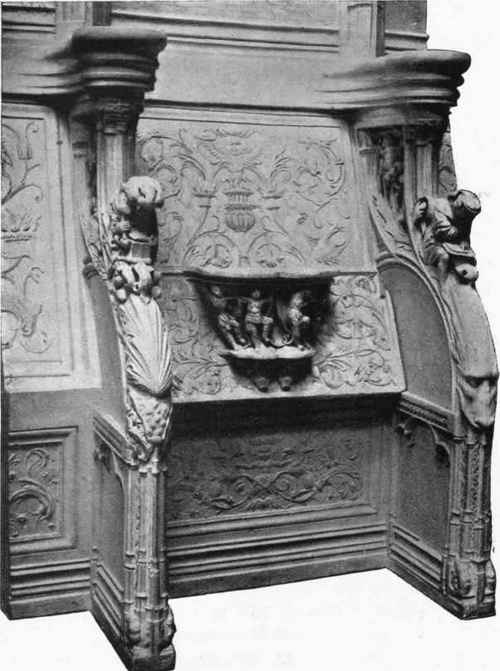
Plate VIII. MISERERE STALL. Beginning of XVI Century. Abbey of S. Denis.
Continue to:


My Books

