


Meeting Of The Chicago Paint, Oil, And Varnish Club. Part 3
Description
This section is from the book "Haven's Complete Manual Of Practical Phonography", by Curtis Haven.
Meeting Of The Chicago Paint, Oil, And Varnish Club. Part 3
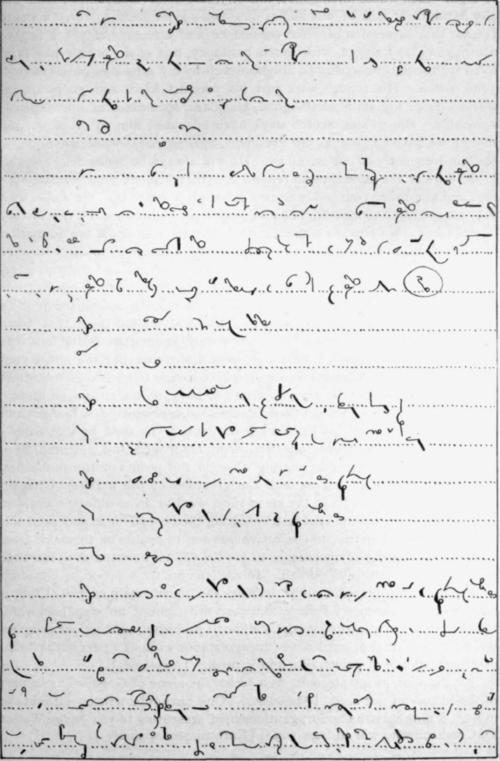
Mr. Pettet - I move that the By-Laws be changed to read the third Thursday instead of the second.
Mr. Coffin - I second the motion.
The President - The motion is that our By-Laws be so amended that we may hold our meetings on the third Thursday of each month instead of the second Thursday. It will require unanimous consent to do this. Are there any remarks? You have heard the motion. All those in favor will please say aye. It is carried. There is no further business.
Gentlemen - As this is my first appearance in the chair, some of you may perhaps expect from me an inaugural address of two or three hours, but I met a friend on the street, who, in congratulating me on my election to the presidency of this Club, gave me a little advice. He said, "You must be serious; you must not talk too much." And as he is a gentleman in whom I have a great deal of confidence, I think I will follow his advice. At the same time, as I am talking, I will say that being called upon to preside over a representative body of business men, such as I see before me to-night - men whose intelligence, industry, and perseverance has placed our city in the front rank of our line of business - is no mean honor. I thank you for this expression of your confidence and esteem, and yet I beg to assure you that I accept, with much hesitancy, this chair, which has been filled for the past two years so ably and well by my esteemed predecessor - John Alston. His rulings were just, his conduct kind and generous, his stories - from my standpoint - good, his jokes, sometimes at our expense, agreeable. His quaint Scotch ways have endeared him to all of us, and though we have lost him as our President, against our wishes, we hope to see him frequently at our meetings. He will always be welcome.
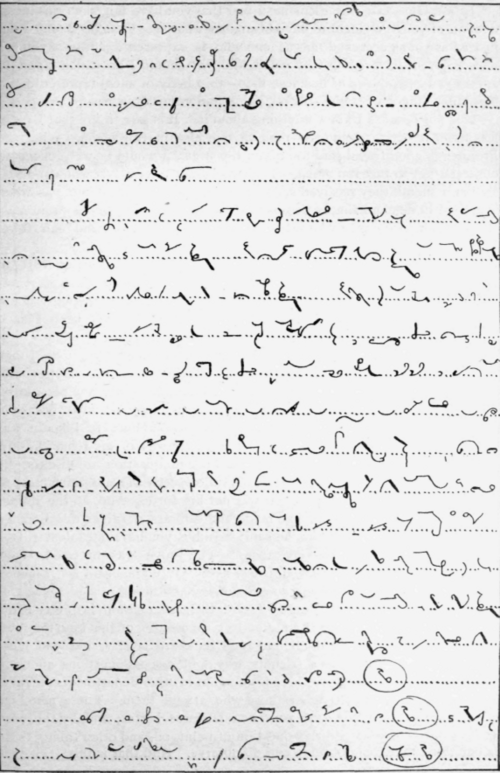
I desire at the same time to remind you that without your cordial support and assistance your officers can accomplish nothing. We hope with your co-operation to make the coming year a prosperous one in the history of this Club. We hope to make a record that will encourage the formation of other clubs, in competing cities of the West, to enable us to carry forward with greater ease the reforms which should be the object and aim and interests of this Club. We hope to prosper so that in 1892, when the paint trade of New York, Washington, and St. Louis come here to attend the World's Fair, we can entertain them in a manner that will remind them that when Columbus discovered America it was not only Manhattan Island and the Potomac flats and Shaw's Garden that were discovered, but the entire continent, extending from ocean to ocean; where we are to have in the twentieth century, according to Bellamy, no army, no navy, no merchants, no money, no servant girls, no saloons, no court-houses - consequently few lawyers and judges - it is expected that the Cronin trial will be finished by that time - but we will have a grand industrial army, controlled and operated by a happy and contented people, sharing alike in the profits of the industries, all of which will be in keeping with the greatness of the nation. What an Utopia to contemplate! In the mean time, we live in a different era - an era in which competition is severe, requiring the best thought and patience, of organizations like this, to correct abuses and to enable us to make from our business a profit compensating us for the capital invested and the time and energy devoted to its pursuit. In my opinion, the solution of our difficulties lies in co-operation, and I believe the membership of this Club is equal to the occasion. I believe that they will commit no step backward, but that they will grasp and solve the difficult problems, and that our progress will be onward and upward until Chicago stands without a peer in the manufacture and sale of paints, oils, and varnish. [Applause.]
As a soldier, as a statesman, as a jurist, the name of Gresham is a part of the history of our land. [Applause.] One cannot be written without the other. I now have the honor, gentlemen, of presenting to you Judge Walter Q. Gresham, who will address you. [Enthusiastic applause.]
Judge Gresham - Gentlemen: I fear that you have mistaken this introduction of your President to have been somewhat sought on my part. I am invited as your guest, and not as one who is expected to address you. I have enjoyed the evening very much, and why should I be called upon to address an assemblage of business men - this body of men representing a particular branch'of trade - the oil, paint, and varnish business?
It is not because I know anything about it. It is safe to say that I know less about it - very much less - than anyone else in this room. What the President's good friend said to him on the street, it would be well for me to observe - not to talk too much. That was good advice. It would be well for many men if they received such advice and heeded it. Time was when men were in demand simply because they could talk whether they said anything or not. The men who are in demand now are men who can think and act.
Some of you are old enough to remember the campaign of 1858, in which Mr. Lincoln and Judge Douglass canvassed this State as representatives of the two great parties. It was a famous campaign. Perhaps such a campaign never occurred before. Certainly, there has not been such a match in this country since, in any State.
Mr. Lincoln's friends gave him a reception at Bloomington, as Judge Douglass' friends did also. A gentleman was selected who was happy - who was gifted - in the way of speech. He could talk gracefully and pleasantly, whether he said much or not. He was very happy, on that occasion, receiving and presenting Mr. Lincoln to the people, but Mr. Lincoln was not quite so happy in his response as the Judge was in his remarks - Mr. Lincoln's mind was such that he needed some question to discuss; he could not talk into the air very well; his little speech was not satisfactory to him, perhaps not to his friends. It was not his forte. And, at the dinner party, he paid the gentleman who made the address a rather questionable compliment. Addressing him, he said: " Judge, you have one talent that I envy you the possession of very much." The Judge was flattered. Said he, " Mr. Lincoln, what is that, if I may ask?" " Judge," said Mr. Lincoln, " it is the ability to talk as you do and not say anything."
Continue to:


My Books

