


Meeting Of The Chicago Paint, Oil, And Varnish Club. Part 4
Description
This section is from the book "Haven's Complete Manual Of Practical Phonography", by Curtis Haven.
Meeting Of The Chicago Paint, Oil, And Varnish Club. Part 4
There are such men. But, as I said, their occupation is pretty much gone, and it is well it is so. I am glad to see a meeting of this kind to-night. You, gentlemen, are no doubt engaged in sharp rivalry, but you meet around this social board in a friendly way, and discuss questions affecting your welfare. What you see here is going on in other departments of trade. It shows the mental activity of those who attend them. These meetings stimulate thought. You learn your own business better; and, by the way, while I do not understand this question of paint, oil, and other things, there is one thing that I can observe and do observe. And that is this: There is no longer the opportunity for individual enterprise that existed twenty-five years ago.
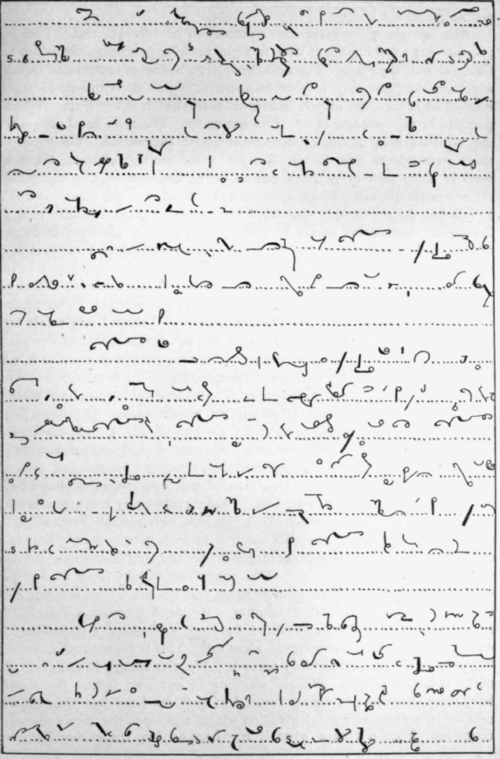
I am not going to enter into a discussion of this question. I am not going to say anything about who is right or who is wrong. It is not the time, nor is it the place. But with these large bodies of associated capital, which we find not only in your business but in all departments of trade, what show is there for merely individual enterprises? Very little. What is going to be the outcome of it? I do not know. The time has come when the business men of the country must assert themselves. We have too many mere talkers now in our National and State legislatures. What we need is more men of practical business experience - men who understand the economic questions which are forcing themselves to the front. It would be infinitely better for our country if we had more good business men in Congress. Legislation would be better. I hope you give me credit for candor, and not think that I am trying to flatter you, when I say that it is not true, as some people suppose, that the talent of this country is in the professions; that the men of brains are found in the professions. The men of ability in this country are largely in business enterprises. The professions are amounting to less and less all the time. I think I may safely say, that in my profession, the standard is not as high as it was twenty-five years ago. That is to say, the percentage of able men is not as great as it was then. I will simply refer to some of the questions - one in particular. You all know that we have an International Trade Congress here, to be in session at Washington - I believe it is mainly on wheels, though [Applause] - to consider questions affecting the welfare, not only of the United States, but of other countries upon this continent. Suppose we had had practical business men - more practical business men - in Congress for the last generation, don't you think the business men of this country would have been transacting more business, would have been exchanging more goods with the South American countries? Why is it that only a small percentage of the business done in the countries south of us finds its way here? Why is it that the business men of this country are not engaged more in commerce with the countries south of us? The conditions should favor us, and yet we are scarcely known there as merchants and traders. It affects you. It affects the welfare of this whole country. We need legislation there. We should not be controlled or governed by mere sentiments or prejudice. It does not matter what our political ideas are. This is a practical question. There is a field, and we should occupy it. We can occupy it, and if we do not, it is our own fault. We are standing in our own light. We should have more than 50 per cent. Instead of that, we have less than 10 per cent. of it. Then we need legislation which will open the doors to those countries. I do not care what it is. I am no free trader, but I am not going to make a political speech here. I do not think the conditions under which we are now living can justify free trade. We can not yet handle the commerce of the world. Neither am I in favor of the making of laws which deny to our business men the opportunity to enjoy the trade of other countries. Let us modify our laws.
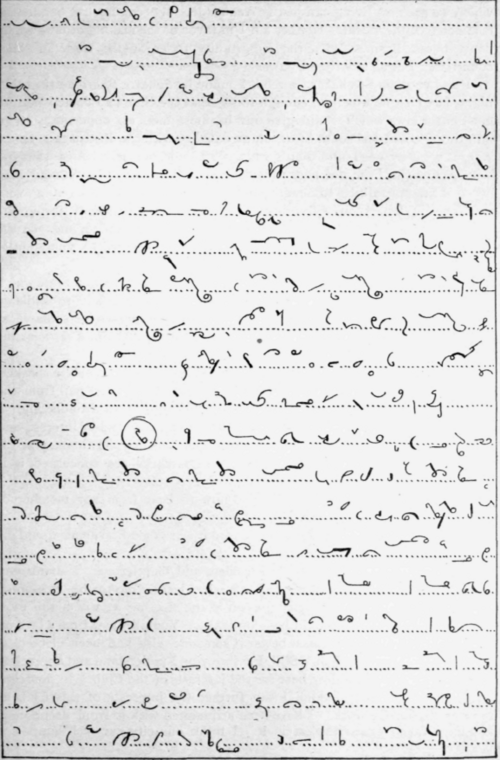
I was very glad to hear of a remark made by Senator Sherman the other night, in which he was bold enough to say that the time had come when we must enact laws which would give our business men an opportunity to go into those countries south of us, on an equality with the British merchants. That is what we need, and that is what you should demand. As I said before, gentlemen, I am not here to make a speech. I see a shorthand man here. I am not talking to newspapers. I have enjoyed the evening very much, and I hope you will prosper during the next year, and during the coming years. I hope to see American commerce extended, and see the conditions more favorable to our merchants. I am obliged to you, gentlemen. [Applause.]
The President - We have a gentleman here to-night from a State which has produced many great men. [A Voice-Ohio!] I allude to Indiana. There is a bond of sympathy between us, because he follows the same vocation as we do. We would like to hear from Mr. Johnson, of Evansville, Indiana.
Mr. Johnson - Mr. President and Gentlemen: I am no public speaker, but I have enjoyed this evening very much. It is true that I hail from the State of Indiana, but I have always considered myself an Illinois boy. I have watched the proceedings of this Club with a good deal of interest, and I think it is a great benefit to the paint trade of this city. I thank you for the compliment of calling on me. As far as remarks are concerned, it is not my forte.
The President - We would be glad now to hear from any member of the Club who cares to talk to us.
Mr. Hayes - I think some remarks from our Vice-President would be in order.
Continue to:


My Books

