


Tables. Part 4
Description
This section is from the book "Furniture", by Esther Singleton. Also available from Amazon: Furniture.
Tables. Part 4
In the middle of the Eighteenth Century, tables were made with movable tops; tops that could be raised or lowered; writing tables, at which one stood up to write; and tables "en croissant." In 1754 Madame de Pompadour had a writing-table in the form of a crescent, with a desk. It was inlaid with rosewood and satin-wood and feet and mounts of or moulu. A table in the Louvre, supposed to have belonged to the daughters of Louis XV., is of rosewood and satin-wood, beautifully ornamented with or moulu, the top covered with blue velvet, - the favorite material for covering the tops and lining the drawers of a lady's desk at this period.
Ladies' desks were charming: one called the bonheur du jour is very delicate in form and is made of ornamental woods.
The long bureau table, with a tier of shelves supplied with pigeon-holes, called serre-papiers, was a favorite writing-table until the cylinder bureau, with the roll top, said to have been invented by Prince Kaunitz, drove it from the field.
On Plate CX. a charming table of this period is shown. It is of waved lines, made of veneered wood, the frieze ornamented with three panels of lattice-work of mother-of-pearl and red horn on a ground of horn, colored green, sprinkled with flowerets and framed in gilt-bronze scrolls. The ornaments on the spring of the leg and the leaf-shoes of the feet are gilded bronze. The slab, of wood and gilded bronze, is movable, and beneath it are two small drawers and one large drawer.
Until the Eighteenth Century the special dressing-table seems to have been unknown. Pictures of the period show ladies seated before a low table covered with a cloth, or in front of a commode, or table with drawers, or low case of drawers, resembling the one on Plate LII.
The bureau de commode often contained a drawer fitted up as a desk. It was probably because of this fact that the word bureau has been so frequently misused for the dressing-table.
When the straight line again dominated furniture in the Louis XVI. period, the table naturally yielded to the fashion. Tables were delicate and charming, and include writing-tables with ingenious appliances to lift the desks up and down to any height desired, pretty work-tables, that are also writing-desks, supplied with a tambour-shutter to conceal the shelves, dainty tea-tables and round, folding and square card-tables are numerous and varied. These are greatly prized by collectors, particularly if they are adorned with Sevres plaques.
The table servante, a kind of dumb-waiter with drawers and shelves arranged in tiers, and standing on four grooved feet on casters, also became popular. This contained many little drawers for various articles of table service. It frequently appears in the caricatures of Grandville, Charlet and H. Monnier.
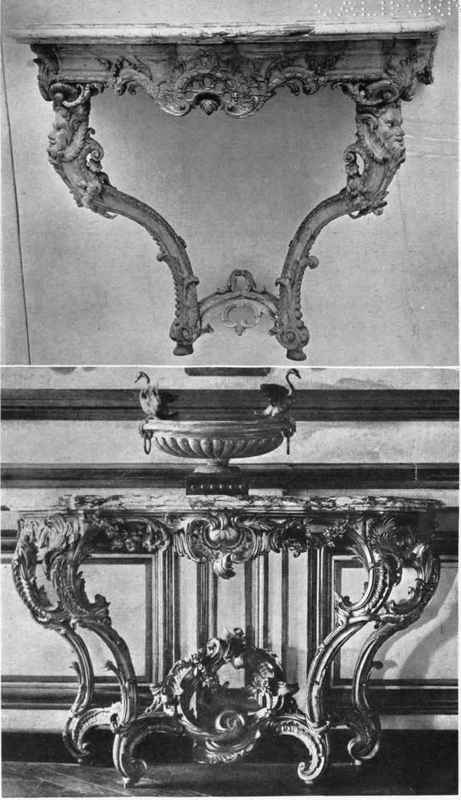
Plate CIX - Regency Console-Table - Metropolitan Museum
Louis XV. Console-Table
More notable, however, was the advent of the extension dining-table standing on four, six, or eight feet, and opening in the middle. This appeared in France earlier than in England, where it is not found until about 1800.
Another popular table was the flower-table, or jardiniere. It made its first appearance in the form of a square pier table, and was arranged for growing-plants, lined with lead, and frequently decorated with porcelain plaques. Sometimes it had an additional shelf for a globe of gold fish. The table a fleurs was placed in the drawing-room and boudoir. A description of one occurs in an advertisement in one of the Parisian newspapers in 1777:
"For sale a beautiful table a fleurs, now being made, of satin-wood, lined with lead, the four feet a roulettes, ornamented with gilded shoes, the rings forming the handles also or moulu, a drawer lined with lead to catch the water. Address, Thomas, rue de Menars."
The console-table was composed of straight, grooved legs, or legs grooved and tapering. The ornaments were very slight, such as, for example, a little gilded metal rail around the top and base, a rosette, a trophy, or some other ornament under the slab in the centre, and, perhaps, a little gold decoration on the legs. Sometimes the legs were joined by a straining-rail which had an ornament in the centre, or a little stand on which was placed a basket of flowers or a Sevres vase. Sometimes the legs were formed of a classic head and bust ending in a term. Console-tables were made of mahogany, with brass trimmings; and they were also made of less expensive woods painted in bright hues. Gray was a favorite shade, particularly towards the close of the period. During the Reign of Terror "two consoles, painted in pearl-gray, elegantly ornamented with carving, and having very handsome slabs of Carara marble," are offered for sale.
Tables of gilded wood for the drawing-room went out of fashion and their places were taken by solid or veneered tables of violet-wood, amaranth, rosewood, or mahogany, decorated with brass-work. It is noticeable that during the Empire period the table cloth is never used. If the top was not a marble slab, then it was covered with a square of cloth or velvet, framed in a border of wood with a narrow metal moulding.
Turning now to the English styles of the second half of the Eighteenth Century, the importance of the card-table and tea-table can hardly be over-estimated. In very wealthy houses these were inlaid with ivory or mother-of-pearl, but in the ordinary prosperous home they were of walnut or mahogany. The card-table, with its claw-and-ball feet, and its stands for the candles at each corner and wells for the little fish that were used as counters before the days of "chips," of Anglo-Dutch form, is a model that lasted until late in the century, and is still found in old houses and prized by collectors. At such a table ladies of fashion in wide-spreading hoops of brocade and with enormous headdresses, sat to settle the odd trick, the flames of the candles illuminating their rouged faces and causing their jewels to sparkle. At such a table Belinda probably played her famous game of ombre when she led to war her sable Matadores and "Spadillo first, unconquerable Lord Led off two captive Trumps and swept the Board," before she lost the graceful ringlet that formed the subject of The Rape of the Lock.
Continue to:


My Books

