


The Story Of Bees. Part 3
Description
This section is from the book "The Busy Little Honeybee", by Josephine Morse True. Also available from Amazon: The Busy Little Honeybee.
The Story Of Bees. Part 3
It is the magic in this royal jelly that makes the worker egg grow into the wonderful Queen Bee.
When the first young Queen steps out of her cell she looks for any Queen eggs that haven't hatched. If she finds any she kills them, so she will be the only young Queen in the hive.
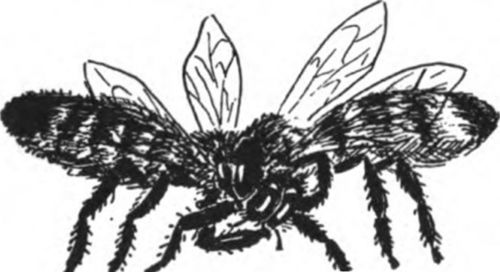
Sometimes the Young Queen Kills the Old Queen.
But the old Queen is still there. Sometimes the young Queen kills her. Sometimes they live together in peace for a while. But that can't last long, for the hive would become crowded with two mothers and all their children. The old Queen will have to go soon, and her loyal followers will go with her.
A few days after her birth the young Queen leaves for her wedding flight. She meets one of the drones in the air, and when she returns she is ready to lay her eggs.
And the drone! What a helpless creature he is! He does not work at all, he gets in everybody's way, and just fills himself with the sweets his worker sisters carry in. So he gets very big and very fat. He is waiting for only one thing - to be married to the new Queen.
The worker bees let the drones live in the hive and eat all they want until the wedding. They know that one of the drones must marry the Queen so there can be more young bees. But after the wedding all the drones are driven out to starve or freeze, or to be killed by other insects. For without a stinger, the drone cannot protect himself.
It is the workers who really run the hive. Without them, there would be no hive at all, no babies, no Queen, not even a drone.
The worker bee is busy from sunrise to sunset almost from the day she is bom. When she is young she acts as nurse to the larvae that will later grow into other bees. After a while she must help to pack the pollen as the older workers bring it in.
Now the young worker leaves the hive for the first time. She plays around the entrance like a happy kitten. She rushes here and there, tumbling and whizzing about and teasing the fat drones that loaf nearby. In the meanwhile she learns how the outside of the hive looks and where it stands. Later, when she goes a long way to gather nectar she can always find her way home again.
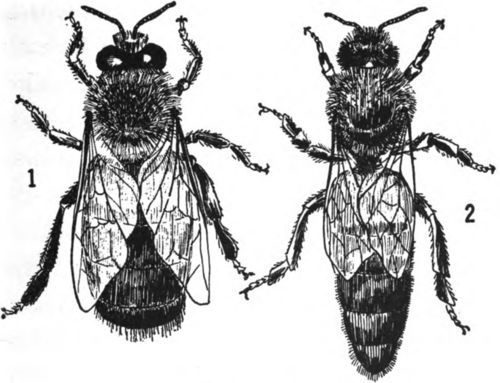
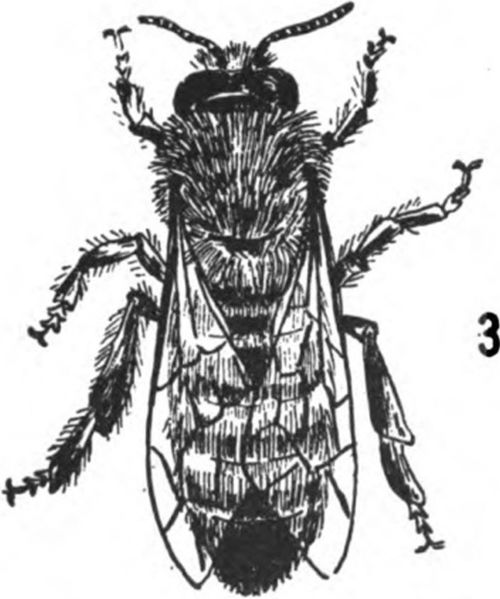
The Drone (1), Queen (2), and the Worker (3) All Look a Little Different.
Soon afterward she makes her first trip to the flowers. She spins around them, hopping here and there. When she returns, she brings back her first ball of pollen, and there is no more excited bee in the hive than this one. She is so proud and so excited that she whirls all through the hive showing everybody what a wonderful thing she has done. Of course, the older bees have already brought in thousands of balls of pollen. It's an old story to them.
Soon after the worker gathers her first ball of pollen, she learns to make trips for nectar. When she is able to do this, she begins to take on other duties in the hive. She builds honeycombs and ripens honey. She sweeps and cleans. She repairs and glues loose parts together with a special bee glue.
In fact so hard does she labor that she really kills herself with work.
The Queen does nothing but lay eggs and let the workers wait upon her. So she can sometimes live for two or three years, mothering the hive summer after summer. But the worker bee will hardly live longer than six or seven weeks. While a human being can rest and rebuild his body when he sleeps, the body of a bee does not do that. The harder the bee works, the shorter is her life. But she enjoys her work. So when there is nectar in the flowers and work to be done, she drives herself on and on, up until her last days.
When we do a hard day's work most of us aren't ready to stay up all night doing more work. We want to go to bed and rest. But that is not how the bees feel. Often they stay up late to work on the nectar gathered dining the day. They fan their wings and shake this nectar in their mouths a drop at a time. It becomes the thick syrupy honey which comes to our table.
When a farmer comes past a hive late at night and hears the happy buzz-buzz of the workers as they chew over their nectar, he himself feels happy too. He knows he is going to have a large honey crop.
The bees themselves seem to be excited when they have a good day. Often in the evening the farmer sees them parading around in front of the hive, buzzing merrily, and looking like holiday crowds at Easter time.
When there is plenty of nectar the bees will be good-tempered. We can tell how a bee is feeling by the kind of buzz she makes. A high hissing kind of buzz means that the bee is angry. Perhaps the flowers haven't been giving as much nectar as she likes. Perhaps some person or animal has frightened her.
But if she is well fed, and her hive is full of honey and people let her alone, there is no more pleasant insect than the honey bee. Then her buzz is like the purr of a contented cat, and the farmer who hears it is also contented.
When unhappiness begins to spread in the hive, then the farmer must keep his eyes open for swarms.
Bees may swarm for many reasons. Maybe there are two Queens in the hive and one of them is leaving with her followers. Each of those who will leave with the swarming Queen fills her sac with honey so there will be enough for all to eat until a new home is found.
Sometimes the workers go out and find a new home. Then they go back for the Queen and guide her to it. But more often the old Queen marches to the door of the hive when all is ready, spreads her wings and soars away, followed by her workers' army. When the Queen stops to rest, her army stops. When she flies on, they follow.
Continue to:


My Books

